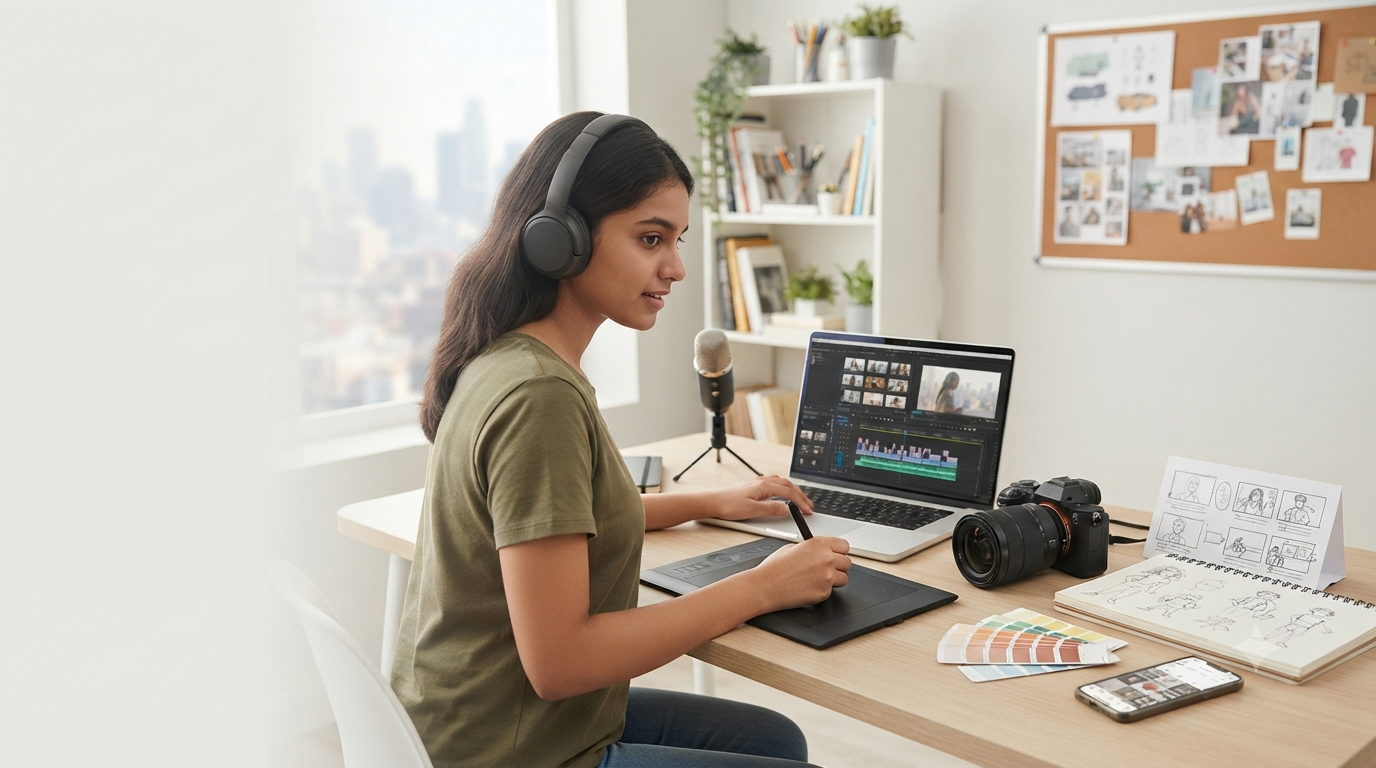
Why Media & Creative Careers Are Growing Fast in India (2027-28)
Pichhle kuch saalon me India ka media aur creative sector kaafi tezi se develop hua hai. Internet accessibility, affordable smartphones, social media platforms aur digital entertainment ke rapid growth ne is industry ko completely transform kar diya hai. Aaj communication aur creative skills lagbhag har business ka important hissa ban chuki hain. Isi wajah se 12th Arts ke students ke liye bhi career opportunities pehle ke comparison me kaafi zyada expand hui hain.
Ek samay tha jab creative careers ko sirf journalism, television ya film industry tak limited mana jata tha. Lekin ab situation badal chuki hai. Aaj branding, digital marketing, online education, e-commerce, gaming, advertising, podcasting, influencer marketing aur corporate communication jaise sectors bhi creative professionals ko actively hire kar rahe hain. Is change ne Arts students ke liye career options ko kaafi wide aur flexible bana diya hai.
Why the Creative Industry Is Expanding So Quickly
Digital Content Consumption Has Increased: Log aaj news, entertainment, education aur shopping se related content zyada tar mobile aur online platforms par consume karte hain. Is demand ko fulfil karne ke liye quality content creators aur media professionals ki zarurat continuously badh rahi hai.
Businesses Are Investing in Branding: Har business apni online identity ko strong banana chahta hai. Iske liye graphic designers, copywriters, video editors, photographers aur branding specialists ki demand har saal increase ho rahi hai.
Skill-Based Hiring Is Becoming Common: Creative industry me recruiters sirf degree nahi dekhte. Practical skills, portfolio, communication ability aur real projects ko bhi equal importance di jati hai. Isliye talented students jaldi industry me entry kar sakte hain.
Freelancing and Remote Work Have Opened New Opportunities: Aaj creative professionals kisi ek city ya office tak limited nahi hain. Students ghar baithe national aur international clients ke saath freelance projects aur remote jobs par kaam kar sakte hain.
Technology Has Made Learning Easier: Online courses, tutorials aur practice platforms ki wajah se students college ke saath-saath bhi industry-relevant skills develop kar sakte hain aur graduation se pehle hi portfolio build karna start kar sakte hain.
Major Industries Where Creative Professionals Can Work
Creative skills ki requirement sirf advertising ya media tak limited nahi hai. Alag-alag industries mein companies ko aise professionals ki zaroorat ho sakti hai jo ideas ko visual designs, videos, written content, campaigns ya clear communication ke through present kar sakein. Job ka nature aapki skills, portfolio, experience aur organisation ki requirements par depend karega.
Digital Marketing Agencies: Social media creatives, campaign content, short-form videos aur digital advertisements par kaam.
Advertising and Branding Companies: Brand identity, campaign concepts, promotional designs aur product communication develop karna.
News and Media Organisations: News graphics, editorial content, video production aur digital media presentation se jude roles.
OTT and Entertainment Platforms: Promotional videos, show artwork, trailers, social media content aur audience-facing campaigns.
Content Production Agencies: Articles, scripts, branded content, video editing aur platform-specific creative material par kaam.
Public Relations Firms: Press materials, communication campaigns, media presentations aur public-facing brand messages prepare karna.
In industries mein entry-level opportunities ke liye apne chosen field ke relevant samples banana useful ho sakta hai. For example, graphic design mein interested student sample posters aur brand layouts prepare kar sakta hai, jabki video production mein interest rakhne wala student short edited videos ka portfolio bana sakta hai. Apply karne se pehle job description mein required software, communication skills, experience aur portfolio expectations check karein.
Why This Is a Good Time for Arts Students
Aaj ke competitive job market me creativity, communication aur problem-solving skills ki value pehle se kaafi zyada badh gayi hai. Isi wajah se Arts background ke students bhi media aur creative industries me successful career build kar sakte hain. Agar koi student practical skills seekhne, regular practice karne aur apna portfolio strong banane par focus karta hai, to uske liye job, internship aur freelancing tino me achhe opportunities available ho sakte hain.
Overall, 2027–28 ke liye expected media ecosystem sirf employment hi nahi, balki entrepreneurship, personal branding aur independent freelancing jaise multiple career paths bhi provide karta hai. Isi wajah se creative careers aaj ke time me Arts students ke liye sabse dynamic aur future-oriented career options me se ek maane ja rahe hain.
Digital India & Creative Job Expansion (2027–28)
Pichhle kuch saalon me India ka digital ecosystem bahut tezi se expand hua hai. Affordable internet, smartphones, UPI payments, online shopping, OTT platforms aur social media ke widespread use ne businesses ke kaam karne ka tarika hi badal diya hai. Aaj lagbhag har industry apni online presence ko strong banana chahti hai, jiska direct benefit creative aur media professionals ko mil raha hai.
Is digital transformation ki wajah se Arts stream ke students ke liye bhi naye career opportunities create hui hain. Pehle jahan creative jobs sirf media houses ya advertising agencies tak limited mani jati thi, wahi aaj startups, e-commerce companies, educational platforms, healthcare brands, travel companies aur local businesses bhi skilled creative professionals ko hire kar rahe hain.
Why Digital India Is Creating More Creative Jobs
Every Business Needs Online Visibility: Aaj chhoti dukaan se lekar multinational company tak sabhi ko website, social media pages, digital advertisements aur branding ki zarurat hoti hai. Isi wajah se graphic designers, content writers, video editors aur social media managers ki demand continuously badh rahi hai.
Growth of Startups: India me har saal hazaron naye startups launch hote hain. In companies ko marketing, branding, visual identity aur digital communication ke liye creative professionals ki requirement hoti hai.
Expansion of E-commerce: Online shopping platforms aur D2C (Direct-to-Consumer) brands ko product photography, advertising creatives, promotional videos aur engaging content ki zarurat hoti hai. Isse creative jobs ka scope aur bhi increase hua hai.
Rise of OTT & Entertainment Platforms: OTT platforms aur digital entertainment industry ke growth ke saath video production, editing, animation, script writing, motion graphics aur visual storytelling jaise careers ka demand level pehle se kaafi zyada ho gaya hai.
Creator Economy: YouTube, Instagram, Facebook aur LinkedIn jaise platforms ne content creators, influencers aur digital educators ke liye naye earning opportunities create kiye hain. In creators ko support karne ke liye editors, thumbnail designers, script writers aur social media experts ki bhi demand badh rahi hai.
AI and Digital Tools: Artificial Intelligence repetitive tasks ko faster bana raha hai, lekin original ideas, storytelling, branding aur audience engagement ke liye human creativity ki importance ab bhi sabse zyada hai. Isliye AI ko use karne wale skilled creative professionals future me aur valuable honge.
Major Industries Where Creative Professionals Can Work
Creative skills ki requirement sirf advertising ya media tak limited nahi hai. Alag-alag industries mein companies ko aise professionals ki zaroorat ho sakti hai jo ideas ko visual designs, videos, written content, campaigns ya clear communication ke through present kar sakein. Job ka nature aapki skills, portfolio, experience aur organisation ki requirements par depend karega.
Digital Marketing Agencies: Social media creatives, campaign content, short-form videos aur digital advertisements par kaam.
Advertising and Branding Companies: Brand identity, campaign concepts, promotional designs aur product communication develop karna.
News and Media Organisations: News graphics, editorial content, video production aur digital media presentation se jude roles.
OTT and Entertainment Platforms: Promotional videos, show artwork, trailers, social media content aur audience-facing campaigns.
Content Production Agencies: Articles, scripts, branded content, video editing aur platform-specific creative material par kaam.
Public Relations Firms: Press materials, communication campaigns, media presentations aur public-facing brand messages prepare karna.
In industries mein entry-level opportunities ke liye apne chosen field ke relevant samples banana useful ho sakta hai. For example, graphic design mein interested student sample posters aur brand layouts prepare kar sakta hai, jabki video production mein interest rakhne wala student short edited videos ka portfolio bana sakta hai. Apply karne se pehle job description mein required software, communication skills, experience aur portfolio expectations check karein.
Why This Matters for Arts Students
Sabse positive change ye hai ki digital economy me entry ke liye Engineering ya Computer Science degree compulsory nahi hoti. Agar kisi student ke paas creativity, communication skills, practical knowledge aur strong portfolio hai, to wo media aur creative industry me achha career build kar sakta hai. Isi wajah se 2027–28 ke digital job market me Arts students ke liye opportunities pehle ke comparison me kaafi zyada open aur accessible ho chuki hain.
Most In-Demand Skills for Creative Careers (2027–28)
Creative industry me success sirf degree ya college name se decide nahi hoti. Employers aur clients sabse pehle ye dekhte hain ki candidate practical level par kya create kar sakta hai. Isi wajah se aaj ke digital ecosystem me portfolio, creativity, communication aur technical skills ka combination sabse zyada valuable mana jata hai.
2027–28 tak industry experts ke according, advertising, content creation, branding aur entertainment industries aur bhi technology-driven hone wali hain. AI tools ka use badh raha hai, lekin original ideas, storytelling aur audience ko samajhne ki ability ab bhi human skills hi rahengi. Isliye students ko sirf software seekhne ke bajay practical projects ke through apni skills develop karni chahiye.
Essential Skills Every Student Should Build
Video Editing: Short-form videos, YouTube content, advertisements aur documentaries ki demand continuously badh rahi hai. Adobe Premiere Pro, DaVinci Resolve, CapCut aur AI-assisted editing tools ka basic knowledge students ko freelancing aur internships dono me advantage de sakta hai.
Graphic Design & Visual Communication: Attractive social media posts, logos, posters, banners, presentations aur brand identity create karna har industry ki requirement ban chuka hai. Design sirf software chalana nahi, balki visual storytelling aur audience engagement bhi hota hai.
Content Writing & Storytelling: Blogs, website content, YouTube scripts, social media captions, advertisements aur email campaigns ke liye effective writing skills bahut important hain. Clear communication aur audience-focused writing har digital business ki basic need ban chuki hai.
Social Media Management: Instagram, YouTube, Facebook aur LinkedIn jaise platforms par audience build karna, content planning, engagement analyse karna aur platform algorithms ko samajhna ek valuable professional skill ban chuka hai.
Photography & Visual Content Creation: Basic photography, composition, lighting aur mobile content creation ki understanding designers, marketers aur content creators ke liye extra advantage provide karti hai.
AI Productivity Skills: AI tools brainstorming, script drafting, subtitles, thumbnail ideas, image generation aur workflow automation me help karte hain. Lekin best results tabhi milte hain jab student apni creativity ke saath AI ka smart use kare.
Communication & Presentation Skills: Client meetings, interviews, teamwork aur presentations me effective communication directly career growth ko impact karti hai. Creative ideas ko confidently explain kar pana equally important skill hai.
Time Management & Project Handling: Creative industry me deadlines normal part hoti hain. Multiple projects ko organise karna, files manage karna aur timely delivery dena professionalism ki pehchan hoti hai.
Portfolio Development: Certificates se zyada recruiters practical work dekhna pasand karte hain. Isliye students ko editing samples, designs, writing projects, branding work aur personal creative projects ka digital portfolio regularly update karna chahiye.
Continuous Learning Mindset: Media aur digital industry bahut fast change hoti hai. New software, AI features aur content trends regularly aate rehte hain. Jo students learning continue rakhte hain, wahi long-term competitive advantage maintain kar pate hain.
Which Skills Should You Learn First?
12th Arts ke baad creative field choose karte waqt students ko ek common problem hoti hai: unhe ek saath editing, designing, writing, social media, photography aur AI sab seekhne ka pressure feel hota hai. Practical approach iske opposite hai. Pehle apni preferred career direction identify kijiye aur uske according ek core skill ko strong banaiye. For example, agar aapko videos aur storytelling pasand hai to video editing ko primary skill rakha ja sakta hai; writing me interest hai to content writing, script writing ya journalism se start karna better rahega. Core skill ke saath communication, basic digital tools aur project management jaise supporting skills gradually add kiye ja sakte hain.
Career Interest
Primary Skill
Useful Supporting Skills
First Portfolio Project
Video & Media
Video Editing
Storytelling, audio, thumbnails
60–90 second edited video
Design
Graphic / UI Design
Typography, branding, visual research
Poster or small brand kit
Writing
Content / Script Writing
Research, editing, SEO basics
Blog or 2-minute video script
Social Media
Content Planning
Analytics, copywriting, design
7-day content calendar
Film & Animation
Editing / Animation
Storyboarding, sound, visual effects
Short scene or motion graphic
Recruiters aur clients ko impress karne ke liye sirf software ke naam ya certificates list karna enough nahi hota. Better portfolio wahi hota hai jisme student apna process bhi explain kar sake: problem kya thi, idea kaise develop hua, kaunsa tool use kiya aur final result kya raha. Is approach se portfolio ek simple collection ke bajay actual working ability ka evidence ban jata hai. Students ko har month kam se kam ek properly finished project add karne ka target rakhna chahiye, chahe woh college assignment ho, self-created project ho ya small freelance assignment.
Student Takeaway
Agar aap 12th Arts ke baad creative career banana chahte hain, to ek saath bahut saari skills seekhne ki jagah pehle ek core skill me strong foundation banaiye. Uske baad gradually related skills add kariye, regular practice kijiye aur real projects ke through portfolio develop kariye. Isi approach se internships, freelance projects aur long-term career opportunities dono significantly improve hote hain.
Popular Creative Career Courses
12th Arts ke baad creative course choose karte waqt sirf “high demand” label dekhna useful nahi hai. Course ka selection aapke interest, learning style, practical work exposure aur desired job role ke combination par hona chahiye. Journalism un students ke liye suitable ho sakta hai jinko reporting aur current affairs pasand hain, jabki graphic design visual work me interest rakhne walon ke liye better fit ho sakta hai. Isi tarah animation aur VFX me patience ke saath software practice ki zarurat hoti hai, aur advertising me writing, design aur consumer understanding ka mix kaam aata hai.
Production equipment, studio access, practical projects
Admission se pehle institute ki recognition, course structure, internship arrangements, faculty profile, practical facilities aur total fee ko separately verify karna chahiye. Higher-education institute ki authenticity check karne ke liye students UGC ke official higher-education resources ko bhi refer kar sakte hain.
Freelancing & Remote Work Opportunities (Reality + Student Guide)
Freelancing ab sirf “side income” nahi raha, balki ek full-time career model ban chuka hai.2026–27 ke current trends ko dekhte hue aur young creatives ke liye ye sabse fast-growing earning path hai, especially unke liye jo college ke saath skill build kar rahe hain.
Aaj ke time par global clients India se freelancers ko hire kar rahe hain kyunki cost effective hai aur talent quality high mil rahi hai. Is wajah se Tier-2 aur Tier-3 cities ke students bhi international level projects handle kar rahe hain.
Platform
Real Use (2027-28)
Students ke liye Opportunity
Fiverr
Quick gigs: reels editing, thumbnails, logo design
Beginner level freelancing start karne ke liye best
Upwork
Long-term clients, agency-level projects
High-paying international work + contracts
LinkedIn
Direct client hunting + brand collaboration
Personal brand + professional networking growth
Instagram
Portfolio showcase + DM-based client deals
Creators ke liye fastest client conversion platform
How a Student Can Build Experience Before Graduation
Maan lijiye ek Arts student graduation ke first year me video editing choose karta hai. Starting me woh local business ke liye ek promotional reel, kisi college event ka short video aur ek YouTube-style informational video create kar sakta hai. In projects ka objective turant paid work lena nahi, balki editing workflow samajhna, deadlines follow karna aur different formats me kaam dikhana hai. Jab 3–5 samples ready ho jayein, student internship applications, local businesses aur suitable freelance projects ke liye portfolio share kar sakta hai. Isi process me feedback milta hai, aur student ko ye bhi samajh aata hai ki uski strength editing, storytelling, motion graphics ya social-media content me se kis area me zyada hai.
Freelance Skills Creative Beginners Can Learn
Creative freelancing mein shuruat karne ke liye ek specific skill choose karna aur uski regular practice karna useful hota hai. Aapko har tool ek saath seekhne ki zaroorat nahi hai. Pehle decide karein ki aapko video, graphic design, writing ya social media content mein se kis type ka kaam pasand hai. Uske baad sample projects banakar apne work ki quality aur presentation improve karein.
Reels and Short-form Video Editing: Instagram Reels aur YouTube Shorts ke liye clips trim karna, captions add karna, audio sync karna aur video ka flow improve karna.
AI-assisted Thumbnail Design: AI tools aur design software ki help se thumbnail concepts banana, images arrange karna aur readable text ke saath final design taiyar karna.
UGC-style Content Creation: Brands ke liye product demonstrations, explainers ya testimonial-style videos banana. Content ko honest rakhna aur actual experience ke bina personal-use claims nahi karna zaroori hai.
Social Media Design and Branding: Posts, story templates, promotional graphics aur basic brand kits create karna, jisme colours, fonts aur visual style consistent rahe.
Scriptwriting for Videos and Ads: Video ideas ko short scripts mein convert karna, opening hook likhna aur message ko clear sequence mein present karna.
Basic Motion Graphics: Animated text, simple transitions, logo animation aur moving visual elements banana. Iske liye design fundamentals ke saath relevant software ki practice bhi chahiye.
Freelancing mein degree ke saath-saath aapka actual work bhi important ho sakta hai, lekin sirf achha sample bana lena regular clients ya income ki guarantee nahi hai. Clients brief samajhne, deadlines follow karne, feedback handle karne aur agreed changes complete karne ki ability bhi dekh sakte hain. Shuruat mein apne selected skill ke kuch original sample projects banayein aur har project ko portfolio mein clearly explain karein.
How a Creative Project Moves from Idea to Publication
Creative work aksar ek hi step mein complete nahi hota. Client, creator, designer aur editor ke roles project ke size ke hisaab se alag ho sakte hain. Chhote project mein ek person multiple tasks handle kar sakta hai, jabki bade campaign mein different specialists milkar kaam karte hain. Neeche ek example diya gaya hai jisse aap project ka general workflow samajh sakte hain.
Project Stage
What Happens
Example
1. Planning
Project ka purpose, audience, format, deadline aur required deliverables decide kiye jaate hain.
Ek creator AI-assisted editing aur manual editing ke comparison par video banana chahta hai.
2. Content Creation
Required footage, images, voice-over, written material ya other raw assets prepare kiye jaate hain.
Creator phone se clips record karta hai aur video ke liye narration taiyar karta hai.
3. Editing
Raw material ko arrange kiya jata hai; unnecessary parts remove karke sound, captions aur pacing improve ki jaati hai.
Editor clips trim karta hai, narration sync karta hai aur captions add karta hai.
4. Visual Design
Project ke liye thumbnail, title graphics ya supporting visuals banaye jaate hain.
Designer video ke main idea ko represent karne wala thumbnail taiyar karta hai.
5. Review and Revision
Draft check kiya jata hai aur agreed feedback ke according changes kiye jaate hain.
Final file ko required format mein export karke platform par upload ya client ko deliver kiya jata hai.
Video ke saath relevant title, description aur thumbnail upload kiye jaate hain.
7. Promotion and Review
Project ke goal ke hisaab se content share kiya jata hai aur available performance data review kiya ja sakta hai.
Video ke selected clips short-form platforms par share kiye jaate hain aur audience response dekha jata hai.
What Creative Work Is Like in Practice
Revisions: Feedback ke baad changes karne pad sakte hain. Kaam shuru karne se pehle revision limits aur delivery requirements clear karna useful hai.
Deadlines: Sirf jaldi kaam karna enough nahi hai; final output ko agreed brief aur quality requirements ke according complete karna bhi zaroori hai.
Teamwork: Kuch projects independently complete hote hain, jabki doosre projects mein client, writer, designer aur editor ke saath coordination karna pad sakta hai.
Communication: Requirements confirm karna, progress update dena aur feedback ko samajhna project ko smoothly manage karne mein help karta hai.
File and Usage Rights: Images, music, fonts aur AI-generated assets use karne se pehle unki licence conditions check karein. Client ke saath final files aur usage rights ko bhi clear rakhein.
Agar aap beginner hain, toh ek chhota project choose karke planning se final delivery tak poora process practise karein. Isse aapko apni technical skill ke saath time management, file organisation aur feedback handle karne ka experience bhi milega. Portfolio mein sirf final output nahi, balki project ka objective aur aapne kaun-sa kaam khud kiya tha, yeh bhi clearly batayein.
Common Mistakes Students Make in Creative Careers (Reality Check)
Bahut saare students creative field ko sirf trending ya “cool” samajh kar choose kar lete hain, lekin real industry ka pressure, skills requirement aur consistency demand ko ignore kar dete hain. Is wajah se baad me confusion, frustration aur career stagnation dekhne ko milta hai.
Agar starting phase me hi sahi mindset aur direction set ho jaye, to same field me growth speed kaafi fast ho jati hai aur freelancing + job dono me better opportunities milti hain.
Mistake 1: Trend dekh kar course select karna
Sirf trending courses ya social media hype ke basis par decision lena sabse common mistake hai. Isse hota ye hai ki interest long-term nahi tikta aur skill development slow ho jata hai. Sahi approach ye hai ki apne interest ko industry demand ke saath match karke decision lo.
Mistake 2: Sirf theory par focus karna
Kai students sirf classes, notes aur tutorials tak limited rehte hain. Lekin creative field me real learning “practice + projects” se hoti hai. Bina real work ki experience ke industry me entry difficult ho jati hai.
Mistake 3: Portfolio na banana
Portfolio ko ignore karna career ka slowest growth reason ban sakta hai. Clients aur companies ko aapka certificate nahi, balki aapka actual work dikhna chahiye. Har small project ko showcase karna future opportunities ke liye important hota hai.
Mistake 4: Jaldi success expect karna
Creative careers me growth instant nahi hoti. 1–2 mahine me results expect karna unrealistic hota hai. Real success consistency, feedback aur improvement cycle ke through aata hai, usually 3–6 months minimum effort lagta hai.
Mistake 5: Industry tools ignore karna
Software aur AI tools ko ignore karna direct skill gap create karta hai. 2027 me industry fast ho chuki hai, isliye Adobe Premiere Pro, Photoshop, AI editing tools aur design software ka basic knowledge mandatory hota ja raha hai.
Final Student Takeaway
Creative field me success unhi students ko milti hai jo sirf learning nahi, balki practical execution par focus karte hain. Galtiyon ko early stage me samajh kar avoid karna hi long-term growth ka sabse strong shortcut hai.
Student Career Roadmap After 12th Arts
Step 1: Understand Interest
Apne interest ko identify karo — writing, design, editing, communication ya filmmaking.
Step 2: Choose Right Course
Journalism, Animation, Design, Mass Communication ya Film Studies me se choose karo.
Apna work create karo — posters, videos, blogs ya designs ko portfolio me add karo.
Step 5: Start Freelancing / Internship
Small projects ya internships se real industry experience start karo.
Step 6: Career Growth
Experience ke saath high-paying jobs ya freelance career develop karo.
Reality vs Expectations in Creative Careers – Deep Breakdown
Creative careers ko lekar students ke mind me kaafi expectations hoti hain, jaise easy work, fast success aur high income. Lekin real industry ka experience thoda different hota hai. Yahan success slowly build hota hai aur continuous practice, feedback aur improvement ki zarurat hoti hai.
Same time par ye bhi true hai ki agar skill strong ho, to earning aur growth dono traditional jobs se kaafi better ho sakti hai—especially freelancing aur digital platforms ke through.
Aspect
Student Expectation
Industry Reality
Industry Insight (2026–27)
Work Nature
Easy, creative & fun daily work
Deadlines, pressure & multiple revisions
Creative work is fun but structured + deadline-driven
Income
Quick high salary after learning tools
Slow start, low entry-level pay
High income possible but only after strong portfolio & experience
Growth Speed
1–2 months me success
2–4 years consistent effort required
Growth depends on skill + consistency, not time alone
Job Security
Stable job like traditional fields
Project-based & freelance uncertainty
Multiple income streams = real stability
Skill Requirement
Basic software knowledge enough
Advanced tools + creativity + communication
Hybrid skills (creative + technical + AI tools) are must
Work Pressure
Low pressure, flexible work
Client demands, revisions & tight timelines
Pressure exists, but improves speed & professionalism
Career Growth
Degree-based promotion
Portfolio & real work matters more
Portfolio > Degree in most creative industries
Key Reality Points for Students
Creative field me success overnight nahi milta, patience zaroori hai
Portfolio strong ho to degree se zyada value milti hai
Freelancing + job dono combine karke better income possible hai
Client handling aur communication skills bahut important hain
AI tools use karne wale creatives faster grow karenge
How AI May Shape Creative Careers: What Students Should Prepare For
Creative fields mein AI tools ka use content ideas develop karne, rough drafts banane, images generate karne aur editing ke kuch repetitive tasks complete karne ke liye kiya ja raha hai. Lekin har project mein AI ka role same nahi hota. Kaam ki requirements, client expectations, available tools aur final output ki quality ke hisaab se workflow badal sakta hai. Students ke liye useful approach yeh hai ki woh creative fundamentals seekhne ke saath AI tools ki capabilities aur limitations ko bhi samjhein.
1. Creative Work Mein AI Ka Use Kahan Ho Sakta Hai?
AI ko ek supporting tool ki tarah use kiya ja sakta hai, lekin uske output ko check karna aur project ke purpose ke according improve karna zaroori hai. For example, video editor AI ki help se transcript ya rough cut prepare kar sakta hai, par final video mein timing, context, sound aur storytelling ko manually review karna pad sakta hai.
Social Media Planning: Content calendars, caption drafts aur different post ideas organise karne mein support.
2. Creative Students Ko Apna Learning Approach Kaise Badalna Chahiye?
Sirf kisi software ke buttons ya AI prompts yaad karna long-term preparation ke liye enough nahi hai. Tools update hote rehte hain, isliye students ko yeh samajhna chahiye ki unse ek specific result kaise achieve kiya ja sakta hai. Agar aap design seekh rahe hain, toh layout, typography, colour balance aur readability par bhi kaam karein. Video editing mein pacing, audio clarity aur narrative flow samajhna utna hi important hai jitna editing software chalana.
Project brief ko samajhkar suitable tools select karna seekhein.
Feedback ke basis par output revise karne aur deadlines manage karne ki practice karein.
3. Human Skills Jo Creative Work Mein Important Rahengi
AI ideas aur drafts generate kar sakta hai, lekin kisi project ke audience, purpose aur context ko samajhna ab bhi careful judgement maangta hai. Human skills ko completely replace nahi kiya ja sakta, aisa kehna bhi sahi nahi hoga; lekin creative projects mein communication, decision-making aur thoughtful review ka role important hai. Students in skills ko practical assignments aur collaborative projects ke through develop kar sakte hain.
Storytelling: Information ko aise sequence mein present karna jo audience ke liye clear aur relevant ho.
Creative Judgement: Multiple ideas mein se project ke objective aur brand style ke according suitable option choose karna.
Audience Understanding: Content ki language, format aur tone ko intended viewers ya readers ke hisaab se adjust karna.
Visual Communication: Images, typography, colours aur layout ko message clearly convey karne ke liye use karna.
Ethical Review: Facts verify karna aur copyrighted material, privacy, consent aur AI-generated content ke use se judi conditions samajhna.
4. AI Ke Saath Kaam Karne Ke Liye Kaun-Se Creative Roles Explore Kar Sakte Hain?
AI tools ke badhte use ke saath kuch roles mein AI-assisted workflows relevant ho sakte hain. Lekin kisi job title ki availability ya hiring demand industry, location, employer aur candidate ki skills ke hisaab se vary karti hai. Neeche diye gaye roles ko career research ke starting points ki tarah dekhein, guaranteed job opportunities ki list ki tarah nahi.
Video Editor: Footage organise karna, scenes edit karna, audio improve karna aur AI-assisted editing features ko zaroorat ke hisaab se use karna.
Content Strategist: Audience needs samajhna, content topics plan karna aur different platforms ke liye content direction decide karna.
Digital Content Creator: Videos, graphics ya written content develop karna aur platform requirements ke according usse present karna.
Graphic or Multimedia Designer: Visual assets create karna aur design tools ke saath AI-assisted features ka responsible use karna.
In roles ke liye job descriptions carefully read karein. Kuch employers specific software experience, design fundamentals, writing ability ya previous projects maang sakte hain. Isliye ek role select karne ke baad uski common requirements note karein aur unke according apna portfolio develop karein.
What Students Can Do Now
Creative career ki preparation ke liye AI tools ko blindly follow karna ya unhe completely ignore karna, dono ke bajay balanced approach rakhein. Ek skill choose karein, uske fundamentals seekhein, AI tools se chhote experiments karein aur final result ko khud evaluate karein. Apne projects mein batayein ki aapne kaun-se tools use kiye, kya decisions khud liye aur output ko kaise improve kiya. Is tarah aap sirf tools use karne ke bajay apni actual creative ability aur problem-solving process bhi demonstrate kar sakte hain.
Current & Future Industry Trends (2026–27) – Student Friendly Breakdown
1. Digital Media Growth (OTT + Online Content)
Aaj ke time par media ka sabse bada change OTT aur digital platforms ki wajah se aa raha hai. Students ke liye samajhne wali baat ye hai ki content consumption ab TV se shift hoke mobile aur streaming apps par chala gaya hai. Iska direct effect ye hua hai ki film, web series aur digital ads ka production bahut fast ho gaya hai, jisse jobs aur internships dono badh rahi hain.
OTT platforms: Netflix, Amazon Prime Video, Disney+ Hotstar
High demand roles: Video Editor, Script Writer, VFX Artist, Sound Designer
Opportunity: Freelance + studio dono level par kaam
2. Creator Economy (Reels, Shorts & Social Media)
Students ke liye sabse interesting trend ye hai ki ab content creation ek proper career ban chuka hai. Instagram Reels, YouTube Shorts aur other platforms ne normal students ko bhi creator bana diya hai. Agar content strong ho to audience aur income dono grow ho sakte hain.
Platforms: Instagram, YouTube Shorts, Moj
Career options: Content Creator, Influencer, Social Media Manager
AI creative workflows ka ek useful part ban raha hai, particularly un tasks me jahan repetitive editing, basic content assistance, subtitles, idea generation, image concepts ya information organisation involved hota hai. Lekin AI ka effect har creative role par same nahi hota. Kuch tasks automate ya speed up ho sakte hain, jabki creative projects me human judgement, communication, context understanding, storytelling, audience awareness aur final quality checking ki requirement role ke according bani reh sakti hai. Isliye Arts students ke liye practical approach ye hai ki AI ko apni existing creative skill ka replacement samajhne ke bajay productivity tool ki tarah samjhein aur uske output ko independently review karke improve karna seekhein.
Common AI uses: Editing assistance, script ideas, subtitles, image concepts, research support aur content organisation
Important human skills: Creative thinking, judgement, storytelling, audience understanding, communication aur quality control
Practical approach: AI-generated output ko directly publish karne ke bajay facts, tone, originality aur context ke according review aur edit karein
Useful combination: Ek strong creative skill ke saath relevant AI tools samajhna students ko changing digital workflows ke liye prepare kar sakta hai
4. Regional Content Boom (Local Language Growth)
Ab content sirf Hindi ya English tak limited nahi hai. Regional languages ka consumption bahut fast grow ho raha hai. Iska matlab ye hai ki students apni mother tongue me bhi career build kar sakte hain.
Languages: Tamil, Telugu, Bengali, Marathi, etc.
Roles: Voice Artist, Translator, Regional Writer
Growth: Tier-2 & Tier-3 audience expansion
5. Gaming & Live Streaming Industry
Gaming aur live streaming ek naya aur fast-growing career area ban raha hai. Students ke liye ye field interesting hai kyunki yahan entertainment + technology dono ka mix hota hai.
Fields: Esports, Game Streaming, Live Shows
Roles: Streamer, Production Assistant, Community Manager
Income: Ads, donations, sponsorships
Final Insight (Student Takeaway)
2027 me media industry ka future fully digital aur skill-based hota ja raha hai. Students ke liye sabse important baat ye hai ki ab sirf degree nahi, balki skills, portfolio aur consistency matter karte hain. Jo log editing, storytelling, AI tools aur content platforms ko samajh lete hain, unke liye is field me growth ka scope bahut high hai.
Career Scope in India (Real Opportunities)
Aaj ke time me India me creative careers ka scope bahut fast grow kar raha hai. Startups, digital marketing agencies, OTT platforms, YouTube creators, gaming companies aur e-commerce brands sabko skilled creative professionals ki zaroorat hai.
Pehle jobs me sirf degree ko importance di jati thi, lekin ab situation change ho chuki hai. Companies ab un students ko zyada prefer karti hain jinke paas strong portfolio ho — matlab real work samples jaise designs, videos, writing ya projects.
Ek aur strong opportunity freelancing ki hai. Aaj kal designers, video editors, writers aur social media managers ghar baithe bhi international clients ke saath kaam kar rahe hain aur achhi earning kar rahe hain.
Agar aap continuously apni skills improve karte ho — jaise editing tools, design software, storytelling aur AI tools ka use — to aap is field me long-term stable aur high-growth career build kar sakte ho.
Creative Career Earnings in India: Indicative Salary Guide
Creative aur media careers me salary ek fixed number nahi hoti. Starting income role, city, organisation, practical skills, portfolio quality, software knowledge, communication aur previous project experience ke according change ho sakti hai. Journalism, animation, graphic design, social media, content creation aur video editing jaise roles me entry-level packages alag ho sakte hain, aur experience badhne ke saath responsibilities aur earning range bhi change hoti hai. Isi reason se neeche diye gaye figures ko guaranteed salary ya fixed industry standard ke roop me nahi, balki students ko career options compare karne ke liye ek broad indicative range ke roop me dekhna chahiye.
Career Role
Entry Level
Experienced Level
Journalist / Reporter
₹3–4.5 LPA
₹8–14 LPA
Animator / VFX Artist
₹3–5.5 LPA
₹12–20 LPA
Graphic / UI Designer
₹2.5–4.5 LPA
₹9–16 LPA
Content Creator / Social Media Manager
₹2–5 LPA
₹12–25+ LPA
Video Editor
₹3–6 LPA
₹12–22 LPA
How these salary figures should be understood: Ye ranges indicative market estimates hain, exact job offers nahi. Inhe role responsibilities, experience progression, publicly available job-market information aur creative-industry hiring patterns ko dhyan me rakhkar broad guidance ke liye use kiya gaya hai. Actual package company, location, candidate ke practical skills, portfolio, interview performance aur experience ke basis par lower ya higher ho sakta hai. Freelancing aur creator income ko salaried employment ke same benchmark par compare nahi karna chahiye, kyunki project availability, client rates aur monthly workload us income ko kaafi change kar sakte hain. Current job opportunities aur career information ko independently verify karne ke liye students National Career Service (NCS) jaise official resources bhi check kar sakte hain.
Creative field me career growth ka route har student ke liye same nahi hota. Kuch students entry-level job se start karke experience aur responsibility ke saath higher roles ki taraf move karte hain, jabki kuch students internships, freelance projects, agency work ya independent content projects ko apne career ka part banate hain. Practical portfolio, communication, editing ya design tools ki command, deadlines handle karne ki ability aur continuously updated skills professional growth me useful ho sakti hain. Isliye 12th ke baad course choose karte waqt sirf highest salary figure dekhne ke bajay course ki practical training, internship exposure, portfolio opportunities, learning cost aur long-term skill development ko bhi compare karna better approach hai.
How Student Careers Are Changing in the Digital Era
Pichhle kuch saalon me India ka career ecosystem kaafi rapidly transform hua hai. Pehle students ke paas limited options hote the jahan engineering, government jobs ya traditional office careers ko hi stable future mana jata tha. Lekin digital platforms aur internet-driven industries ke growth ne career opportunities ka pura structure change kar diya hai.
Aaj companies sirf academic marks ya theoretical knowledge par dependent nahi hain. Real-world skills, communication ability, creative thinking aur digital adaptability ko equally important mana ja raha hai. Isi wajah se Arts stream ke students ke liye bhi media, design, branding, content production aur online communication jaise sectors me strong opportunities create hui hain.
2027 me businesses ka focus rapidly online shift ho raha hai. Har brand ko social media visibility, video marketing, visual identity aur audience engagement ki zarurat hai. Is demand ki wajah se editors, content strategists, graphic designers, script writers aur digital marketers ka role pehle se kaafi zyada important ho gaya hai.
Ek aur major change remote work culture ka hai. Aaj students apne hometown se bhi freelance projects, internships aur international collaborations par kaam kar sakte hain. Ye flexibility creative industry ko young generation ke liye aur accessible bana rahi hai.
Rise of the Content Economy in India
India ki content economy ab sirf entertainment industry tak limited nahi rahi. Education, business, marketing, finance, gaming aur lifestyle jaise multiple sectors content-driven model par kaam kar rahe hain. Smartphone accessibility aur affordable internet ne digital content consumption ko massive level par increase kiya hai.
YouTube channels, Instagram creators, podcasts, newsletters aur online learning platforms ne naye earning ecosystems create kiye hain. Ab ek individual creator bhi audience build karke advertisements, sponsorships, affiliate marketing aur paid collaborations ke through income generate kar sakta hai.
Brands bhi traditional advertising se gradually creator-led marketing ki taraf shift kar rahe hain. Iska reason simple hai — audience authentic aur relatable content ko zyada trust karti hai. Isi wajah se companies social media creators, video editors aur branding professionals me continuously invest kar rahi hain.
Students ke liye ye ecosystem ek practical advantage create karta hai. Agar kisi ke paas communication skills, storytelling ability ya editing knowledge hai, to wo apni personal online identity build karke early stage me hi opportunities explore kar sakta hai.
Digital Platform
Industry Usage
Popular Student Skill
YouTube
Education, entertainment, reviews, tutorials
Video Editing + Presentation
Instagram
Brand promotion, reels, creator collaborations
Short-form Content Creation
Podcast Platforms
Audio learning & discussions
Communication + Voice Skills
Online Learning Platforms
Digital courses & skill education
Teaching + Content Structuring
Why Portfolio Matters in Creative Careers
Creative field me portfolio ka purpose sirf apna best-looking work dikhana nahi hota. Ye recruiter ya client ko ye samajhne me help karta hai ki candidate kisi brief ko kaise interpret karta hai aur final output tak kaise pahunchta hai. Isliye beginner portfolio me quantity ke bajay relevance aur variety ka balance rakhna useful hai. Agar student graphic design seekh raha hai, to sirf 10 random posters upload karne ke bajay ek poster, ek social-media campaign, ek simple brand identity aur ek UI screen jaise different examples zyada meaningful ho sakte hain.
Beginner Portfolio Me Kya Include Karein?
3–5 strongest projects
Har project ka short objective
Student ne khud kya role perform kiya
Tools ya methods used
Final output ka screenshot, video ya link
Possible ho to feedback ya measurable result
Agar professional client work abhi available nahi hai, to self-created projects bilkul valid starting point hain. For example, ek imaginary café ke liye branding kit, kisi local event ke liye poster series, ek sample YouTube channel ke liye three thumbnails ya kisi topic par edited short video portfolio me use kiya ja sakta hai. Important point ye hai ki work original ho aur student uske decisions ko confidently explain kar sake. Graduation tak regularly updated portfolio internship applications aur entry-level interviews ke liye useful working evidence ban sakta hai.
Modern Work Culture in Creative Industry
Creative workplace ka experience company aur role ke according kaafi different ho sakta hai. Agency me ek designer ko ek din me multiple client briefs mil sakte hain, jabki in-house designer ek hi brand ki visual identity par longer projects handle kar sakta hai. Video editor ko raw footage organise karna, brief samajhna, first cut prepare karna, feedback incorporate karna aur final files different platforms ke format me export karna pad sakta hai. Isliye creative job ka practical side sirf “creative ideas” tak limited nahi hota; workflow aur coordination bhi daily responsibility ka part hote hain.
Students Ko College Ke Saath Kaunse Work Habits Develop Karne Chahiye?
Files aur project folders ko properly organise karna
Brief ko kaam start karne se pehle clearly samajhna
Deadline miss hone ki possibility ho to early communication karna
Feedback ko personally lene ke bajay revision instructions ki tarah treat karna
Final files ke correct format aur naming convention maintain karna
Apne completed projects ka backup rakhna
Ye habits beginner ko technically skilled hone ke saath dependable professional banne me help karti hain. Media aur entertainment related occupations ke liye NSDC ke National Occupational Standards me Editor jaise specific roles aur Media & Entertainment Skill Council ke occupational standards listed hain, jisse students ko different job roles aur required competencies ko samajhne ke liye ek useful reference mil sakta hai.
How Students Can Start Early in Creative Careers
Creative industry ki biggest advantage flexibility aur early entry opportunities hain. Students graduation complete hone ka wait kiye bina bhi practical experience gain kar sakte hain.
Aaj kai students part-time editing, content writing, social media handling aur design projects ke through skill-building ke saath earning bhi start kar rahe hain. Is process ka long-term benefit ye hota hai ki graduation tak unke paas already portfolio aur industry exposure available hota hai.
Early stage me students simple steps follow karke strong foundation build kar sakte hain:
Ek specific skill choose karo
Daily practice routine maintain karo
Small personal projects create karo
Online portfolio build karo
Freelance ya internship opportunities explore karo
Industry trends aur AI tools ko regularly learn karo
Consistency creative careers me sabse important factor hota hai. Small improvements over time hi professional-level growth create karte hain. Isi reason ki wajah se students ko comparison ke instead long-term skill development mindset maintain karna chahiye.
Final Industry Insight for Students
2027 ka creative industry landscape traditional career systems se kaafi different ho chuka hai. Ab success sirf academic background par depend nahi karti, balki adaptability, creativity, digital understanding aur execution quality par bhi equally based hoti hai.
Future me companies un professionals ko prefer karengi jo AI tools ko smartly use kar sakein aur saath hi human creativity, storytelling aur audience psychology ko bhi samajhte ho. Isi combination ko modern creative industry ka strongest advantage mana ja raha hai.
Students ke liye sabse important baat ye hai ki learning ko sirf course completion tak limit na rakhein. Real projects, practical execution aur continuous improvement hi long-term growth ka base banate hain.
Agar koi student patience, consistency aur skill-building mindset maintain karta hai, to media aur creative industry future me stable income, flexible work opportunities aur personal brand growth tino provide kar sakti hai.
What Creative Professionals Actually Do Daily
Bahut se students creative careers ko sirf glamorous ya entertainment-based field samajhte hain, lekin real industry workflow kaafi structured aur professional hota hai. Daily work sirf designing ya editing tak limited nahi hota, balki planning, communication, revisions aur audience understanding bhi equally important parts hote hain.
Example ke liye ek video editor ko sirf clips cut nahi karne hote. Usko storytelling flow, background music timing, audience retention aur platform format bhi samajhna padta hai. Isi tarah graphic designer ka kaam sirf “good looking design” banana nahi, balki brand message ko visually communicate karna hota hai.
Modern creative industry me teamwork ka role bhi kaafi important hai. Ek single project me writer, editor, designer, strategist aur marketing team ek saath collaborate kar sakte hain.
Small Skills That Create Big Career Growth
Creative careers me sirf major software knowledge hi important nahi hota. Kai baar small professional habits aur micro-skills long-term growth ko significantly improve kar dete hain.
Fast communication replies
File organization aur project management
Client feedback properly understand karna
Deadline discipline maintain karna
Creative research aur trend observation
Basic marketing psychology samajhna
Industry experts usually un beginners ko prefer karte hain jo reliable aur professional work style maintain karte hain. Isi reason ki wajah se soft skills bhi creative success ka major part ban chuke hain.
Why Personal Branding Matters in 2027
Aaj ke digital era me sirf skills learn kar lena enough nahi hota. Internet aur social media ki wajah se companies, recruiters aur clients kisi bhi student ya creative professional ki online presence easily check kar sakte hain. Isi reason ki wajah se personal branding 2027 me creative careers ka important part ban chuki hai.
1.) Personal branding ka simple meaning hota hai apni skills, work quality aur professional identity ko online properly present karna. Ye zaroori nahi ki aap influencer ya famous creator bano. Even beginners bhi apna work showcase karke opportunities attract kar sakte hain.
2.) Aaj kai students Instagram pages, LinkedIn profiles, Behance portfolios aur YouTube channels ke through apna creative work share kar rahe hain. Isse recruiters aur clients ko directly dekhne ko milta hai ki student kis level ka practical work create kar sakta hai.
3.) For example, agar koi student video editing seekh raha hai aur regularly apne edits upload karta hai, to uske paas future me internships, freelance clients aur collaborations milne ke chances naturally increase ho jate hain. Isi tarah designers apne posters, UI layouts aur branding projects online showcase karke professional credibility build karte hain.
4.) Modern hiring process bhi kaafi change ho chuka hai. Kai companies resume ke saath-saath candidate ka online portfolio aur public work presence bhi check karti hain. Isi wajah se visible online work beginners ke liye bhi strong advantage create karta hai.
Platform
Professional Use
LinkedIn
Professional networking, internships aur industry connections build karne ke liye useful
Behance
Graphic design, UI/UX aur creative portfolio professionally showcase karne ke liye
YouTube
Editing, communication aur presentation skills display karne ka strong platform
Instagram
Creative projects, reels aur branding work audience tak pahunchane ke liye popular
2027 me personal branding sirf popularity ka concept nahi raha. Ye ek professional identity ban chuki hai jo students ko competitive digital industry me alag visibility aur long-term growth opportunities provide karti hai.
Less-Explored Creative Careers Arts Students Can Consider
Creative careers ka matlab sirf graphic designer, content writer ya video editor banna nahi hai. Digital content ke peeche research, planning, editing, audience communication aur educational material develop karne jaise tasks bhi hote hain. In responsibilities ke liye alag-alag skills ki zaroorat pad sakti hai, isliye students apni interests aur existing abilities ke according specialised roles explore kar sakte hain.
Inmein se kuch roles full-time jobs ke roop mein mil sakte hain, jabki kuch project-based assignments ya freelance work ke through available hote hain. Har role ki availability employer, industry, experience aur location ke according vary karti hai. Kisi career ko choose karne se pehle uske actual tasks samajhna aur basic practice project complete karna useful rahega.
Creative Industry Mein Explore Karne Layak Roles
Podcast Editor:
Recorded audio ko edit karna, unwanted pauses aur background noise ko manage karna, audio levels balance karna aur final episode ko publish karne ke liye prepare karna. Is role mein listening skills, attention to detail aur audio-editing software ki understanding useful hoti hai.
YouTube Thumbnail Designer:
Video ke topic aur intended audience ko dhyan mein rakhkar thumbnail designs banana. Ismein image selection, typography, visual hierarchy aur readability par kaam karna hota hai. Beginners sample thumbnails bana kar apni design skills ka portfolio develop kar sakte hain.
Content Research Assistant:
Articles, videos, podcasts ya educational content ke liye relevant information collect karna, sources verify karna aur research notes organise karna. Is work mein fact-checking, reading comprehension aur information ko clearly summarise karne ki ability important hoti hai.
Script Development Assistant:
Video creators, production teams ya educational publishers ke liye research notes, outlines aur script drafts prepare karne mein support dena. Story structure, audience understanding, clear writing aur reliable research is role mein useful skills hain. Final script ki requirements project ke according change ho sakti hain.
Online Community Manager:
Brand ya digital platform ke audience members ke saath communication maintain karna, comments aur questions handle karna, feedback organise karna aur community guidelines follow karna. Is role ke liye professional communication, problem-solving aur appropriate response writing ki practice zaroori hai.
AI Content Workflow Assistant:
Content planning, initial research organisation, draft preparation aur repetitive workflow tasks mein AI tools ka responsible use karna. Is role mein sirf prompts likhna enough nahi hota; generated information ko verify karna, errors identify karna aur final content ki quality review karna bhi important hai.
Digital Course Development Assistant:
Online lessons ko organise karna, learning materials prepare karna, presentation slides banana aur quizzes ya practice activities develop karne mein help karna. Education aur communication mein interest rakhne wale students instructional design ke basic concepts se shuruaat kar sakte hain.
Visual Content Planner:
Kisi website, brand ya social media account ke liye visual content ideas organise karna aur ensure karna ki images, graphics aur videos intended message se match karein. Ismein audience research, content calendars, design awareness aur team coordination useful ho sakte hain.
In Careers Ko Explore Karne Ki Shuruaat Kaise Karein?
Sabhi roles ko ek saath seekhne ki zaroorat nahi hai. Pehle apni interest ke according ek role select karein aur uske common tasks ko samajhne ke liye current job descriptions dekhein. Uske baad ek small practice project banayein, jaise sample podcast edit, three thumbnail designs, research-based video outline ya ek short educational presentation. Aise projects aapko apni strengths identify karne aur future applications ke liye work samples prepare karne mein help kar sakte hain.
Digital businesses mein content production aur online communication ke liye specialised work ki zaroorat ho sakti hai, lekin kisi particular role ki demand har jagah same nahi hoti. Isliye 2027 ya kisi bhi future year ke liye job growth assume karne ke bajaye current vacancies, required skills, employer expectations aur available training options ko compare karein. Practical work, continuous learning aur realistic career planning ke through aap samajh sakte hain ki kaunsa creative role aapke liye suitable ho sakta hai.
Best Learning Strategy for Beginners
Creative skills seekhne me quantity se zyada sequence matter karta hai. Agar student ek hi week me Photoshop, Premiere Pro, Canva, AI tools, SEO aur social media analytics sab start kar deta hai, to practice fragmented ho sakti hai aur kisi ek skill me confidence develop nahi hota. Better method hai ek core skill choose karna, us skill ko regular projects ke through practise karna aur basic proficiency ke baad supporting skills add karna.
Phase
Student Action
Expected Output
1. Explore
2–3 related skills ko try karein
Apni preferred direction identify karein
2. Focus
Ek core skill select karein
Basic tools aur workflow samajhna
3. Practise
Weekly practical projects banayein
Work samples ka collection
4. Feedback
Teacher, peer ya client feedback lein
Weak areas identify karna
5. Portfolio
Best projects ko organise karein
Job/internship-ready portfolio
6. Expand
Related secondary skill add karein
Broader professional capability
Example ke liye, video editing ko core skill choose karne wala student pehle cuts, transitions, audio balancing aur basic storytelling par focus kar sakta hai. Uske baad thumbnails, motion graphics, scripting ya social-media formatting add ki ja sakti hai. Is sequence ka benefit ye hai ki student har stage par ek visible output create karta hai aur bina direction ke tutorials collect karne ke bajay actual work build karta hai.
Creative Career Mindset Students Need
Creative career me talent helpful hai, lekin professional progress usually repeated practice, feedback aur adjustment se develop hoti hai. Student ko shuruat me apne first few projects ko perfect banane ke pressure ke bajay improvement track karna chahiye. Ek project me editing speed weak ho sakti hai, doosre me storytelling better ho sakti hai; isi comparison se next project ke liye clear learning target milta hai. Industry ke tools aur content formats change hote rahenge, isliye ek software ya platform par permanently depend karne ke bajay transferable skills—research, communication, visual thinking, writing, storytelling aur problem-solving—develop karna zyada useful approach hai.
A Practical Monthly Routine
Week 1: Ek skill ya technique learn karein.
Week 2: Us technique par ek small project banayein.
Week 3: Feedback lekar project revise karein.
Week 4: Final work portfolio me add karein aur next learning goal decide karein.
Is routine ka purpose overnight success promise karna nahi hai. Iska objective student ko measurable progress dikhana hai. Agar har month ek finished project complete hota hai, to ek saal me student ke paas practice ke saath-saath portfolio material ka meaningful collection bhi ban sakta hai.
Frequently Asked Questions About Creative Careers After 12th Arts
Neeche diye gaye answers career choice ko practical angle se samjhate hain. Course select karne se pehle eligibility, curriculum, fees, institute recognition, internship options aur current admission requirements ko separately verify karna important hai.
1. Kya Arts stream se creative career start kiya ja sakta hai?
Haan. Journalism, mass communication, advertising, graphic design, animation, film production, content creation aur social-media related roles me Arts background useful ho sakta hai. Final suitability student ke interest, course requirements aur developed skills par depend karegi.
2. Kya creative job ke liye degree compulsory hai?
Har role ka requirement same nahi hota. Kuch employers specific educational qualification maang sakte hain, jabki portfolio-based roles me practical work bhi important ho sakta hai. Isliye jis job role ko target karna hai, uski individual eligibility aur hiring requirements check karna better approach hai.
3. 12th Arts ke baad course choose karne ka easiest method kya hai?
Pehle desired work type identify karein—writing, visual design, editing, reporting, communication ya production. Uske baad relevant courses compare karein aur syllabus, practical assignments, internship exposure, fees aur institute recognition ko ek saath evaluate karein.
4. Kya college ke saath freelancing ya internship ki ja sakti hai?
Possible hai, lekin workload aur college rules ko dhyan me rakhna chahiye. Beginner students small projects, campus activities, internships ya supervised assignments se practical exposure build kar sakte hain. NCS par internships aur employment-related opportunities bhi check ki ja sakti hain.
5. Freelancing me income fixed hoti hai kya?
Nahi. Freelance income project type, client, skill level, workload, pricing aur repeat work par depend karti hai. Beginner ko income estimates ke bajay portfolio, client communication aur reliable delivery par focus karna chahiye.
6. AI ke baad creative careers ka kya hoga?
AI workflow ke kuch repetitive parts ko faster bana sakta hai, lekin role-specific judgement, original concepts, editing decisions, storytelling, audience understanding aur client communication ki zarurat bani rahegi. Student ke liye practical approach AI ko ek productivity tool ki tarah seekhna hai, na ki apni complete skill ka replacement samajhna.
Official Sources & Career Reference Links
Career planning ke time students ko course advertisements ya social-media claims par depend karne ke bajay official information bhi verify karni chahiye. Neeche kuch government and sector-level resources diye gaye hain jo higher education, jobs, internships aur media-related skill standards ko cross-check karne me useful ho sakte hain.
In resources ka use course admission, job search ya career decision ko independently verify karne ke liye karein. Kisi institute, recruiter ya training provider ko payment karne se pehle uski official details aur applicable recognition requirements check karna important hai.
About This Guide
This guide is written for students who are exploring media, communication, design, journalism, animation and other creative career paths after 12th Arts. The focus is not to promote one particular course or institute, but to help students compare different directions through skills, work type, portfolio requirements, learning route and career-entry options.
How the Information Is Evaluated
Course and higher-education information is checked against relevant official sources where applicable.
Career pathways are explained through common job roles and practical student activities.
Salary figures are presented as indicative ranges rather than guaranteed packages.
Industry and technology-related points are treated as changing information and should be rechecked when making an actual career decision.
Important Note for Students
Course eligibility, fees, admission rules, salary levels and hiring requirements can vary by institute, employer, location and experience. Students should verify current details directly from the relevant university, employer or official government source before making an admission, payment or career decision.
Important Career Disclaimer
Salary figures, industry trends and career opportunities mentioned in this guide are based on current market research, public job data and industry observations available as of 2026 and projected industry trends for 2027. Actual results may vary depending on skills, location, experience and market demand.
Author Information
This article has been prepared to help students understand the career paths, educational options and practical skills they can explore after completing Class 12 in the Arts stream. It aims to explain different opportunities in clear language so that students can compare options according to their interests, educational plans and long-term goals.
The information is intended for general educational and career guidance. Course eligibility, admission requirements, job responsibilities and recruitment criteria may vary between institutions, employers and examinations. Students should verify important details through the relevant university, official department, examination authority or employer before making an academic or career decision.
Readers are encouraged to use this guide as a starting point for their own research rather than as a guarantee of admission, employment or income. Reviewing official information and understanding the skills required for a chosen field can help students make more informed decisions.