What Are Environmental Jobs? Complete Understanding
Environmental careers un roles ko cover karti hain jahan professionals pollution control, natural resources, biodiversity, climate-related planning aur sustainable development jaise practical issues par kaam karte hain. Is field ka scope sirf forests ya wildlife tak restricted nahi hai; water quality, waste management, environmental monitoring, GIS mapping, carbon management, sustainability reporting aur environmental compliance bhi isi career ecosystem ka part hain. Isliye students ko environmental field ko ek single job ke bajay alag-alag specializations wale career area ke roop me samajhna chahiye.
Aaj environmental work ka connection government programmes ke saath-saath industries, infrastructure projects, research organisations, consulting firms aur corporate sustainability teams se bhi hai. For example, kisi manufacturing unit ko wastewater treatment, pollution monitoring aur compliance documentation manage karni ho sakti hai, jabki ek consulting team kisi proposed project ke environmental assessment par kaam kar sakti hai. Career choice karte waqt student ko apni academic background, fieldwork preference aur technical interest ke according specialization select karna zyada practical rahega.
Simple Example
For example, kisi manufacturing plant me wastewater treatment system, air-emission monitoring aur waste disposal records maintain karne ke liye alag environmental responsibilities hoti hain. Environmental professional samples aur monitoring data review kar sakta hai, required documentation prepare kar sakta hai aur applicable compliance requirements ke according issues identify kar sakta hai. Is example se clear hota hai ki environmental career ka actual work practical monitoring, documentation, analysis aur problem-solving ka combination ho sakta hai.
Environmental Career Ecosystem (Career Roadmap Diagram)
       SCHOOL (10th / 12th)
                  │
                  ▼
   Environmental Related Courses
                  │
 ┌──────────────┬──────────────┬──────────────┐
 ▼              ▼              ▼
B.Sc       B.Tech Env.      Diploma
Env. Sci.   Engineering     Programs
 │              │              │
 └───────┬──────┴───────┬──────┘
         ▼
      Internship
         ▼
 Entry-Level Environmental Jobs
         ▼
 Environmental Specialist
         ▼
 Consultant / Scientist
         ▼
 Senior Expert / Manager
         ▼
 Sustainability Head
         ▼
 International Organizations
Why Environmental Careers Are Becoming Popular?
Environmental careers ka scope badhne ka reason sirf climate change nahi hai. Businesses ko pollution control aur environmental compliance manage karni hoti hai, cities ko waste aur water systems improve karne hote hain, aur infrastructure projects ko environmental assessment ki zarurat pad sakti hai. Saath hi, renewable energy, sustainability reporting, carbon management aur climate-risk analysis jaise specialised areas ne traditional environmental work ke beyond naye roles create kiye hain. Students ke liye iska practical meaning ye hai ki environmental degree ke saath ek focused skill develop karna job options ko broaden kar sakta hai.
Key Reasons Behind Growing Demand
- Climate Change Adaptation Projects: Extreme weather events, heatwaves aur changing climate patterns ke karan governments aur organizations climate resilience projects me investment kar rahi hain.
- Renewable Energy Expansion: Solar, wind aur clean energy projects environmental specialists, analysts aur engineers ke liye opportunities create kar rahe hain.
- Corporate Sustainability Goals: Large companies apne environmental impact ko reduce karne ke liye sustainability teams hire kar rahi hain.
- Environmental Regulations: Industries ko pollution control, waste management aur environmental compliance follow karna padta hai jiske liye experts ki zarurat hoti hai.
- Green Infrastructure Development: Smart cities, sustainable buildings aur eco-friendly infrastructure projects me environmental professionals ka important role hota hai.
Industry Observation
Environmental work ka expansion organisations ke internal requirements me bhi dekha ja sakta hai. Ek large company ko environmental compliance ke liye alag expertise chahiye ho sakti hai, jabki another organisation sustainability reporting, carbon measurement ya resource-efficiency projects ke liye specialist hire kar sakti hai. Is wajah se environmental graduates ke options organisation ke type aur chosen specialization ke saath kaafi change ho jate hain.
Student ke liye iska practical takeaway ye hai ki sirf “environmental job” search karne ke bajay specific roles aur skills identify karna better hai. For example, GIS seekhne wala student mapping-oriented vacancies dekh sakta hai, jabki EIA aur compliance knowledge wala candidate environmental consulting ya project-assessment roles target kar sakta hai.
Future Growth Areas
Environmental sector me opportunities ek hi direction me grow nahi hoti. Kuch roles technical monitoring aur assessment se connected hain, kuch corporate sustainability se, aur kuch climate, water, waste ya renewable-energy projects se. Students ko future-oriented career choose karte waqt apne interest ke saath ye bhi dekhna chahiye ki unki chosen specialization me kaunse practical tools aur work responsibilities involved hain.
- Carbon Management
- Climate Risk Assessment
- Sustainability Consulting
- Renewable Energy Planning
- Environmental Data Analytics
- Water Resource Management
- Waste-to-Energy Projects
- Green Building Certification
Environmental knowledge ko GIS, data analysis, sustainability reporting ya project-based skills ke saath combine karne se candidate ek specific job profile ke liye stronger preparation kar sakta hai. Is approach ka benefit ye hai ki student ke paas degree ke saath demonstrable skills bhi hoti hain, jaise mapped project, field-survey report, basic environmental dataset analysis ya sustainability assessment. Portfolio me aise outputs future applications ke waqt useful evidence provide kar sakte hain.
Best Courses After 12th For Environmental Jobs
Environmental career ke liye course select karte waqt sabse pehle eligibility, academic background aur target role ko compare karna useful hai. Environmental Science research, monitoring aur ecological studies ki taraf le ja sakta hai, jabki Environmental Engineering zyada technical design, treatment systems aur industrial applications par focused hoti hai. Forestry, sustainability management ya related programmes un students ke liye relevant ho sakte hain jinka interest natural resources, conservation ya organisational sustainability me hai.
Course choose karne se pehle student ko syllabus, practical components, internship opportunities aur higher-study options check karne chahiye. Sirf course ka naam dekhkar decision lene ke bajay ye compare karein ki programme me fieldwork, laboratory work, data analysis, GIS ya industry exposure kitna milta hai. Isi comparison se degree ko future job direction ke saath realistically connect karna easier hota hai.
| Course | Duration | Suitable For | Career Outcome |
|---|---|---|---|
| B.Sc Environmental Science | 3 Years | Science Students | Research, Analysis, NGO, Consulting |
| B.Tech Environmental Engineering | 4 Years | PCM Students | Engineering & Industrial Roles |
| B.Sc Forestry | 3-4 Years | Nature & Wildlife Interest | Forest & Conservation Sector |
| Environmental Management Diploma | 1-2 Years | Quick Skill Development | Entry-Level Industry Jobs |
| M.Sc Environmental Science | 2 Years | Advanced Studies | Research & Specialist Roles |
Student Advice
Environmental course ke saath practical exposure ko early stage se build karna useful rahega. Student college projects, field surveys, NGO activities, laboratory assignments ya sustainability initiatives ke through apne classroom concepts ko real situations se connect kar sakta hai. Internship choose karte waqt organisation ke naam se zyada ye dekhein ki aapko actual data collection, reporting, monitoring, mapping ya project work karne ka opportunity milega ya nahi.
Top Environmental Jobs Explained: Roles, Responsibilities, Career Growth & Future Opportunities
Environmental sector me job roles ko samajhne ka better tareeka unki daily responsibilities aur required skills ko compare karna hai. Environmental Scientist ka work research, sampling aur analysis ke around ho sakta hai, Environmental Engineer treatment systems aur pollution-control solutions par focus kar sakta hai, jabki Sustainability Consultant corporate targets, reporting aur environmental strategy ke saath kaam kar sakta hai. Isi tarah Forest Officer aur Environmental Consultant ke work environments aur entry routes alag ho sakte hain.
Neeche diye gaye roles ko salary ke basis par hi compare na karein. Work location, field exposure, technical requirements, academic eligibility aur long-term specialization bhi decision me important hain. Is comparison se student ko apne interest aur existing skills ke saath suitable career direction identify karne me help milegi.
| Job Role | Main Responsibilities | Work Environment | Growth Potential |
|---|---|---|---|
| Environmental Scientist | Research, Monitoring, Analysis | Labs + Field Work | High |
| Environmental Engineer | Pollution Control Systems | Industrial Projects | Very High |
| Climate Change Analyst | Climate Risk Assessment | Research & Corporate Sector | High |
| Sustainability Consultant | Corporate Advisory & ESG | Consulting Firms | Excellent |
| Forest Officer | Forest Resource Management | Government Sector | Stable |
| Environmental Consultant | Project Assessments & Compliance | Private Consulting | Very High |
Environmental Scientist
Environmental Scientist ka kaam environmental conditions ko study karna aur collected evidence ke basis par findings develop karna hota hai. Role ke according professional air, water ya soil samples analyse kar sakta hai, ecological surveys conduct kar sakta hai, monitoring data interpret kar sakta hai aur technical reports prepare kar sakta hai. Research laboratories, consulting assignments, monitoring projects aur environmental organisations me work pattern alag ho sakta hai, isliye student ko role ki actual duties vacancy level par check karni chahiye.
Key Responsibilities
- Water, air aur soil quality testing
- Environmental surveys conduct karna
- Research reports prepare karna
- Environmental monitoring programs manage karna
- Pollution sources identify karna
Best For
Ye role un students ke liye comparatively suitable ho sakta hai jinko scientific observation, environmental data, research work aur evidence-based analysis pasand hai. Agar aap laboratory work ya field sampling se comfortable hain aur findings ko reports ke form me present kar sakte hain, to Environmental Scientist ek relevant career direction ho sakta hai.
Environmental Engineer
Environmental Engineer ka focus environmental problems ke liye technical systems aur engineering-based solutions par hota hai. Work me wastewater treatment, air-pollution control, industrial waste handling, resource efficiency ya environmental infrastructure projects shamil ho sakte hain. Is role me engineering principles ke saath calculations, design understanding, project coordination aur regulatory requirements ko samajhna important ho sakta hai.
Engineering background ke karan candidates manufacturing plants, infrastructure projects, energy companies, environmental consulting aur treatment-system projects jaise areas target kar sakte hain. Actual opportunities candidate ki engineering qualification, technical exposure, location aur employer requirements par depend karengi.
Key Responsibilities
- Pollution control systems design karna
- Industrial compliance ensure karna
- Wastewater treatment projects monitor karna
- Environmental regulations implement karna
- Environmental risk assessment karna
Career Advantage
Environmental Engineering ki technical training ke baad professionals manufacturing plants, infrastructure projects, energy companies aur environmental consulting assignments me pollution control, waste management, treatment systems aur compliance-related responsibilities handle kar sakte hain. Career options candidate ki qualification, practical experience aur chosen specialisation ke according vary karte hain.
Climate Change Analyst
Climate Change Analyst ka work climate-related information ko analyse karke organisations ko risks aur possible responses samajhne me support karna ho sakta hai. Depending on the position, responsibilities me emissions data, climate indicators, scenario analysis, risk documentation, adaptation planning ya sustainability reporting shamil ho sakte hain. Is role ke liye environmental knowledge ke saath quantitative analysis aur clear report writing useful combination hai.
Climate-related reporting aur risk assessment projects expand hone par analytical environmental roles ke opportunities create ho sakte hain. Students is direction me interest rakhte hain to climate data, carbon measurement, spreadsheet-based analysis aur basic modelling concepts ko gradually develop kar sakte hain.
Typical Work Areas
- Climate modelling
- Carbon footprint analysis
- Climate risk reporting
- Sustainability strategy support
- Renewable energy assessments
Climate-related work me regulations, emissions reporting aur sustainability planning jaise responsibilities involve ho sakti hain. In areas me professionals climate data ko analyse karne, environmental risks assess karne aur organisations ke reporting or mitigation efforts ko support karne jaise tasks handle kar sakte hain. Opportunities candidate ki qualification, analytical skills, experience aur specific climate-related role par depend karti hain.
Sustainability Consultant
Sustainability Consultant organisations ko environmental targets ko practical business processes ke saath connect karne me support karta hai. Assignment ke according consultant sustainability assessment, resource-efficiency review, carbon reduction planning, ESG-related reporting ya improvement roadmap par kaam kar sakta hai. Is role me environmental understanding ke saath business communication aur structured problem-solving ka combination useful hota hai.
Ye direction un students ke liye suitable ho sakti hai jinko environmental topics ke saath business strategy, presentations, client communication aur problem-solving me interest hai. Agar aap purely field-based work ke bajay analysis, meetings aur project recommendations wala environment prefer karte hain, to sustainability consulting explore karna practical option ho sakta hai.
Major Responsibilities
- ESG strategy development
- Sustainability audits
- Carbon reduction planning
- Stakeholder reporting
- Environmental performance improvement
Who Should Consider This Role?
Ye direction un students ke liye suitable ho sakti hai jinko business decisions, strategy, sustainability initiatives aur environmental issues ko ek saath samajhne me interest hai. Agar aap analysis ke saath presentations, client communication aur practical business recommendations par kaam karna pasand karte hain, to sustainability-related roles explore kiye ja sakte hain.
Forest Officer
Forest-related government roles me office documentation ke saath field visits, inspections aur local-level implementation bhi ho sakta hai. Isliye ye option un students ko zyada suit karega jo outdoor assignments, natural-resource work aur structured government-service environment ke saath comfortable hain.
Key Duties
- Forest protection
- Wildlife conservation
- Illegal activities monitor karna
- Forest development programs implement karna
- Community awareness activities conduct karna
Work Reality
Forest-related roles me office documentation aur planning ke saath field visits, inspections, forest monitoring aur conservation activities se judi responsibilities bhi ho sakti hain. Is type ke work me outdoor assignments aur natural-resource management dono ka involvement ho sakta hai, isliye students ko career choose karne se pehle field-based work environment ke liye apni comfort level consider karni chahiye.
Environmental Consultant
Environmental Consultant projects aur organisations ko environmental assessment, compliance documentation aur regulatory requirements samajhne me support kar sakta hai. Work assignment ke according EIA-related documentation, environmental monitoring, compliance audits, project assessments aur approval-support activities involve ho sakti hain. Consulting environment generally project-based hota hai, isliye professionals ko different industries aur project locations ke requirements ke saath adapt karna pad sakta hai.
Environmental consulting private sector ka ek strong career segment ban chuka hai jahan experienced professionals significant growth achieve kar sakte hain.
Major Work Areas
- Environmental Impact Assessment (EIA)
- Compliance auditing
- Environmental reporting
- Regulatory approvals support
- Project sustainability planning
Which Environmental Job Is Right For You?
| Interest Area | Suitable Career |
|---|---|
| Research & Science | Environmental Scientist |
| Engineering & Technical Work | Environmental Engineer |
| Climate & Sustainability | Climate Analyst |
| Corporate Sector | Sustainability Consultant |
| Government Service | Forest Officer |
Career choose karte waqt salary ko ek factor ki tarah dekhein, final decision ka single basis na banayein. Apni academic eligibility, preferred work setting, fieldwork tolerance, technical interest aur future specialization ko compare karein. For example, research-oriented student Scientist role ki taraf ja sakta hai, technical problem-solving pasand karne wala Engineering route dekh sakta hai, aur corporate communication me interest rakhne wala Sustainability ya ESG roles explore kar sakta hai.
Which Job Is Right For You?
Environmental career me ek hi role sabhi students ke liye equally suitable nahi hota. Apne interest ke saath ye dekhna useful hai ki aap research, technical work, corporate projects, field activities ya government service me kis type ki responsibilities handle karna prefer karte hain.
- Research aur environmental data me interest hai? Environmental Scientist roles me research support, sampling, monitoring aur environmental data analysis jaise kaam explore kiye ja sakte hain.
- Technical problem-solving aur engineering me interest hai? Environmental Engineer roles pollution control, wastewater treatment, waste management aur environmental systems se related technical responsibilities provide kar sakte hain.
- Business, sustainability aur corporate projects pasand hain? Sustainability Consultant ya ESG-related roles me reporting, environmental performance analysis, sustainability planning aur client-oriented project work involve ho sakta hai.
- Government service aur field-based work prefer karte hain? Forest Officer aur Pollution Control Board se related careers me regulatory work, inspections, monitoring, documentation aur implementation responsibilities ho sakti hain.
Career decide karte waqt salary ko ek factor ke roop me rakhein, lekin final choice qualification, required skills, daily work responsibilities, field exposure, work environment aur future specialization ko compare karke karein. Job description ko dhyan se padhna bhi useful hai, kyunki same environmental field ke different roles me actual day-to-day work kaafi alag ho sakta hai.
Detailed Salary Comparison in Environmental Careers
Environmental careers me compensation ek fixed figure nahi hoti. Qualification, relevant experience, employer type, location, technical capability aur role ki responsibility salary range ko influence kar sakte hain. Entry-level environmental monitoring aur support roles ka compensation specialised consulting, engineering, ESG ya climate-analysis positions se different ho sakta hai. Isliye table ko guaranteed salary promise ke bajay broad comparison ke roop me read karna better hai.
Higher compensation wale roles usually additional responsibility ya specialised expertise ke saath connected hote hain. Carbon accounting, ESG reporting, environmental engineering, climate-risk analysis aur sustainability consulting jaise areas me candidates ko environmental knowledge ke saath analytical, regulatory, technical ya business skills bhi demonstrate karni pad sakti hain.
Important Note About Salary
Niche diye gaye salary figures approximate industry ranges ko represent karte hain. Actual package location, employer, specialization aur candidate profile ke according vary kar sakta hai.
| Role | Fresher | 3-5 Years | Experienced | Growth Outlook |
|---|---|---|---|---|
| Environmental Scientist | ₹3–6 LPA | ₹7–12 LPA | ₹15–25+ LPA | Strong Research Demand |
| Environmental Engineer | ₹4–7 LPA | ₹8–15 LPA | ₹18–35+ LPA | Very Strong |
| Climate Analyst | ₹5–8 LPA | ₹10–18 LPA | ₹20–40+ LPA | Rapidly Growing |
| Sustainability Consultant | ₹5–10 LPA | ₹12–22 LPA | ₹25–50+ LPA | Excellent |
| ESG Specialist | ₹5–9 LPA | ₹12–25 LPA | ₹30–60+ LPA | Very High |
Which Environmental Roles Usually Pay More?
Environmental roles me higher salary potential generally tab develop hota hai jab candidate kisi specialised function ki responsibility handle karne lagta hai. Sustainability consulting, ESG, climate-risk work aur carbon management me environmental understanding ko reporting, analytics aur business decision-making ke saath combine karna pad sakta hai. Technical engineering roles me treatment systems, pollution control, compliance ya project execution ka deeper experience compensation growth ko influence kar sakta hai.
Career ke early stage par broad environmental knowledge useful foundation deti hai, lekin experience ke saath ek clear specialization develop karna zyada valuable ho sakta hai. Student ko har skill ek saath seekhne ke bajay apne target role ke according relevant tools, projects aur certifications choose karne chahiye.
Skills That Can Increase Salary Faster in Environmental Careers
Environmental jobs me degree ke alawa practical capability bhi important hoti hai, lekin har role ke liye same skills ki requirement nahi hoti. GIS mapping field data aur spatial work ke liye useful ho sakti hai, EIA assessment-oriented roles se connected hai, jabki carbon accounting aur ESG reporting corporate sustainability positions ke liye relevant ho sakte hain. Isliye student ko pehle target role select karke uske required skills ko priority deni chahiye.
GIS & Remote Sensing
GIS aur Remote Sensing environmental data ko location ke context me understand karne ke tools hain. Inka use land-use mapping, forest monitoring, urban planning, environmental surveys aur spatial analysis jaise assignments me ho sakta hai. Beginner student ek small mapping project se start kar sakta hai, jaise kisi local area ke land-use features map karna, aur phir gradually layers, spatial analysis aur remote-sensing data interpretation seekh sakta hai.
- Environmental mapping aur spatial analysis me help karta hai
- Smart city aur urban planning projects me use hota hai
- Government aur private consulting firms me demand high hoti hai
- Disaster management aur climate studies me important role hota hai
GIS practice ke baad student environmental mapping, GIS support, planning projects ya environmental data roles ki entry-level opportunities explore kar sakta hai. Portfolio me 2–3 clearly documented maps aur unke methodology notes rakhna skill ko resume ke simple “GIS knowledge” statement se zyada demonstrable bana sakta hai.
Environmental Impact Assessment (EIA)
Environmental Impact Assessment ka purpose proposed project ke possible environmental effects ko systematically assess karna hota hai. EIA-related work me baseline information, impact identification, mitigation measures, monitoring plans aur supporting documentation jaise components aa sakte hain. Students is skill ko samajhne ke liye kisi public environmental assessment document ko read karke project, identified impacts aur proposed mitigation measures ko separately note karne ki practice kar sakte hain.
- Industrial projects ke environmental impact ko assess karta hai
- Government approval process me important role hota hai
- Consulting companies me high demand hoti hai
- Project planning aur compliance me use hota hai
EIA knowledge environmental consulting, assessment support aur compliance-oriented assignments ke liye relevant foundation de sakti hai. Practical understanding develop karne ke liye student ko sirf definition yaad karne ke bajay sample assessment documents ki structure aur reasoning samajhni chahiye.
Carbon Accounting & Climate Awareness
Carbon accounting organisations ke greenhouse-gas emissions ko quantify aur report karne ki process se related hai. Is work me emissions sources identify karna, relevant activity data collect karna, calculations organise karna aur reporting requirements ke according information prepare karna shamil ho sakta hai. Students is area me spreadsheets, basic emissions concepts aur sustainability-report structures se practical learning start kar sakte hain.
- Companies ke carbon emissions track karne me use hota hai
- Sustainability targets achieve karne me help karta hai
- Climate change mitigation projects me important role hota hai
- ESG reporting me directly connected hota hai
Iski understanding sustainability analysis, climate-related reporting aur corporate environmental work ke liye useful foundation ban sakti hai. Is field me interest rakhne wale students ko calculation accuracy ke saath documentation aur data interpretation par bhi practice karni chahiye.
ESG Reporting & Sustainability Knowledge
ESG reporting organisations ke environmental, social aur governance-related information ko structured form me communicate karne se connected hai. Environmental side par energy use, emissions, waste, water ya other sustainability indicators jaise data relevant ho sakte hain. Student ko is area ko samajhne ke liye sample sustainability disclosures read karke ye identify karna chahiye ki data ka source kya hai, indicator kaise present kiya gaya hai aur year-to-year comparison kaise kiya ja raha hai.
- Company ke environmental performance ko document karta hai
- Investors ke liye transparency improve karta hai
- Corporate sustainability teams me demand high hai
- Global companies me career opportunities strong hoti hain
ESG knowledge corporate sustainability, reporting support aur environmental data roles ke liye useful ho sakti hai. Strong preparation ke liye environmental concepts ke saath spreadsheet handling, data checking, report reading aur concise business writing par bhi practice karna beneficial rahega.
Data Analysis & Environmental Analytics
Environmental projects me monitoring aur survey activities se large amounts of data generate ho sakta hai, jaise air-quality readings, water parameters, soil observations ya climate-related datasets. Data analysis ka role raw information ko organise karne, unusual values identify karne, trends compare karne aur findings ko understandable form me present karne me hota hai. Beginner students Excel ya similar spreadsheet tools se cleaning, sorting, basic calculations aur charts ki practice kar sakte hain.
- Environmental data ko interpret karne me help karta hai
- Research aur decision-making improve karta hai
- Climate modelling aur forecasting me use hota hai
- High-paying analytical roles ke liye important skill hai
Aage chal kar statistical analysis, GIS integration ya specialised analytical tools role ke according add kiye ja sakte hain. Portfolio ke liye student ek small environmental dataset analyse karke methodology, observations aur conclusion ko short report me document kar sakta hai.
Project Management Skills
Environmental projects me surveys, contractors, technical teams, clients aur regulatory requirements ek saath manage karne pad sakte hain. Project management skills ka practical use scope define karne, tasks assign karne, timelines track karne, documentation maintain karne aur project risks ko monitor karne me hota hai. Student kisi college project me simple task list, deadline tracker aur responsibility matrix bana kar is skill ki basic practice kar sakta hai.
- Project planning aur execution me help karta hai
- Team coordination improve karta hai
- Deadlines aur budgets manage karne me useful hota hai
- Leadership roles ke liye important skill hai
Project coordination ka experience senior environmental consulting, sustainability programmes aur implementation-oriented roles me useful foundation provide kar sakta hai. Leadership ke liye sirf team manage karna nahi, balki clear documentation aur timely communication bhi important hai.
Communication & Report Writing
Environmental professionals ko technical findings ko clients, managers, regulators, community members ya project teams ke liye understandable format me explain karna pad sakta hai. Isliye report writing, presentation, email communication aur data ko simple language me summarise karne ki ability practical value rakhti hai. Student kisi environmental topic par one-page technical summary likhkar aur usi information ko five-slide presentation me convert karke communication practice kar sakta hai.
- Reports aur presentations prepare karne me help karta hai
- Clients aur stakeholders ke saath communication improve karta hai
- Interview aur career growth me advantage deta hai
- Leadership aur consulting roles ke liye essential hai
Final Student Tip
Agar aap environmental career me grow karna chahte hain, to sab skills ek saath seekhne ki zarurat nahi hai. Pehle basics strong karein, phir gradually 1–2 high-demand skills choose karein aur unme specialization develop karein.
Environmental Science vs Environmental Engineering: Which One Should You Choose?
Sabhi environmental skills ek saath seekhna zaruri nahi hai. Pehle target role decide karein, phir us role ki 1–2 core skills choose karke un par project-based practice karein. For example, GIS-oriented role ke liye mapping project, EIA-oriented role ke liye assessment-document review, aur sustainability role ke liye basic reporting analysis portfolio me add kiya ja sakta hai. Is approach se learning random courses collect karne ke bajay actual career preparation ke around organised rahegi.
Environmental Science aur Environmental Engineering ka overlap hai, lekin dono programmes ka academic approach alag ho sakta hai. Environmental Science generally ecosystems, environmental processes, monitoring aur research ko explore karta hai, jabki Environmental Engineering engineering principles ko pollution control, treatment systems aur technical problem-solving ke saath apply karta hai. Decision lete waqt student ko apni eligibility, mathematics comfort, practical interest aur preferred work type ko table ke factors ke saath compare karna chahiye.
| Factor | Environmental Science | Environmental Engineering |
|---|---|---|
| Primary Focus | Research, Environment & Ecosystems | Technical Solutions & Design |
| Math Requirement | Moderate | High |
| Field Work | Higher | Moderate |
| Research Opportunities | Excellent | Good |
| Technical Depth | Moderate | Very High |
| Salary Potential | Good | Very High |
Simple Decision Guide
- Nature, research aur environmental studies pasand hain? → Environmental Science consider kar sakte hain.
- Engineering, technical systems aur problem-solving me interest hai? → Environmental Engineering stronger option ho sakta hai.
- Corporate sustainability aur consulting target kar rahe hain? → Dono backgrounds useful ho sakte hain, lekin additional sustainability skills helpful rahengi.
Course select karne ke baad practical exposure ko plan me include karein. Degree ke semesters ke dauran internship, project work, field activity, relevant certification ya professional networking me se kam se kam kuch activities ko target karein. Isse graduation ke time resume me sirf qualification nahi, balki role-related evidence bhi present kiya ja sakta hai.
Step-by-Step Career Plan for Environmental Jobs
Environmental career ko planned stages me build karna student ke liye zyada manageable hota hai. School level par subject foundation se shuruaat karke suitable course, practical exposure, technical skill, portfolio aur entry-level experience ko step-by-step add kiya ja sakta hai. Graduation ke baad specialization choose karne ka decision actual projects aur work exposure dekhne ke baad lena bhi practical approach ho sakta hai.
Neeche roadmap ko academic preparation se professional growth tak sequence me rakha gaya hai, taaki student har stage par ek specific action identify kar sake instead of sirf broad career advice follow karne ke.
Stage 1: Strong Academic Foundation (Class 11–12)
Class 11–12 me environmental career ka preparation kar rahe students ko apni actual eligibility aur target course requirements pehle check karni chahiye. Biology, Chemistry, Geography ya Environmental Studies jaise subjects environmental concepts ko samajhne me useful ho sakte hain, lekin specific degree ki eligibility institution ke according different ho sakti hai. Is stage par science projects, environmental observations aur basic research reading se interest ko test karna useful rahega.
- Science concepts strong karein
- Environmental issues par reading habit develop karein
- Science exhibitions aur projects me participate karein
- Nature conservation activities me involve ho sakte hain
Stage 2: Right Course Selection
12th ke baad course select karte waqt target career ko qualification ke saath map karein. Research aur environmental studies me interest ho to relevant science programmes explore kiye ja sakte hain, jabki technical engineering roles ke liye required engineering eligibility ko pehle verify karna zaruri hai. Admission se pehle syllabus, practical training aur future-study options compare karna decision ko clearer banata hai.
Stage 3: Practical Learning & Internships
College ke dauran practical exposure ko resume ke last semester tak postpone na karein. Field survey, NGO assignment, laboratory project, environmental audit exercise ya sustainability initiative me participation se student ko real work process samajhne ka chance milta hai. Har activity ke baad ek short report ya documented output save karna future portfolio ke liye useful rahega.
- Pollution monitoring projects
- Water quality surveys
- Environmental audits
- Waste management studies
- Renewable energy awareness projects
Stage 4: High-Value Technical Skills Build Karna
Environmental jobs me technical skills role ke according different hoti hain, isliye random certifications collect karne ke bajay target profile choose karna better hai. GIS, EIA, carbon accounting aur data analysis jaise options me se wahi skill pehle develop karein jo aapke intended role ke actual work se directly connected ho.
| Skill | Career Benefit |
|---|---|
| GIS & Mapping | Environmental analysis projects |
| EIA | Project approval sector jobs |
| Carbon Accounting | Emerging sustainability careers |
| Data Analysis | Research & consulting roles |
Stage 5: Build a Professional Portfolio
Resume ke saath ek simple professional portfolio maintain karein jisme selected projects, field reports, maps, analysis sheets, certifications aur internship outputs include hon. Har project ke saath problem, aapka role, method aur final result clearly mention karne se interviewer ko sirf skill-list ke bajay actual work ka evidence milta hai.
Stage 6: Entry-Level Experience Gain Karein
First job choose karte waqt sirf designation ya starting salary par focus karne ke bajay learning scope dekhein. Agar role me monitoring, reporting, site exposure, data handling ya client/project interaction jaise relevant tasks mil rahe hain, to initial experience future specialization ke liye strong foundation create kar sakta hai.
Stage 7: Specialization Choose Karein
Kuch saal ke practical exposure ke baad student ko apne strongest work area identify karna chahiye. Agar projects climate aur sustainability ke around rahe hain to climate-risk ya ESG direction explore ki ja sakti hai; technical treatment work pasand aaya ho to engineering-oriented specialization, aur assessment projects useful lage hon to environmental consulting ki direction zyada relevant ho sakti hai.
- Climate Change & Sustainability
- Environmental Engineering
- ESG Reporting
- Carbon Management
- Water Resource Management
- Environmental Consulting
- Renewable Energy Planning
Stage 8: Leadership & Consulting Level Growth
Experience ke saath professionals project coordination, client management, technical review aur team responsibilities handle kar sakte hain. Career progression ka exact title organisation par depend karega, lekin strong domain expertise ke saath communication, project management aur decision-making skills develop karna senior environmental, sustainability aur consulting positions ke liye useful preparation hai.
Long-term growth ke liye har year ek measurable improvement target rakhein, jaise new technical tool, larger project responsibility, specialised certification ya stronger portfolio output. Industry updates follow karna useful hai, lekin learning ko actual work projects ke saath connect karna zyada valuable rahega.
Future Scope of Environmental Careers: Outlook Towards 2030 and Beyond
Environmental career opportunities ka future multiple sectors ke development se connected hai. Renewable energy, waste management, water security, sustainable infrastructure, environmental compliance aur corporate sustainability jaise areas alag-alag types ke professionals ko involve kar sakte hain. Isliye “future scope” ko ek single job-count prediction ke roop me dekhne ke bajay sector-wise skill demand ko samajhna student ke liye zyada useful hai.
Aane wale years me environmental work me technical data, reporting aur business decision-making ka connection aur important ho sakta hai. Students jo apni core environmental education ke saath ek practical specialisation build karte hain, unke paas different types ke projects aur employers ko target karne ke comparatively more options ho sakte hain.
Major Trends Shaping Future Opportunities
- Renewable Energy Expansion: Solar, wind aur hybrid energy projects naye employment opportunities create kar rahe hain.
- Electric Mobility: EV ecosystem ke growth ke saath environmental assessment aur sustainability experts ki demand badh rahi hai.
- Carbon Neutrality Goals: Kai organizations apne carbon emissions reduce karne ke targets set kar rahi hain.
- Green Buildings: Sustainable construction aur energy-efficient infrastructure projects increase ho rahe hain.
- Water Security Projects: Water conservation aur management future me major priority reh sakte hain.
- ESG Reporting: Corporate sustainability disclosures environmental professionals ke liye naya growth area ban rahe hain.
Environmental Jobs Likely to Grow Strongly
| Emerging Role | Growth Potential |
|---|---|
| Climate Risk Analyst | Very High |
| Carbon Accounting Specialist | Very High |
| ESG Consultant | Excellent |
| Renewable Energy Planner | Strong |
| Sustainability Manager | Excellent |
Future-oriented preparation ke liye environmental subject knowledge ko ek practical capability ke saath pair karna useful approach hai. GIS, data analysis, carbon measurement, sustainability reporting ya project management me se relevant skill choose karke student apne academic learning ko specific job requirement ke saath connect kar sakta hai.
A Day in the Life of an Environmental Professional
Environmental professional ka daily routine role aur organisation ke according kaafi different ho sakta hai. A field-oriented employee site inspection, sampling aur observations par zyada time spend kar sakta hai, jabki consulting ya sustainability role me reports, data review, client meetings aur documentation ka proportion higher ho sakta hai. Isi variability ki wajah se students ko job title ke saath actual job description bhi read karni chahiye.
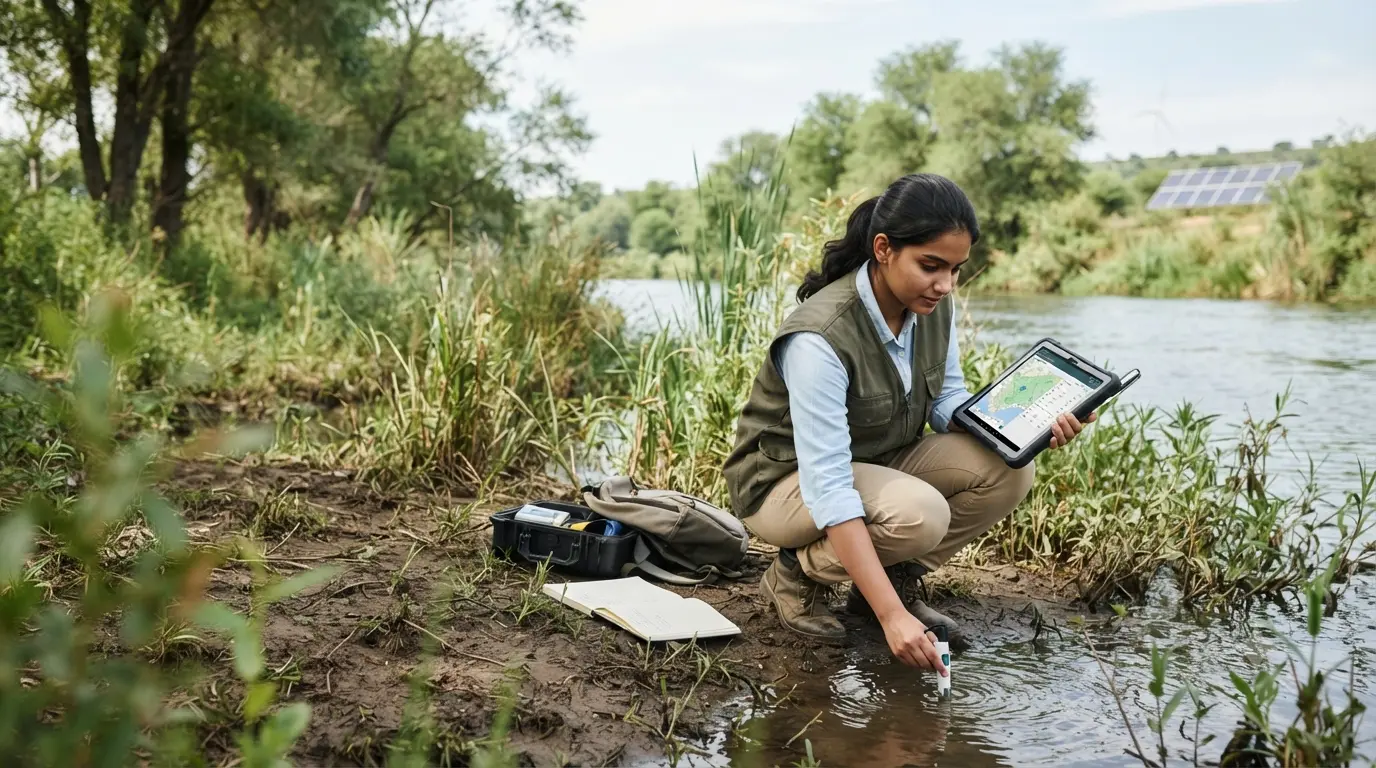
Ye field un careers me se ek hai jahan office work aur field work ka combination mil sakta hai. Kuch din reports aur analysis me nikalte hain, jabki kuch din industrial sites, rivers, forests ya project locations par inspections karte hue guzarte hain.
Example Workday Schedule
- 09:00 AM: Environmental data aur monitoring reports review karna
- 10:30 AM: Industrial site ya project area inspection
- 12:00 PM: Sample collection aur field observations
- 01:30 PM: Team discussion aur findings review
- 03:00 PM: Compliance documentation aur reporting
- 04:30 PM: Risk assessment ya environmental impact analysis
- 06:00 PM: Recommendations aur project planning
What Makes This Career Different?
Environmental work ka practical impact project ke type par depend karta hai. Kisi professional ka contribution pollution monitoring ya water-quality assessment tak ho sakta hai, jabki another role sustainability planning, waste reduction, compliance ya environmental data analysis se connected ho sakta hai. Students ko “purpose” ko sirf statement ki tarah dekhne ke bajay ye samajhna chahiye ki selected role me actual responsibilities kya hongi.
Har environmental job jungle ya wildlife se related nahi hoti. Aaj environmental professionals corporate offices, consulting firms, manufacturing industries, research organizations, NGOs aur government departments sabhi jagah kaam kar rahe hain.
Frequently Asked Questions (FAQs)
1. Can Arts students build a career in the environmental sector?
Yes. Although many technical environmental roles require a Science background, Arts students can also enter this field through subjects like Environmental Studies, Geography, Public Policy, Sustainability Management, Environmental Law, Social Work, and NGO management. With the right course and practical skills, several career opportunities are available.
2. Which environmental jobs usually offer higher salaries?
Roles such as Sustainability Consultant, ESG Specialist, Environmental Engineer, Climate Risk Analyst, Renewable Energy Consultant, and Environmental Project Manager generally offer better salary growth. Income depends on your education, experience, technical skills, certifications, and the organization you work for.
3. Are environmental jobs available in both the government and private sectors?
Yes. Government departments like Pollution Control Boards, Forest Departments, Municipal Corporations, and environmental agencies recruit professionals regularly. Private companies, consulting firms, manufacturing industries, renewable energy companies, and NGOs also hire environmental experts for various projects.
4. Which skills can improve career growth in environmental jobs?
Practical skills such as GIS mapping, Environmental Impact Assessment (EIA), ESG reporting, sustainability planning, carbon accounting, environmental data analysis, project management, and report writing can significantly improve your career opportunities and long-term salary growth.
5. Is fieldwork compulsory in every environmental career?
Not always. Some jobs involve regular site visits, inspections, and surveys, while others are mostly office-based and focus on research, consulting, compliance, reporting, policy development, or sustainability planning. The amount of fieldwork depends on your chosen specialization.
6. What is the future scope of environmental careers in India?
The future looks promising because India is investing in renewable energy, climate action, waste management, sustainable infrastructure, and environmental compliance. As green industries continue to grow, the demand for skilled environmental professionals is also expected to increase.
7. Can I pursue higher studies after completing an environmental degree?
Yes. Students can continue with postgraduate programs such as M.Sc. Environmental Science, Environmental Engineering, Climate Change, Forestry, Sustainability Management, Renewable Energy, or even pursue research through a Ph.D. Specialization often opens the door to higher-level positions and research careers.
8. Is an environmental career a good choice for the next 10 years?
For students who are interested in sustainability, environmental protection, research, and solving real-world challenges, this field has strong long-term potential. Continuous learning, internships, and updated technical skills will play an important role in achieving career success over the coming years.