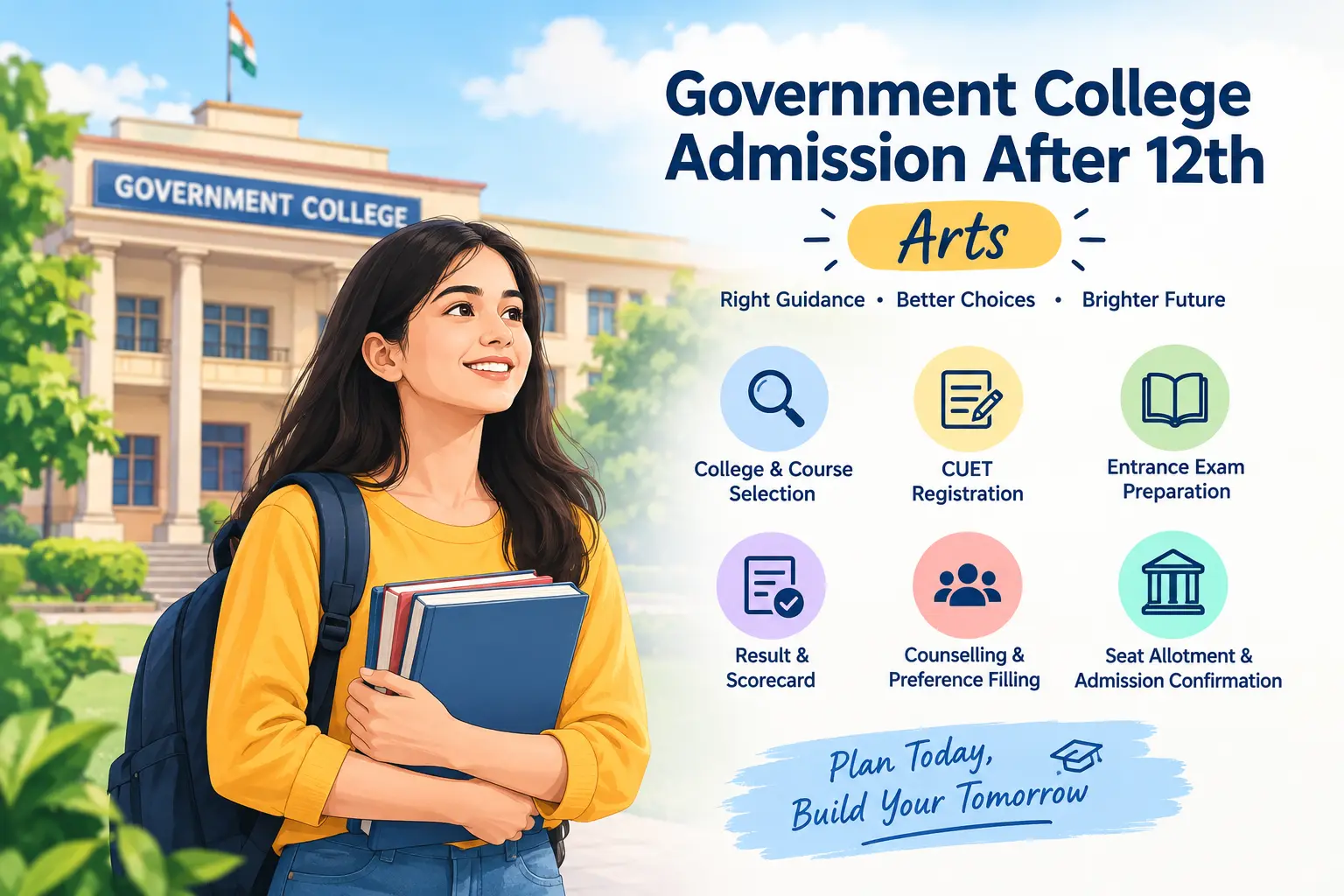
Introduction
12th Arts complete karne ke baad sabse important decision hota hai sahi college aur sahi course choose karna. India me har saal lakhon students Arts, Humanities aur Social Science streams me higher education ke liye apply karte hain. In students ke liye government colleges aur universities ek strong academic foundation provide karte hain kyunki yahan quality education relatively low fees me available hoti hai.
Government universities in India combine affordability with structured academic learning, experienced faculty, and competitive peer environment, which helps students prepare for both higher studies and government exams.
Arts stream ko lekar kai students aur parents ke mind me misconceptions bhi hote hain ki Arts ke baad career options limited hote hain. Reality iske bilkul opposite hai. Aaj Arts graduates UPSC, State PCS, SSC, Teaching, Journalism, Law, Social Work, Public Policy, Content Writing, Digital Media, Research, International Relations aur Corporate Sector tak me successful careers bana rahe hain.
Agar aap graduation ke dauran right subjects choose karte hain aur saath hi communication skills, digital skills aur internships par focus karte hain, to Arts background se bhi career options can be expanded by combining the degree with relevant skills, internships and field-specific preparation. For example, a student interested in journalism can build writing and reporting samples, while an aspirant for competitive examinations can organise subject preparation alongside graduation. Government universities ka exposure aur academic culture students ko long-term career growth ke liye prepare karta hai.
Is detailed guide me aapko India ke top government colleges aur universities, admission process, CUET information, approximate fees structure, state-wise college options, scholarship opportunities aur future career scope ke baare me complete information milegi. Is article ka objective students aur parents dono ko informed decision lene me help karna hai taaki admission process simple aur confusion-free ban sake.
Chahe aap BA, BA (Hons), Political Science, History, English, Sociology, Psychology ya kisi bhi Humanities course me admission lena chahte ho, yeh guide aapko suitable government college identify karne aur future planning practical reference ke roop me use ki ja sakti hai while comparing colleges, admission routes, fee ranges, scholarships and the preparation steps involved in undergraduate applications.
About the Author, Editorial Policy & Trust
This article is created to guide students choosing government colleges after 12th Arts in India. Information is based on official university websites (DU, BHU, JMI), CUET official portal, and publicly available admission notifications. Readers are advised to verify latest updates from official sources. We regularly review and update content to maintain accuracy.
Our goal is to provide clear, structured and updated education guidance so students can make informed career decisions. We avoid misleading or promotional claims.
Author
Aarti Singh (Education Content Writer)
Specialized in Indian college admissions, CUET guidance and career planning content.
The information in this guide is checked against university admission pages and CUET-related updates available for the current admission cycle. Because eligibility rules, programme lists, fees and application dates can change, students should use the linked official sources to confirm the details that apply to their chosen course before submitting an application.
Trust Factors
- 1. Information compiled from official university and government sources
- 2. Content reviewed and updated for 2027 admission cycle
- 3. CUET and UGC guidelines considered
- 4. Non-promotional and educational purpose content
Last updated: October 2026 | This page is for educational guidance only. Please verify admission details from official university websites before applying.
Government Universities in India for Arts Students
India me kai government universities aur public institutions Arts aur Humanities ke undergraduate programmes offer karte hain. Inhe compare karte waqt students ko sirf institution ka naam ya general reputation dekhne ke bajay available courses, admission route, eligibility, fees, location, accommodation aur academic resources ko separately check karna chahiye. Neeche kuch commonly considered institutions ka course aur admission perspective se overview diya gaya hai.
1. Delhi University (DU)
Location: Delhi is the main academic base for the University of Delhi and its affiliated colleges, giving students access to a large university ecosystem along with libraries, student societies, academic events, internships and other opportunities available across the capital.
Popular Courses: Arts and Humanities applicants can explore programmes such as BA and BA (Hons), with subjects including Political Science, English, History, Economics, Sociology and Psychology; the exact combination depends on the college and programme offered in the admission cycle.
Approx Fees: The page lists an indicative annual fee range of ₹5,000–₹15,000 for DU-related Arts study. Students should treat this only as a planning figure because college-specific tuition, examination, student services and other charges can differ.
Admission Process: The guide identifies CUET as the admission route for DU-related undergraduate applications. Before selecting subjects in the application form, students should match their choices with the eligibility and subject requirements published for the specific programme.
Delhi University ek central university hai jiske affiliated colleges me Arts aur Humanities ke kai undergraduate programmes available hain. DU ke colleges jaise Miranda House, Hindu College, Lady Shri Ram College, Hansraj College aur Kirori Mal College Arts aur Humanities ke programmes ke liye widely known hain.
University ka academic environment competitive exams ki preparation karne wale students ke liye bhi beneficial mana jata hai. UPSC, SSC aur State PCS aspirants ke liye DU ka peer group aur exposure kaafi helpful rehta hai. Delhi me location hone ke karan students ko internships, seminars, workshops aur networking opportunities bhi zyada milti hain.
Arts students ke liye DU me subject combinations aur specialization options kaafi diverse hain, jisse students apne future plans ke according course choose kar sakte hain.
Official Website2. Banaras Hindu University (BHU)
Location: Banaras Hindu University is located in Varanasi, Uttar Pradesh, and its residential campus provides students with access to academic departments, libraries, student activities and the wider university environment while they pursue undergraduate study.
Popular Courses: The guide lists BA Arts and Social Sciences along with subjects such as History, Sociology, Political Science and Psychology. Students should check the current programme list because course names, combinations and eligibility conditions may vary by admission cycle.
Approx Fees: An indicative annual range of ₹4,000–₹10,000 is given in this guide for planning purposes. The actual amount can vary according to the programme, university charges and other applicable expenses, so applicants should confirm the latest fee structure before admission.
Admission Process: The guide describes BHU undergraduate admission as CUET-based for the relevant programmes. Applicants should verify the current admission bulletin for programme-specific eligibility, subject combinations, application requirements and the steps required after the entrance examination.
Banaras Hindu University India ki oldest aur most respected universities me se ek hai. BHU ka campus Asia ke largest residential campuses me count kiya jata hai. Academic discipline aur research-oriented environment is university ki major strengths hain.
Arts students ko yahan strong theoretical knowledge ke saath research exposure bhi milta hai. University library, cultural activities aur student support systems kaafi developed hain. Government exams aur higher studies ke liye BHU ka academic foundation students ko long-term advantage provide karta hai.
BHU ko compare karte waqt students ko sirf fee range nahi dekhni chahiye. Programme availability, subject combination, residential campus requirements, hostel cost, university rules aur apne preferred career direction ko bhi saath me evaluate karein. Is tarah BHU ka option student ke actual academic aur financial needs ke according judge kiya ja sakta hai.
Official Website3. Jamia Millia Islamia (JMI)
Location: Jamia Millia Islamia is situated in New Delhi, giving students studying Humanities, Media and related subjects access to the academic environment of the capital as well as organisations, events and professional activities located in the city.
Popular Courses: The page highlights BA Humanities, Journalism, Mass Communication, Languages and Social Sciences among the areas relevant to Arts students. Applicants should compare the current programme list and eligibility rules before adding a course to their application.
Approx Fees: The guide gives an indicative annual range of ₹6,000–₹15,000 for planning purposes. Students should not treat this as a fixed amount because programme-specific fees and additional university charges can change between admission cycles.
Jamia Millia Islamia Arts, Media, Journalism aur Humanities education ke liye nationally recognized institution hai. University ka focus academic excellence ke saath practical learning aur industry exposure par bhi rehta hai.
Students interested in Media, Communication or Journalism can compare JMI's relevant programmes with other institutions by checking course structure, eligibility, admission route, location and available academic activities. Delhi location ki wajah se students ko media houses aur professional organizations ke saath internships ke opportunities bhi mil sakti hain.
JMI ka campus experience classroom learning ke saath societies, cultural activities, seminars, student projects aur communication-based participation ka scope bhi de sakta hai. Media ya Humanities ke students ke liye admission se pehle programme structure ke saath available student activities aur academic resources ko dekhna useful rahega, kyunki ye daily college experience ka important part ban sakte hain.
Official Website4. Aligarh Muslim University (AMU)
Location: Aligarh Muslim University is located in Aligarh, Uttar Pradesh. Students considering Humanities programmes can evaluate the location alongside course availability, campus facilities, accommodation requirements and the overall cost of studying away from home.
Popular Courses: The guide includes BA and BA (Hons) options with subjects such as History, Political Science, Urdu, Sociology and Economics. Applicants should check the current AMU prospectus for the exact programme structure, subject combinations and eligibility conditions.
Approx Fees: This guide uses ₹5,000–₹12,000 as an indicative annual range for AMU Arts study. The payable amount may differ by programme and additional university charges, so students should confirm the latest official fee details before submitting admission documents.
Aligarh Muslim University India ki most historic universities me se ek hai aur Humanities education ke field me iska strong reputation hai. University ka academic structure traditional values aur modern education dono ka balanced combination provide karta hai.
AMU me students ko quality classroom teaching ke saath libraries, cultural societies aur research resources ka access milta hai. Competitive exams aur higher education pursue karne wale students ke liye bhi university ka academic ecosystem supportive mana jata hai.
AMU ko shortlist karne wale students ko fee ke saath course structure, available Humanities subjects, campus accommodation, admission requirements aur location-related expenses bhi compare karne chahiye. Different states se apply karne wale students ke liye hostel availability aur total yearly cost ko pehle samajhna especially useful hai.
Official WebsiteIn universities me admission competition kaafi high hota hai. Isliye students ko CUET preparation, subject selection aur application process par early stage se focus karna chahiye. Sahi university selection future academic growth, career opportunities aur personal development par long-term impact daal sakta hai.
State-Wise Top Government Colleges & Universities for Arts Students
India ke alag-alag states me Arts, Humanities aur Social Sciences ke liye kai reputed government universities aur colleges available hain. College select karte waqt students ko sirf ranking nahi balki admission process, fees, course options, location aur career opportunities ko bhi compare karna chahiye.
| State | College / University | Location | Popular Arts Courses | Admission Process | Approx Annual Fees | Best For |
|---|---|---|---|---|---|---|
| Delhi | Miranda House (DU) | Delhi | English, History, Political Science, Sociology | CUET | ₹12,000–₹18,000 | Top-ranked Arts Education |
| Delhi | Hindu College (DU) | Delhi | Political Science, History, English, Philosophy | CUET | ₹15,000–₹22,000 | UPSC & Higher Studies |
| Delhi | Lady Shri Ram College (DU) | Delhi | Psychology, English, Political Science | CUET | ₹18,000–₹25,000 | Women Students & Humanities |
| Uttar Pradesh | Banaras Hindu University (BHU) | Varanasi | History, Sociology, Political Science, Psychology | CUET | ₹4,000–₹10,000 | Research & Competitive Exams |
| Uttar Pradesh | University of Allahabad | Prayagraj | History, Economics, Ancient History, Sociology | CUET | ₹4,000–₹8,000 | Government Exam Aspirants |
| Uttar Pradesh | Lucknow University | Lucknow | Political Science, English, Public Administration | Merit / Entrance | ₹8,000–₹20,000 | State-Level Opportunities |
| Maharashtra | University of Mumbai | Mumbai | History, Sociology, Psychology, Economics | Merit Based | ₹6,000–₹15,000 | Urban Exposure & Careers |
| Maharashtra | Fergusson College | Pune | Psychology, English, Philosophy, Economics | Merit Based | ₹8,000–₹20,000 | Academic Excellence |
| West Bengal | Jadavpur University | Kolkata | Literature, Philosophy, Comparative Studies | Merit / Entrance | ₹3,000–₹10,000 | Research & Higher Education |
| West Bengal | Presidency University | Kolkata | History, Sociology, Political Science | Merit Based | ₹5,000–₹12,000 | Academic Excellence |
| Tamil Nadu | University of Madras | Chennai | English, History, Economics, Sociology | Merit Based | ₹5,000–₹15,000 | South India Students |
| Tamil Nadu | Presidency College | Chennai | History, Political Science, Economics | Merit Based | ₹3,000–₹8,000 | Affordable Government Education |
| Bihar | Patna University | Patna | History, Political Science, Sociology | Merit / Entrance | ₹4,000–₹10,000 | Civil Services Preparation |
| Rajasthan | University of Rajasthan | Jaipur | History, Public Administration, Economics | Merit Based | ₹5,000–₹12,000 | State Government Exams |
| Madhya Pradesh | Barkatullah University | Bhopal | English, Sociology, Political Science | Merit Based | ₹4,000–₹10,000 | Affordable Higher Education |
Key Insights for Students
- Competitive-exam preparation: Delhi University, BHU, Allahabad University aur Patna University jaise institutions ko shortlist karte waqt students ko available subjects, academic schedule, location aur apni exam-preparation requirements compare karni chahiye.
- Research and higher studies: Jadavpur University, Presidency University aur BHU jaise institutions ko consider karne wale students ko research departments, postgraduate programmes, faculty information aur subject-specific academic resources check karne chahiye.
- Humanities and Social Sciences: Miranda House, Hindu College, LSR aur BHU me available Arts and Humanities programmes ko course structure, subject combination aur admission eligibility ke basis par compare kiya ja sakta hai.
- Fee comparison: BHU, Presidency College Chennai aur Jadavpur University ke listed fee structures ko compare karte waqt programme, academic year aur additional expenses ko separately check karein, kyunki total cost sirf tuition fee tak limited nahi hoti.
- Major-city study environment: Delhi University, University of Mumbai aur University of Madras jaise institutions major cities me located hain. Students admission se pehle location, accommodation cost, daily travel aur available academic activities ko apni requirements ke saath compare kar sakte hain.
- Women-focused college options: Miranda House aur Lady Shri Ram College women students ke liye dedicated college options hain. Applicants ko course availability, eligibility, admission process, fees aur current academic information official sources se verify karni chahiye.
Admission process aur fees structure har saal thoda change ho sakta hai. Isliye application submit karne se pehle respective university ki official admission notification aur prospectus zarur check karein.
Official Sources
Admission Process for Government Colleges After 12th Arts
12th Arts ke baad government college me admission lene ke liye students ko course eligibility, admission route, application dates aur required documents ki information pehle se samajh leni chahiye. Undergraduate admission ka process institution ke according change ho sakta hai, aur kai central universities me admission ke liye CUET score ka role hota hai. Isliye kisi ek common process ko follow karne ke bajay apni target university aur programme ki current admission requirements check karna zaroori hai.
Admission ka route university, programme aur applicable rules par depend karta hai. Kuch institutions CUET ke through applications process karte hain, kuch programmes me merit ya qualifying criteria relevant ho sakte hain, aur kuch universities ya specific courses ke liye separate entrance requirements bhi ho sakti hain. Application start karne se pehle official admission notice me eligibility aur selection process verify karna practical step rahega.
Step 1: College & Course Selection
Sabse pehle students ko apni academic interest aur future plans ke basis par suitable courses aur colleges ki shortlist banani chahiye. BA Programme ke alawa Political Science, History, English, Sociology, Psychology aur Economics jaise subjects wale programmes available ho sakte hain, lekin har university me course combination aur eligibility same nahi hoti. Isliye shortlist final karne se pehle programme details ko official source se compare karein.
- Apne preferred courses aur universities ki initial shortlist banayein.
- Programme ke subjects, eligibility aur admission requirements compare karein.
- Tuition fee ke saath location, accommodation aur other study expenses ko consider karein.
- Apne higher-study plans ya target career ke saath course structure ko match karein.
Step 2: CUET Registration
Jin universities aur programmes ke liye CUET applicable hai, unke applicants ko registration ke time subject selection par particular attention dena chahiye. Required subjects programme aur university ke according differ ho sakte hain, isliye form submit karne se pehle concerned programme ki eligibility aur subject requirements ko carefully verify karein. Application complete karte waqt personal details, uploaded documents aur selected subjects ko final submission se pehle dobara check karna bhi useful rahega.
- CUET application form official portal par prescribed deadline ke andar fill karein.
- Application instructions ke according required documents upload karein.
- Target programme ke rules ke according subjects select karein.
- Applicable application fee submit karke payment status verify karein.
- Confirmation page ya application record ko future reference ke liye save rakhein.
Step 3: Entrance Exam Preparation
CUET ya kisi university-specific entrance examination ki preparation karte waqt students ko pehle official syllabus aur examination pattern samajhna chahiye. Uske baad available study material ko topic-wise organise karke regular practice karna zyada useful rahega. Mock tests aur previous papers ka use preparation ki progress check karne aur exam ke time ko better manage karne ke liye kiya ja sakta hai.
- Required syllabus aur prescribed study material ko systematically revise karein.
- Previous year questions se question pattern aur difficulty ko samajhne ki practice karein.
- Regular mock tests ke through apni preparation assess karein.
- Exam me applicable subjects ke important topics par focused revision karein.
- Practice sessions me time allocation aur question-solving speed par bhi kaam karein.
Step 4: Result & Scorecard
Entrance examination ke baad result aur scorecard concerned examination authority ke schedule ke according available hote hain. Result publish hone par students ko apne marks, qualifying status aur scorecard me mentioned personal details ko verify kar lena chahiye. Scorecard ko digital aur, zarurat ho to, printed form me safely rakhna useful rahega, kyunki aage counselling, programme selection ya admission verification ke dauran iski requirement ho sakti hai.
- Scorecard me naam, roll number aur marks ki details verify karein.
- Category ya reservation-related information, agar applicable ho, check karein.
- Apne result ko concerned admission requirements ke context me samjhein.
- Previous-year cut-off information ko sirf reference ke liye use karein, final admission requirement ke liye current notice dekhein.
Step 5: Counselling & College Preference Filling
Result ke baad applicable universities apne admission portal par counselling ya preference-filling instructions provide kar sakti hain. Is stage par students ko available programmes, eligibility, seat availability aur apni academic preference ko dekhkar choices enter karni hoti hain. Preference submit karne se pehle selected options ka order dobara review karna useful hai, kyunki allocation process university ke current admission rules ke according operate karta hai.
- Eligible programmes aur colleges ki available options identify karein.
- Apne course interest aur eligibility ke according preferences enter karein.
- Preference order submit karne se pehle details ko review karein.
- Counselling portal par correction, submission aur payment ki applicable dates note karein.
Step 6: Seat Allotment & Admission Confirmation
Preference-filling aur seat-allocation stage ke baad selected candidates ko university portal par allotted programme aur further admission instructions check karne hote hain. Seat accept karne ka option, fee payment, document verification aur joining formalities ki requirements institution ke rules par depend kar sakti hain. Students ko allotted seat ki conditions samajhkar prescribed process ko time par complete karna chahiye.
- Allotted college aur programme ki details portal par verify karein.
- Applicable admission fee submit karke payment confirmation save karein.
- Required original documents ya verified copies ke saath verification process complete karein.
- Migration certificate ya other additional documents ko sirf applicable requirement ke according arrange karein.
- Hostel ke liye separate application required ho to uski process aur deadline check karein.
Documents Required During Admission
Admission ke time required documents university aur programme ke rules ke according thode different ho sakte hain. Isliye students ko common documents ke saath apne selected college ki latest admission notice me di gayi document list bhi check karni chahiye. Original documents ke saath clear copies aur required digital files ready rakhne se verification ke waqt unnecessary delay ko avoid karna easier hota hai.
- Class 10 marksheet aur certificate ko academic proof ke roop me ready rakhein.
- Class 12 marksheet aur certificate ki original copy aur required photocopies prepare karein.
- CUET scorecard ko tab ready rakhein jab selected programme me CUET applicable ho.
- Aadhaar Card ya university dwara accepted identity proof available rakhein.
- Recent passport-size photographs required format me prepare karein.
- SC/ST/OBC/EWS category certificate, agar applicable ho, current requirements ke according arrange karein.
- Transfer Certificate (TC) ko previous institution se obtain karke rakhein, agar university maange.
- Migration Certificate ko sirf tab arrange karein jab concerned institution ki admission instructions me required ho.
Important Tips for Students
Admission process ke dauran students ko sirf application submit karne par focus nahi karna chahiye. Registration se lekar counselling aur final document verification tak har stage ki information alag ho sakti hai. Ek simple checklist maintain karke application details, documents, payments aur important dates ko track karna practical rahega.
- Target universities ke admission notices ko unke official portals par regularly review karein.
- CUET ya applicable entrance registration ko deadline ke close tak postpone karne se bachein.
- Ek se zyada suitable programmes ya colleges ko shortlist karke unki eligibility separately check karein.
- Required documents ki physical copies ke saath digital copies bhi organised folder me save rakhein.
- Application submit karne ke baad confirmation page, payment receipt aur important application details preserve karein.
- Counselling, preference submission, fee payment aur document verification ki dates ko personal calendar me note karein.
CUET applicable hone wale programmes ke applicants ko examination ke saath admission ke later stages ki requirements bhi samajhni chahiye. Exam result ke baad university-specific preference filling, counselling, seat allocation aur document verification jaise steps aa sakte hain, aur inki dates institution ke schedule par depend karti hain. Isliye CUET score milne ke baad sirf result ka wait karne ke bajay concerned university ke admission portal par further instructions ko regularly check karna useful rahega.
Essential Skills Arts Students Should Build During College (Deep Guide)
Arts stream me success sirf theory ya degree par depend nahi karti. Aaj ke time me government colleges me padhte hue students ko aise practical skills develop karne hote hain jo unhe jobs, higher studies (MA, MBA, LLB) aur competitive exams (UPSC, SSC, State PCS) me strong advantage dete hain, College life actually skill-building ka best phase hota hai, kyunki yahin par aapko learning, exposure, networking aur real-world experience ka balance milta hai.
1. Communication Skills (Most Important Skill)
- Clear aur confident speaking English aur Hindi dono me develop karein.
- Daily conversation me hesitation avoid karein.
- Group discussions aur classroom participation me actively involve ho.
- News reading aur debate watching se vocabulary improve karein.
Communication skill ko practical banane ke liye students classroom answers, presentations, interviews aur group discussions ko regular practice sessions ki tarah use kar sakte hain. UPSC interview, teaching, journalism ya corporate roles target karne wale students ke liye clear explanation, active listening aur structured answers teen useful areas hain jinhe college ke dauran gradually improve kiya ja sakta hai.
2. Writing Skills (Academic + Professional Growth)
- Essay writing aur answer writing practice karein.
- Reports, notes aur summaries banana seekhein.
- Grammar aur sentence structure par focus karein.
- Blog writing ya content writing start karein (optional but powerful skill).
Writing practice Arts students ko different academic and professional tasks handle karne me help karti hai, including structured answers, research notes, reports, articles and applications. College ke assignments ko deliberate writing practice ke roop me use kiya ja sakta hai.
3. Research & Analytical Skills
- Different sources se information collect karna seekhein.
- Data ko compare aur analyze karne ki habit develop karein.
- Case studies aur real-world examples ko samajhne ki practice karein.
- Library aur online academic resources ka use karein.
Research skill ka practical use tab develop hota hai jab students kisi topic par multiple reliable sources collect karke unke facts, arguments aur differences compare karte hain. Assignments, seminar papers, project work aur competitive-exam preparation ke dauran source checking aur evidence-based note making ki habit future academic work ke liye useful foundation bana sakti hai.
4. Public Speaking & Presentation Skills
- Debates, seminars aur presentations me participate karein.
- Confidence ke saath stage par bolne ki practice karein.
- Body language aur eye contact improve karein.
- Group discussions me apni opinion clearly present karein.
Public speaking ka practical development classroom presentations, seminars, debates aur group discussions se kiya ja sakta hai. Regular participation students ko ideas ko organised manner me explain karne, questions handle karne aur audience ke saamne clearly communicate karne ka experience deta hai.
5. Digital Literacy & Technical Skills
- MS Word, Excel aur PowerPoint ka proper use seekhein.
- Google Docs, Sheets aur online collaboration tools use karein.
- Basic AI tools aur research tools ko understand karein.
- Online learning platforms ka use karke self-learning develop karein.
Digital literacy ka matlab sirf computer chalana nahi hai. Arts students ko documents prepare karna, spreadsheets me basic data organise karna, presentations banana, online research sources evaluate karna aur collaborative tools use karna bhi seekhna chahiye. Ye skills assignments ke saath internships, office work aur online projects me bhi directly kaam aa sakti hain.
6. Critical Thinking & Problem-Solving
- Har topic ko blindly accept na karein, logically analyze karein.
- Different perspectives se issues ko samajhne ki habit banayein.
- Real-life problems ko structured way me solve karna seekhein.
- Decision-making skills ko improve karein.
Critical thinking develop karne ke liye students kisi issue ko ek hi viewpoint se dekhne ke bajay evidence, assumptions aur alternative explanations compare kar sakte hain. Ye habit essays, research assignments, interviews aur problem-solving situations me practical use hoti hai.
7. Time Management & Discipline
- Daily study schedule follow karein.
- Deadlines ko seriously lein.
- Study aur extracurricular activities ka balance banayein.
- Procrastination avoid karein.
Time management ka practical method ye hai ki students weekly classes, assignments, entrance preparation, skill practice aur personal commitments ko ek realistic schedule me divide karein. Isse last-minute workload identify karna aur pending tasks ko priority dena easier hota hai.
Final Insight
Jo Arts students sirf degree par focus karte hain, wo average results tak hi limited rehte hain. Lekin jo students college ke 3 years me communication, writing, research aur digital skills develop kar lete hain, unke paas graduation ke baad multiple career paths open ho jate hain.
Graduation ko skill development ke saath combine karna students ko academic knowledge ko practical work me apply karne ka opportunity deta hai. Communication, writing, research aur digital tools jaise skills ko projects, internships aur college activities ke through gradually build kiya ja sakta hai.
Higher Education Opportunities After Arts Graduation
BA ke baad next step student ke subject background aur career plan par depend karta hai. Kuch graduates MA ke through apne subject ko deepen karte hain, jabki others LLB, MBA, MSW, B.Ed ya kisi relevant professional route ki taraf move karte hain. Course choose karne se pehle eligibility, entrance requirement, duration aur desired career outcome compare karna practical approach rahega.
| Course | Duration | Best For |
|---|---|---|
| MA (Master of Arts) | 2 Years | Teaching & Research |
| LLB | 3 Years | Law Career |
| MBA | 2 Years | Management & Corporate Sector |
| MSW | 2 Years | Social Work |
| B.Ed | 2 Years | Teaching Profession |
Higher study ka decision tab zyada practical hota hai jab student apne target role ko pehle identify kare aur us role ki qualification requirement ko course ke saath match kare. For example, teaching, law, management aur social-sector careers ke entry requirements alag ho sakte hain, isliye sirf course ki popularity ke basis par admission lena avoid karna better hai.
Salary Expectations After Arts Graduation
Arts students ke liye salary completely career path par depend karti hai. Initial package kam ho sakta hai, lekin experience aur skills ke saath growth kaafi strong hoti hai.
| Career | Starting Salary | Experienced Salary |
|---|---|---|
| Teacher | ₹20,000–₹35,000/month | ₹50,000+/month |
| Journalist | ₹25,000–₹40,000/month | ₹80,000+/month |
| Content Writer | ₹20,000–₹35,000/month | ₹70,000+/month |
| Government Officer | As Per Pay Commission | ₹80,000+ Benefits |
| Social Worker | ₹20,000–₹40,000/month | ₹60,000+/month |
Arts graduates ki actual earning career field, qualification, location, employer, experience aur selection route ke according kaafi vary kar sakti hai. Isliye salary table ko fixed earning promise ke roop me nahi dekhna chahiye. Government recruitment me pay rules alag hote hain, jabki private roles me experience, portfolio, employer aur specialised skills compensation ko influence karte hain.
16. Common Mistakes Arts Students Should Avoid (Deep Guide)
Har saal lakhon Arts students government colleges aur universities me admission lete hain, lekin unme se kaafi students galat decisions, lack of awareness aur poor planning ki wajah se apni full potential growth achieve nahi kar pate. In mistakes ko samajhna aur avoid karna aapke career ko direct impact karta hai.
Sahi time par sahi decisions lene wale students hi BA ke baad UPSC, SSC, teaching, law, journalism ya higher studies me strong position bana pate hain.
1. Sirf College Brand Name Par Decision Lena
- Sirf famous college ka naam dekhkar admission lena galat approach hai.
- Har college ka course quality aur subject strength alag hota hai.
- Location, faculty aur syllabus ko ignore nahi karna chahiye.
College shortlist karte waqt course syllabus, available subjects, admission route, total fees, location, accommodation, academic resources aur apne intended career path ko ek saath compare karein. Is approach se sirf naam ke basis par shortlist banane ke bajay practical requirements clearly saamne aati hain.
2. Course Subjects Ko Samjhe Bina Admission Lena
- BA ya BA (Hons) me subject combination ko ignore karna common mistake hai.
- Har subject ka career impact alag hota hai (History, Pol Sci, Sociology, etc.).
- Interest aur future scope dono ko consider karna zaroori hai.
Subject combination choose karne se pehle students ko syllabus, assessment pattern aur future study requirements dekhni chahiye. Agar kisi particular subject ko MA, competitive examination ya professional course ke liye continue karna hai, to us requirement ko graduation planning ke saath match karna useful rahega.
3. CUET / Entrance Preparation Delay Karna
- Last moment preparation sabse badi mistake hoti hai.
- CUET syllabus vast hota hai aur consistent practice ki zarurat hoti hai.
- Mock tests aur revision ko ignore karna dangerous hota hai.
Entrance preparation ko application deadline ke bilkul paas start karne ke bajay students syllabus, required subjects, previous papers aur mock-test schedule ko pehle organise kar sakte hain. Isse preparation ko manageable weekly targets me divide karna possible hota hai.
4. Scholarship Opportunities Ignore Karna
- Bahut se students financial aid schemes check hi nahi karte.
- National Scholarship Portal aur state scholarships available hoti hain.
- Income-based aur merit-based support mil sakta hai.
Scholarship applications ko admission ke baad postpone karne se eligible students important deadlines miss kar sakte hain. Income, category, merit aur institution-specific requirements pehle check karke documents ready rakhna financial assistance ke available options ko evaluate karne me useful hota hai.
5. Skills Aur Internship Par Focus Na Karna
- Sirf academic studies par depend rehna outdated approach hai.
- Internships, volunteering aur projects ignore karna career gap create karta hai.
- Digital skills aur communication development important hai.
Employability improve karne ke liye students apni academic learning ko projects, internships, volunteering, writing samples, presentations ya digital assignments ke saath demonstrate kar sakte hain. Aise practical examples graduation ke baad applications aur interviews me apni capabilities explain karne me help karte hain.
6. Career Planning Late Karna
- Bahut se students final year tak decide nahi karte ki aage kya karna hai.
- UPSC, MBA, LLB ya teaching ke liye early roadmap zaroori hota hai.
- Without planning confusion aur time waste hota hai.
First year me career planning ka matlab immediately final career decide karna nahi hai. Students pehle different fields explore karke required qualifications, entrance examinations, internships aur skill gaps note kar sakte hain, phir second aur third year me apni preparation ko specific direction de sakte hain.
7. Guidance Ya Research Ignore Karna
- Without proper research random college selection karna risk hota hai.
- Teachers, seniors aur official websites se guidance lena important hai.
- Fake information ya rumors par depend nahi karna chahiye.
College research karte waqt official admission notices, programme pages, fee information, eligibility rules aur prospectus ko primary references ke roop me use karein. Social media posts ya third-party claims ko final information maan ne se pehle university source se cross-check karna safer process hai.
Final Advice
Arts stream me success ka formula simple hai — sahi information + sahi planning + consistent effort. Jo students in common mistakes ko avoid kar lete hain, unke paas graduation ke baad government jobs, higher studies aur professional careers ke multiple strong options hote hain.
Career Opportunities After 12th Arts & Graduation (Deep Guide)
Arts stream ko aksar log limited samajhte hain, lekin reality me is stream ke baad government, private aur corporate sector me bahut wide career opportunities available hoti hain. Agar student sahi skills, graduation aur preparation follow kare to Arts background se bhi high-paying aur respected careers build kiye ja sakte hain.
1. Government Jobs (Most Popular Career Path)
- UPSC Civil Services: IAS, IPS, IFS jaise top administrative posts.
- State PCS Exams: SDM, DSP, Tehsildar jaise posts.
- SSC Exams: CGL, CHSL, GD constable, clerical jobs.
- Railway Jobs: NTPC, Group D, Station Master, Clerk posts.
Arts graduates ke liye UPSC, State PCS, SSC aur railway examinations jaise routes available hain, lekin eligibility aur selection process examination ke according alag hota hai. Students ko graduation ke subject, age criteria, syllabus aur recruitment notification ko separately verify karna chahiye.
2. Teaching & Academic Field
- Primary Teacher (D.El.Ed / B.Ed required)
- PGT / TGT Teacher (School level teaching)
- College Professor (MA + NET/PhD required)
- Coaching Institute Faculty
Teaching career choose karne wale students ko school level aur higher-education requirements alag se samajhni chahiye. B.Ed, relevant postgraduate qualification, eligibility tests aur recruitment rules role aur institution ke according change ho sakte hain, isliye roadmap ko target teaching level ke saath match karein.
3. Journalism & Mass Communication
- News Reporter
- Content Writer / Editor
- Anchor / News Presenter
- Digital Media Specialist
- PR (Public Relations) Executive
Journalism aur digital media me students writing, interviewing, research, editing, presentation aur basic multimedia tools par practice kar sakte hain. College projects, campus publications aur internships in skills ko real assignments ke through test karne ka practical opportunity provide karte hain.
4. Law (LLB Career Path)
- BA ke baad LLB (3 years) course
- Corporate Lawyer
- Civil Lawyer
- Legal Advisor
- Judiciary Exams (Judge banne ka path)
Arts graduation ke baad law pursue karne wale students three-year LLB route explore kar sakte hain, subject to the applicable admission requirements. Legal career me आगे practice, corporate roles, legal research, compliance aur judiciary-related examinations jaise different directions available ho sakte hain.
5. Social Work & NGO Sector
- NGO Worker
- Social Development Officer
- Community Welfare Coordinator
- CSR (Corporate Social Responsibility) Roles
Social Work aur NGO-related roles me community programmes, field coordination, documentation, fundraising support, awareness campaigns aur development projects jaise tasks ho sakte hain. Students internships aur volunteering ke through is field ke day-to-day work ko graduation ke dauran samajh sakte hain.
6. Modern Career Options (New Age Fields)
- Content Writing & Blogging
- Digital Marketing
- Graphic Designing
- Freelancing (Upwork, Fiverr)
- Social Media Management
Digital careers explore karne wale Arts students content writing, digital marketing, graphic design, social media management ya freelancing jaise areas me portfolio-based learning start kar sakte hain. Income fixed nahi hoti; results skill level, client demand, experience, work quality aur market conditions par depend karte hain.
Final Insight
Arts stream me success ka secret sirf degree nahi, balki right direction, skills aur consistency hai. Agar student early stage se apna career goal decide kare, to UPSC se lekar digital careers tak unlimited opportunities available hoti hain.
Practical Career Planning: Arts degree ke saath relevant skills, internships, projects aur target-field preparation add karne se students graduation ke baad available pathways ko better understand aur pursue kar sakte hain. Exact route unke chosen field, qualification requirements aur personal career plan par depend karega.
Complete Comparison of Top Government Colleges for Arts Students
College choose karte waqt sirf ranking dekhna kaafi nahi hota. Ek student ko fees, admission process, academic environment, location, subjects aur future opportunities sab factors ko compare karna chahiye. Neeche diya gaya comparison table students aur parents dono ko practical understanding dene ke liye tayar kiya gaya hai.
| College / University | Location | Popular Arts Courses | Admission Process | Approx Annual Fees | Major Subjects Available | Course Duration | Best For |
|---|---|---|---|---|---|---|---|
| Delhi University (DU) | Delhi | BA, BA (Hons) | CUET | ₹5,000 - ₹15,000 | Political Science, English, History, Economics | 3 Years | Competitive Exams & Exposure |
| Banaras Hindu University (BHU) | Varanasi | BA Arts, Social Science | CUET | ₹4,000 - ₹10,000 | History, Sociology, Psychology | 3 Years | Academic Foundation |
| Jamia Millia Islamia | New Delhi | BA Humanities, Journalism | CUET / University Criteria | ₹6,000 - ₹15,000 | Journalism, Language Studies, History | 3 Years | Media & Communication |
| Aligarh Muslim University (AMU) | Aligarh | BA, BA Hons | University Admission Process | ₹5,000 - ₹12,000 | Political Science, Urdu, History | 3 Years | Traditional Humanities Education |
| Allahabad University | Prayagraj | BA Arts | CUET | ₹4,000 - ₹8,000 | Ancient History, Sociology, Economics | 3 Years | Government Exam Aspirants |
| Jadavpur University | Kolkata | Humanities Programs | Merit / Entrance | ₹3,000 - ₹10,000 | Literature, Philosophy, Comparative Studies | 3 Years | Research & Higher Studies |
| Presidency University | Kolkata | BA Humanities | Merit Based | ₹5,000 - ₹12,000 | History, Political Science, Sociology | 3 Years | Academic Excellence |
| University of Madras | Chennai | BA Arts | Merit Based | ₹5,000 - ₹15,000 | English, History, Economics | 3 Years | South India Students |
Key Insights for Students
Agar aapka primary goal UPSC, SSC ya State PCS jaise government exams crack karna hai, to Delhi University, BHU aur Allahabad University strong options maane jaate hain kyunki inka academic environment aur peer group competitive exams ke liye kaafi supportive hota hai.
Media, Journalism aur Communication field me career banana chahne wale students ke liye Jamia Millia Islamia ek practical choice ho sakti hai. Wahin research-oriented students Jadavpur University aur Presidency University jaise institutions consider kar sakte hain.
College comparison ko practical banane ke liye students course structure, subject availability, faculty information, location, scholarship possibilities, accommodation requirements aur apne post-graduation plans ko ek checklist me compare kar sakte hain. Isse admission decision ke relevant factors ek hi place par clearly visible rahenge.
17. Hostel, Campus Life & Student Experience
College sirf classroom tak limited nahi hota. Ek achha campus environment student ki personality, confidence aur communication skills ko bhi shape karta hai. Government universities me alag-alag states ke students aate hain, jisse cultural exposure naturally milta hai.
Delhi University, BHU aur JNU jaise institutions me active societies, debates, seminars, cultural festivals aur academic events regularly organize kiye jaate hain. Isse students ko books ke bahar bhi practical learning ka exposure milta hai.
Hostel planning me sirf room availability dekhna sufficient nahi hai. Students ko hostel eligibility, application deadline, accommodation charges, mess arrangements, rules, security provisions aur academic buildings se distance jaise points ko official college information ke saath compare karna chahiye before finalising their admission plans.
College activities students ko classroom learning ke alawa practical participation ka experience de sakti hain. Societies, debates, cultural events, volunteering, student projects aur group assignments ke through students communication, coordination, teamwork aur event-management jaise skills ko practice kar sakte hain.
18. Government College Admission Timeline After 12th
12th ke baad government college admission ki preparation ek hi date se start nahi hoti. Students ko pehle apne preferred courses aur universities identify karne chahiye, uske baad entrance requirements, application forms, examination dates aur counselling updates ko alag-alag track karna useful rahega. Ek simple monthly calendar banakar important deadlines note karne se admission process ko step by step manage karna easier ho jata hai.
| Period | What Students Can Work On |
|---|---|
| January – March | Apne preferred subjects, courses aur government colleges ke options research karke initial shortlist taiyar karein. |
| March – April | CUET ya applicable university entrance requirements check karein aur registration ke liye required information aur documents ready rakhein. |
| April – June | Entrance examination ki preparation ko syllabus aur selected subjects ke according organise karein, saath hi practice tests se apni preparation review karein. |
| June – July | Applicable entrance examination complete karein aur examination ke baad official portal par result aur further admission instructions ke updates check karte rahein. |
| July – August | Counselling, programme preference, document verification aur seat-allocation se related university instructions ko prescribed schedule ke according follow karein. |
| August – September | Admission offer ya seat confirmation ke baad fee payment, required documents, joining formalities aur applicable hostel or scholarship applications complete karein. |
Ye timeline ek general planning reference hai, fixed admission calendar nahi. Different universities aur programmes ke registration, entrance, counselling aur joining schedules ek doosre se alag ho sakte hain. Isliye students ko kisi previous year ki date ko final maan ne ke bajay har stage par concerned university ki latest admission notice aur, jahan applicable ho, CUET ki official information se dates confirm karni chahiye.
19. What Successful Arts Students Do Differently
College ke teen saal ko sirf examinations clear karne ke liye use karne ke bajay students academics ke saath reading, projects, internships, volunteering aur career preparation ko bhi gradually include kar sakte hain. In activities ka purpose ek fixed formula follow karna nahi, balki graduation tak academic knowledge ke saath practical evidence aur relevant skills develop karna hai.
- Regular newspaper aur current affairs reading.
- Classroom learning ke saath self-study.
- Internships aur volunteering opportunities explore karna.
- Strong writing aur communication skills develop karna.
- College ke first year se career planning start karna.
- Competitive exams ke syllabus ko early stage par samajhna.
Graduation ke dauran consistent work ka practical benefit tab dikhta hai jab student ke paas final year tak completed projects, writing samples, internship experience, certificates ya competitive-exam preparation ka record ho. Isliye har semester ke liye ek manageable academic target aur ek career-related activity decide karna progress ko track karne ka simple method ho sakta hai.
Arts Student Career Roadmap (Visual Guide)
| 12th Arts Pass | |||||
| ⬇ | |||||
| CUET / Admission Process | |||||
| ⬇ | |||||
| BA / BA (Hons) Degree | |||||
| ⬇ | |||||
| Skills + Internships + Certifications | |||||
| ⬇ | |||||
| Choose Career Path | |||||
|
Is roadmap ko ek strict career formula samajhne ke bajay apni situation ke according planning guide ki tarah use karein. 12th ke baad pehle suitable admission route aur course identify karein, phir graduation ke dauran apne subject se related activities, projects, internships ya additional learning ko gradually include karein. Degree complete hone ke aas-paas apni interests, academic background aur eligibility ko dekhkar competitive exams, further studies, professional courses ya employment me se appropriate direction decide ki ja sakti hai.
20. Scholarships & Financial Assistance for Arts Students
Kai students government college me admission lene ke baad bhi financial concerns ki wajah se higher education continue karne me difficulty face karte hain. Lekin India me central aur state governments ki taraf se multiple scholarship schemes available hain jo tuition fees, hostel expenses aur study materials ke liye financial support provide karti hain.
| Scholarship | Eligibility | Benefit |
|---|---|---|
| National Scholarship Portal (NSP) | Eligible Category & Income Criteria | Tuition Fee Assistance |
| Post Matric Scholarship | SC/ST/OBC Students | Academic Expenses Support |
| Central Sector Scholarship | Meritorious Students | Annual Financial Aid |
| State Government Scholarships | State-specific Eligibility | Fee Reimbursement |
Admission lene ke turant baad scholarship notifications regularly check karna important hai kyunki kai schemes limited application window ke saath aati hain. Scholarship support se students financial pressure kam karke academics aur skill development par zyada focus kar sakte hain.
- Required documents pehle se ready rakhein.
- Income certificate aur caste certificate timely update karayein.
- College scholarship cell se information verify karein.
- Application deadlines miss na karein.
Recommended Books for Arts Students
Disclosure: Is section me diye gaye kuch book links affiliate links ho sakte hain. Agar aap in links ke through purchase karte hain, to website ko bina kisi extra cost ke chhota commission mil sakta hai. Book purchase karna completely optional hai, aur students ko apni study requirements ke according book select karni chahiye.
UPSC Book NCERT Guide GK 2027Frequently Asked Questions (FAQs)
Government Arts colleges me admission lene se pehle students aur parents ke mind me kai practical questions hote hain. Neeche diye gaye FAQs real student queries ko dhyan me rakhkar simple aur easy language me prepare kiye gaye hain.
Q1. Arts students ke liye India ke best government colleges kaun se hain?
India me ek single “best” government college sabhi Arts students ke liye same nahi hota. DU, BHU, JMI, Allahabad University, AMU aur other institutions ko compare karte waqt programme availability, admission route, subject combination, fee structure, location, accommodation aur student ke post-graduation or career plan ko saath me dekhein.
Q2. Government Arts colleges me admission ka process kya hota hai?
Admission route university aur programme ke according check karna zaroori hai. Jahan CUET applicable ho, applicants ko CUET registration ke baad programme-specific eligibility aur subject requirements verify karni hoti hain. Uske baad concerned university ke counselling, preference-filling aur seat-confirmation instructions follow kiye jaate hain.
Q3. Government Arts college ki fees kitni hoti hai?
Government colleges ki sabse badi advantage unki affordable fees hoti hai. Zyada tar Arts courses ki annual fees lagbhag ₹3,000 se ₹15,000 ke beech hoti hai, jabki kuch reputed central universities me ye ₹20,000–₹25,000 tak bhi ho sakti hai. Hostel, examination aur other charges alag ho sakte hain.
Q4. Kya government colleges me scholarship bhi milti hai?
Haan. Bahut se government colleges me National Scholarship Portal (NSP), state government scholarships, SC/ST/OBC/EWS schemes aur merit-based scholarships available hoti hain. Agar aap eligibility criteria complete karte hain, to aapki education cost kaafi had tak kam ho sakti hai.
Q5. Kya government Arts college se padhne ke baad achhi job mil sakti hai?
Government college se graduation ke baad career route degree, eligibility aur additional preparation par depend karta hai. Arts graduates competitive examinations, teaching, journalism, law, management, social-sector work aur private employment jaise different pathways explore kar sakte hain. Har route ki qualification aur selection requirements alag hoti hain, isliye target field ko pehle identify karna useful hai.
Q6. Kya hostel aur campus facilities government colleges me available hoti hain?
Kaafi reputed government universities hostel, library, sports complex, laboratories, Wi-Fi campus, career guidance cell aur placement support jaise facilities provide karti hain. Lekin har college ki facilities alag ho sakti hain, isliye admission se pehle official website ya prospectus zarur check karein.
Q7. Government college choose karte waqt kin baaton ka dhyan rakhna chahiye?
Sirf ranking dekhkar decision na lein. Course quality, faculty, placement support, internship opportunities, campus environment, hostel availability, fees, location aur alumni record jaise factors ko compare karna bhi bahut important hai. Agar possible ho, to admission se pehle college ki official website aur latest admission brochure bhi zarur dekh lein.
Final Note
Government college me admission lene se pehle sirf college name ya previous-year information par depend karna sahi approach nahi hai. Course eligibility, admission route, fees, required documents, counselling schedule aur available programmes me changes ho sakte hain. Isliye application submit karne se pehle concerned university ki current admission notice aur programme details carefully check karein. Agar admission CUET ke through ho raha hai, to CUET portal par latest notification, subject requirements aur important dates bhi verify karna useful rahega. Is tarah students outdated information ke basis par form bharne ya deadline miss karne jaise common problems se bach sakte hain.