Introduction: Why Do So Many Arts Students Choose Government Jobs After 12th?
12th Arts complete karne ke baad students ke paas career choose karne ke liye kaafi options hote hain. Kuch students graduation ke through apni studies continue karte hain, kuch professional ya skill-based courses select karte hain, jabki kuch students aise career options dekhte hain jahan preparation ke baad relatively early stage par employment opportunity mil sake. Isi context me government jobs ka option kaafi students ko attract karta hai, kyunki 12th ke baad bhi kuch recruitments ke liye graduation ki requirement nahi hoti. SSC, Railway, Police, Defence aur Postal Department jaise areas me alag-alag posts aur recruitment processes hote hain, isliye Arts background wale students apni qualification, interest aur eligibility ke according options explore kar sakte hain.
Government examination ki preparation ko simple samajhna bhi theek nahi hoga, kyunki ek hi post ke liye large number of candidates participate kar sakte hain aur selection process recruitment ke rules ke according written examination, skill test, physical test, document verification ya doosre stages ko include kar sakta hai. Isliye 12th ke baad government job target karne wale student ke liye sirf form bharna enough nahi hota; usse pehle yeh decide karna useful hota hai ki kaun se examinations uski qualification aur interest ke saath match karte hain. Uske baad syllabus ko manageable parts me divide karke daily study routine, question practice aur revision ka system banana preparation ko zyada organised bana sakta hai.
12th Arts ke baad government job ki preparation start karne se pehle student ko apni situation ko realistically assess karna chahiye. Agar kisi student ko general awareness, language, reasoning, administrative work, public-facing responsibilities ya disciplined routine me interest hai, to different recruitment categories ko compare karke suitable options shortlist kiye ja sakte hain. Saath hi, preparation ke liye required time aur competition ko bhi seriously consider karna zaroori hai. Is guide ka purpose kisi ek job ko universally suitable batana nahi hai, balki 12th Arts ke baad available government career routes, eligibility, examination pattern, preparation approach aur practical considerations ko ek jagah samajhne me help karna hai.
Stable income and structured promotion opportunities.
Government allowances and future career path security.
Opportunity to serve society and work in reputed departments.
Clear recruitment process and transparent examinations.
Multiple career options for both boys and girls.
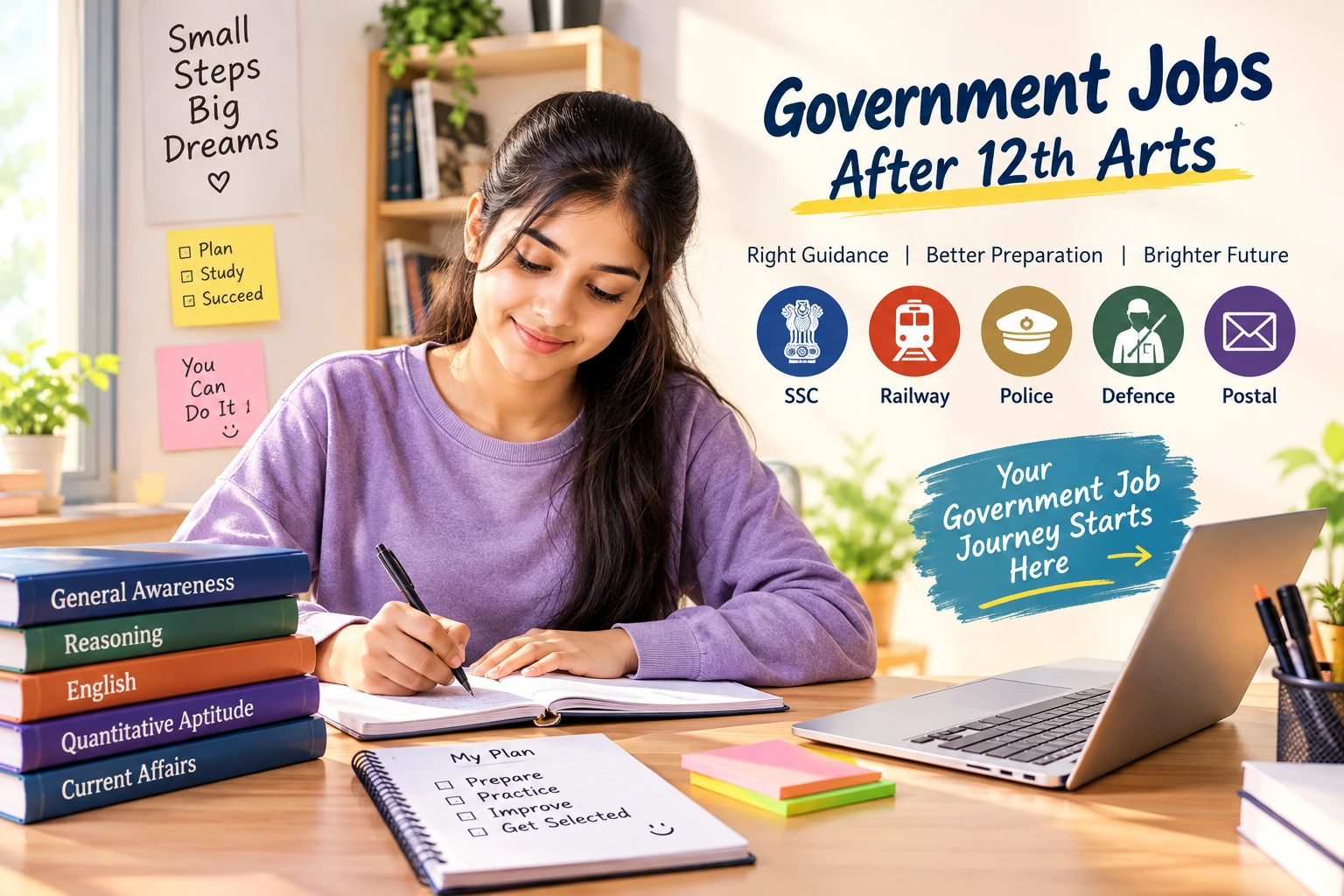
Best Government Jobs After 12th Arts (Detailed Career Guide)
12th Arts ke baad government sector me opportunities sirf ek ya do exams tak limited nahi hain. Aaj ke samay me central government, state government, defence services, railways aur public service departments me kai aise career options available hain jinke liye students directly 12th ke baad apply kar sakte hain, Government jobs ki popularity ka sabse bada reason unki long-term stability, fixed salary, promotion opportunities aur social respect hai. Har job ka nature, syllabus, selection process aur career growth alag hoti hai. Isliye kisi bhi exam ki preparation shuru karne se pehle uske baare me detail me jankari hona bahut zaroori hai.
1. SSC CHSL (Staff Selection Commission Combined Higher Secondary Level)
SSC CHSL 12th pass students ke liye sabse popular central government examinations me se ek mana jata hai. Is exam ke through Lower Division Clerk (LDC), Junior Secretariat Assistant (JSA) aur Data Entry Operator (DEO) jaise posts par recruitment hoti hai, SSC CHSL un students ke liye relevant option ho sakta hai jo Class 12 ke baad central government ke office-oriented roles explore karna chahte hain. Is recruitment ke through clerical, administrative aur data-entry nature ki responsibilities wali posts mil sakti hain, lekin exact post aur selection stages notification ke according change ho sakte hain. Agar kisi student ko desk-based work, documents handle karna, computer-related tasks aur structured office environment pasand hai, to usse CHSL ke different posts ka work profile pehle samajhna chahiye. Preparation shuru karne se pehle eligibility, age requirement, typing ya skill-test conditions aur current notification ko check karna practical approach rahega.
- Job Type: Central Government Office Job
- Approximate Salary: ₹25,000 – ₹40,000 per month
- Main Subjects: English, Reasoning, Mathematics and General Awareness
- Selection Process: Computer Based Examination and Skill Test
- Work Environment: Office and Administrative Roles
- Career Growth: Clerk se Senior Assistant aur Section Officer tak promotion opportunities.
- Best For: Students who prefer stable office jobs and administrative work.
2. Railway NTPC (Undergraduate Level)
Indian Railways duniya ke sabse bade employers me se ek hai. Railway NTPC ke through 12th pass students clerical aur administrative positions ke liye apply kar sakte hain, Railway NTPC ko consider karte waqt sirf railway naam ya salary figure par focus karna enough nahi hota. Undergraduate-level posts ka work profile, qualification, typing requirement, medical standards aur selection stages post ke according different ho sakte hain. Kuch roles office aur clerical work se related hote hain, jabki railway system ke andar operational responsibilities bhi ho sakti hain. Isliye student ko pehle available post ka actual nature samajhna chahiye aur phir apni qualification, working preference aur preparation level ke saath uska comparison karna chahiye. Current recruitment notification hi eligibility aur selection details verify karne ka final reference hona chahiye.
- Job Type: Railway Administration and Clerical Positions
- Approximate Salary: ₹22,000 – ₹45,000 per month
- Main Subjects: Mathematics, Reasoning and General Awareness
- Selection Process: Computer Based Test and Skill Test (for some posts)
- Work Environment: Office and Operational Departments
- Career Growth: Clerk se Supervisor aur Senior Administrative Roles tak promotion.
- Best For: Students looking for stable long-term government careers.
3. Police Constable Recruitment
Police Department me career un students ke liye ek accha option ho sakta hai jo public service, discipline aur active work environment ko pasand karte hain. State governments regular basis par constable recruitment notifications release karti rehti hain, Police Constable recruitment me written examination ke saath physical preparation ko bhi beginning se plan karna useful hota hai. Written stage me General Knowledge, Reasoning, Current Affairs ya state-specific subjects aa sakte hain, jabki physical stage me running, endurance, height, chest ya other standards recruitment ke according apply ho sakte hain. Isliye candidate ko notification release hone ka wait karke fitness start karne ke bajay apni target recruitment ke previous standards aur current requirements ko samajhkar routine banana chahiye. Academic study aur physical training ko daily schedule me balance karne se preparation last stage par suddenly pressure create nahi karti.
- Job Type: State Government Public Service Job
- Approximate Salary: ₹25,000 – ₹50,000 per month
- Main Subjects: General Knowledge, Reasoning and Current Affairs
- Selection Process: Written Exam, Physical Test and Medical Examination
- Work Environment: Field and Public Service Duties
- Career Growth: Constable se Inspector aur senior positions tak promotion opportunities.
- Best For: Students interested in public service and active careers.
4. NDA (National Defence Academy)
NDA un candidates ke liye defence-entry route hai jo school education ke baad officer training pathway ko explore karna chahte hain. Is preparation me Mathematics aur General Ability Test ke written syllabus ke saath SSB assessment aur medical requirements ko bhi samajhna padta hai. Candidate ko communication, reasoning, general awareness aur problem-solving ke saath apni overall preparation ko structured rakhna hota hai. NDA ke liye educational stream, age conditions aur other eligibility requirements specific notification ke according verify karni chahiye, kyunki sirf 12th pass hona har candidate ke liye automatically complete eligibility prove nahi karta.
- Job Type: Defence Officer Entry
- Approximate Salary: ₹56,100+ (training and service conditions ke according)
- Main Subjects: Mathematics and General Ability Test
- Selection Process: Written Examination, SSB Interview and Medical Test
- Work Environment: Defence and Leadership Roles
- Career Growth: Officer-level promotions and leadership positions.
- Best For: Students who want a disciplined and prestigious career.
5. Postal Department Jobs
Postal Department ki recruitment ko samajhne ke liye candidate ko vacancy-wise conditions dekhni chahiye, kyunki different posts ka qualification aur selection method same nahi hota. Kuch opportunities merit-based criteria ke saath aa sakti hain, jabki other posts me examination, skill requirement ya additional conditions notification me mention ho sakti hain. 12th ke baad postal sector explore karne wale students ko salary ko primary deciding factor banane ke bajay post ka work profile, eligibility, age requirement, location-related conditions aur promotion structure bhi check karna chahiye. Application submit karne se pehle concerned recruitment notification ki latest details verify karna zaroori hai.
- Job Type: Postal and Administrative Services
- Approximate Salary: ₹12,000 – ₹29,000 per month
- Main Subjects: General Knowledge and Basic Aptitude
- Selection Process: Merit Based or Notification-Based Recruitment
- Career Growth: Departmental promotions and higher administrative opportunities.
- Best For: Students looking for comparatively simpler entry opportunities.
6. Forest Guard and State Government Vacancies
Forest Guard, Home Guard aur similar state-level vacancies ka recruitment pattern concerned state aur department par depend karta hai. Written examination ke subjects ke alawa kuch posts me physical standards, endurance test, medical examination ya field-related requirements bhi ho sakti hain. Isliye interested students ko apne target state ki recruitment authority ka notification padhkar qualification, age limit aur physical criteria samajhna chahiye. Field-oriented government work me interest hona useful hai, lekin preparation decide karte waqt daily duties aur selection stages ko bhi realistically consider karna chahiye. Vacancy-specific conditions ko general government-job rules samajhna avoid karein.
- Job Type: State Government Service
- Approximate Salary: State rules ke according vary karti hai.
- Main Subjects: General Knowledge, Reasoning and Current Affairs
- Selection Process: Written Examination and Physical Tests (for some posts)
- Career Growth: Department-specific promotion opportunities.
- Best For: Students interested in state government careers and field work.
B. Best Stable Career: Railway NTPC
C. Best Public Service Job: Police Department
D. Best Prestigious Career: NDA
E. Best Beginner-Friendly Option: Postal Department
F. Best State-Level Opportunities: Forest Guard and Other State Vacancies
Government Jobs Salary Comparison After 12th Arts
Government job ki salary compare karte waqt sirf monthly figure dekhna complete picture nahi deta. Basic pay ke saath applicable Dearness Allowance, House Rent Allowance, Travel Allowance, medical facilities, deductions aur posting location ke factors actual amount ko affect kar sakte hain. Different departments aur posts ke pay levels bhi alag ho sakte hain, isliye ek recruitment ki salary ko doosri recruitment par directly apply nahi karna chahiye. Neeche diya gaya comparison broad reference ke liye hai; actual pay, allowances aur service benefits ko current recruitment notification aur applicable government pay rules se verify karna chahiye.
| Government Job | Approximate Starting Salary | Additional Benefits | Long-Term Growth |
|---|---|---|---|
| SSC CHSL (LDC, JSA, DEO) | ₹25,000 – ₹40,000 per month | DA, HRA, TA, Pension Benefits as per rules | Promotion to Senior Assistant and Officer Level |
| Railway NTPC (Undergraduate Posts) | ₹22,000 – ₹38,000 per month | Travel Benefits, Allowances, Medical Facilities | Senior Clerk and Supervisor Roles |
| Police Constable | ₹25,000 – ₹50,000 per month | Risk Allowance, Medical Benefits and Other State Benefits | Constable to Inspector and Higher Positions |
| Defence Services | ₹30,000 – ₹70,000+ per month | Accommodation, Medical and Service Benefits | Promotion to Senior Ranks and Leadership Positions |
| Postal Department Jobs | ₹12,000 – ₹29,000 per month | Government Service Benefits and Departmental Promotions | Higher Administrative Opportunities |
Is guide me diye gaye salary figures indicative references hain, guaranteed take-home salary nahi. Actual monthly amount post ke pay level, applicable allowances, posting city, deductions, training stage aur government revisions ke according change ho sakta hai. Defence, Police, Railway, SSC aur Postal recruitments me bhi post-specific differences ho sakte hain. Students ko salary table ko initial comparison ke liye use karna chahiye aur application ya career planning se pehle concerned recruitment authority ki latest notification me pay scale aur applicable allowances verify karne chahiye.
Salary figures shown in this guide are indicative rather than guaranteed take-home amounts. Actual pay can differ according to the post, applicable pay level, allowances, posting location, deductions and government revisions. Students should verify the current salary structure from the relevant official recruitment notification before making a career or application decision.
Complete Syllabus for Most Government Exams After 12th Arts
Government examinations ka detailed syllabus recruitment ke according alag hota hai, lekin common competitive exams me English, Reasoning, General Awareness aur Mathematics jaise areas frequently milte hain. Iska matlab yeh nahi ki har examination me in subjects ka weightage ya difficulty same rahega. Kuch posts me Computer Awareness, Typing, Skill Test ya Physical Test bhi selection process ka part ho sakte hain. Preparation start karne se pehle candidate ko target examination ka official syllabus dekhna chahiye, phir common subjects ko apne study plan me organise karna chahiye. Isse unnecessary topics par time spend hone ka risk kam hota hai.
1. English Language
English preparation ko sirf grammar rules ya vocabulary lists yaad karne tak restrict karna useful nahi hota. Competitive examinations me reading comprehension, sentence correction, error detection, vocabulary aur language usage ko alag-alag question formats me test kiya ja sakta hai. Daily reading se unfamiliar words ko context me samajhne ki habit develop hoti hai, jabki previous-year questions se actual question style ka idea milta hai. Students ek notebook ya digital list me repeatedly incorrect words aur grammar concepts note karke weekly revision kar sakte hain. Is approach se preparation reading, practice aur correction tino ko connect karti hai.
- Grammar Rules and Sentence Structure
- Nouns, Pronouns, Tenses and Parts of Speech
- Vocabulary Building
- Synonyms and Antonyms
- One Word Substitution
- Idioms and Phrases
- Error Detection
- Sentence Improvement
- Fill in the Blanks
- Reading Comprehension
- Para Jumbles
- Spelling Correction
2. General Intelligence and Reasoning
Reasoning me improvement tab zyada practical hoti hai jab candidate concept samajhne ke baad us concept ko different question patterns par apply kare. Analogy, series, coding-decoding, directions, ranking, blood relations, seating arrangement aur puzzles jaise topics me question approach repeated practice se gradually clear hoti hai. Preparation ke dauran sirf questions ki counting karna useful measure nahi hai; incorrect answers ko analyse karna bhi equally important hai. Agar mistake concept ki wajah se hui hai to topic revise karein, calculation ya interpretation ki wajah se hui hai to practice method adjust karein, aur time issue ho to timed sets include karein.
- Analogy
- Coding-Decoding
- Alphabet and Number Series
- Classification
- Direction Sense Test
- Blood Relations
- Order and Ranking
- Seating Arrangement
- Puzzles
- Statement and Conclusion
- Syllogism
- Venn Diagrams
- Non-Verbal Reasoning
- Mirror and Water Images
- Logical Reasoning and Decision Making
3. General Knowledge and Current Affairs
General Awareness me information ka volume kaafi broad ho sakta hai, isliye notes banane ka purpose har available fact collect karna nahi hona chahiye. Important dates, constitutional facts, government schemes, reports, awards, appointments aur frequently repeated static topics ko concise format me organise kiya ja sakta hai. Har week ek fixed revision session rakhein jisme naye topics ke saath previous notes bhi cover hon. Previous-year questions ko revision ke saath use karne se yeh identify karna easier hota hai ki kaunse areas repeatedly examination-oriented questions generate karte hain aur kin topics par additional study ki zarurat hai.
- Indian History
- Ancient, Medieval and Modern History
- Indian Freedom Movement
- Indian Geography
- Physical and World Geography
- Indian Polity and Constitution
- Economics Basics
- Science and Technology
- Environment and Ecology
- Important Government Schemes
- Important Days and Themes
- Sports and Awards
- Books and Authors
- National and International Organisations
- Current Affairs and Recent Events
- Important Appointments and Reports
4. Basic Mathematics and Quantitative Aptitude
Mathematics me improvement ke liye concept clarity ke saath regular problem-solving routine maintain karna zaroori hai. Percentage, Ratio, Average, Profit and Loss, Time and Work, Speed and Distance aur Data Interpretation jaise topics ko pehle basic examples ke through samjhein, phir gradually mixed aur timed questions par move karein. Har practice session ke baad incorrect questions ko mark karke dobara solve karna useful hota hai, kyunki isse calculation errors aur conceptual gaps alag identify kiye ja sakte hain. Students ko difficult questions ke shortcuts blindly memorise karne ke bajay pehle underlying method samajhna chahiye.
- Number System
- Simplification
- Percentage
- Profit and Loss
- Discount
- Ratio and Proportion
- Partnership
- Average
- Simple Interest
- Compound Interest
- Time and Work
- Pipes and Cisterns
- Speed, Time and Distance
- Boats and Streams
- Mensuration
- Algebra Basics
- Geometry
- Trigonometry Basics
- Data Interpretation
- Tables and Graphs
5. Computer Awareness (Some Exams)
Jin recruitments me Computer Awareness syllabus ka part hoti hai, unme preparation ko basic terminology se lekar everyday computer use tak systematically cover kiya ja sakta hai. Computer fundamentals, input-output devices, operating systems, MS Office applications, internet, email, file management aur basic cyber-security concepts important areas ho sakte hain, lekin exact syllabus examination-specific rahega. Students ko target exam ke previous-year questions dekhkar topic priority decide karni chahiye. Is section ko completely ignore karna bhi useful nahi hai aur unnecessary advanced computer topics padhna bhi zaroori nahi, jab tak official syllabus unhe specifically mention na kare.
- Computer Fundamentals
- Input and Output Devices
- MS Word, Excel and PowerPoint Basics
- Internet and Email Basics
- Computer Abbreviations
- Operating Systems
- Cyber Security Basics
6. Physical and Medical Tests (Police and Defence Exams)
Police aur Defence recruitment me written examination ki preparation ke saath physical requirements ko early stage se samajhna important hai. Running, endurance, physical standards aur medical conditions har recruitment me identical nahi hote, isliye candidate ko official notification ke exact criteria ko reference banana chahiye. Fitness routine me gradual running, stamina work, mobility aur recovery ko include kiya ja sakta hai, lekin training ko apni present fitness level ke according build karna practical hota hai. Academic study aur physical preparation ko ek hi weekly schedule me organise karne se candidate ko final selection stages ke liye last-minute pressure par depend nahi rehna padta.
Smart 6-Month Study Plan for Beginners
Six-month study plan ka purpose beginner ko ek fixed timetable dena nahi, balki preparation ko logical stages me divide karna hai. Starting phase me examination pattern, syllabus aur basic concepts ko samajhna important hota hai; uske baad topic-wise practice, previous-year questions aur timed tests ka proportion gradually badhaya ja sakta hai. Final phase me revision, mock analysis aur weak areas par targeted work ki zarurat hoti hai. Har student ka available time aur academic background alag hota hai, isliye is roadmap ko target examination ke syllabus aur daily schedule ke according adjust karna better rahega.
Month 1 – Understanding the Exam and Building Basics
First month me preparation ka focus maximum chapters complete karne ke bajay examination ko clearly understand karne aur basic foundation build karne par hona chahiye. Candidate ko official syllabus, exam pattern aur previous-year papers review karke subjects ki priority identify karni chahiye. Is stage par Mathematics aur English ke basic concepts revise karne ke saath General Awareness ke liye manageable reading routine start kiya ja sakta hai. Sabse important kaam daily study schedule ko realistic banana hai, taki student shuruaat me bahut heavy target set karke kuch weeks baad routine break na kare. Month ke end tak candidate ko apne strong aur weak areas ka basic map mil jana chahiye.
Month 1 Targets
- Exam syllabus ko detail me samajhna.
- Previous year papers ka analysis karna.
- Daily study routine banana.
- NCERT basics revise karna.
- English grammar aur basic mathematics ki foundation strong karna.
- Current affairs padhna shuru karna.
Month 2 – Concept Building and Subject Completion
Second month me foundation ko structured subject preparation me convert karna chahiye. Mathematics aur Reasoning ke important concepts ko sequence ke saath cover karein, English me grammar aur vocabulary ko regular practice se strengthen karein aur General Awareness ke liye concise notes maintain karein. Is stage par chapter complete karna final objective nahi hona chahiye. Har major topic ke baad practice questions solve karke check karein ki concept ko actual question me apply kiya ja raha hai ya nahi. Jo topics baar-baar incorrect ho rahe hain unke liye separate revision list banana useful rahega, taki later months me poora syllabus dobara start na karna pade.
Month 2 Targets
- Mathematics ke important chapters complete karna.
- Reasoning ke basic aur intermediate topics cover karna.
- English grammar aur vocabulary improve karna.
- Daily current affairs notes banana.
- Short notes prepare karna.
Month 3 – Practice and Application Phase
Third month se preparation ko reading-heavy routine se application-oriented routine ki taraf shift karna chahiye. Ab tak cover kiye gaye topics par topic-wise questions, previous-year papers aur small timed sets ko regular schedule me include karein. Har practice session ke baad incorrect questions ka reason note karna useful rahega, kyunki kuch mistakes concept-related hoti hain aur kuch question interpretation, calculation ya careless reading ki wajah se. Is phase me weekly revision slot bhi fixed hona chahiye, taki naye topics cover karte waqt pehle padhi hui information gradually weak na ho. Month ke end tak candidate ko practice aur revision ka balanced routine develop kar lena chahiye.
Month 3 Targets
- Topic-wise practice questions solve karna.
- Previous year papers attempt karna.
- Weak subjects identify karna.
- Accuracy improve karna.
- Revision routine develop karna.
Month 4 – Speed Improvement and Time Management
Fourth month me preparation ka focus speed, accuracy aur time allocation par shift hona chahiye. Competitive examination me sirf correct answers aana enough nahi hota; available time ke andar questions ko identify, solve aur skip karne ka decision bhi important hota hai. Timed sectional tests, mixed-question sets aur calculation drills ko weekly schedule me include kiya ja sakta hai. Har test ke baad candidate ko teen cheezein separately note karni chahiye—conceptual mistakes, avoidable errors aur time-consuming questions. Is analysis ke basis par next practice session design karne se speed improvement random practice ke bajay measurable process ban jati hai.
Month 4 Targets
- Timed practice sessions karna.
- Short tricks aur calculation techniques seekhna.
- Daily mixed-question practice karna.
- Speed aur accuracy balance karna.
- Sectional tests dena.
Month 5 – Mock Test and Performance Analysis Phase
Fifth month tak major syllabus coverage ho jaane ke baad mock tests ko preparation ka central component banana useful hota hai. Full-length tests ko possible ho to actual examination ke similar time conditions me attempt karein, lekin test ke score ko single performance indicator na samjhein. Har mock ke baad incorrect, unattempted aur unusually time-consuming questions ko alag categories me review karein. Agar ek particular topic baar-baar problem create kar raha hai to us topic ko targeted revision me wapas laayein. Mock ka real benefit tab milta hai jab test ke baad analysis ke basis par next study cycle me specific changes kiye jayein.
Month 5 Targets
- Har week minimum 2–3 full-length mock tests dena.
- Galtiyon ka detailed analysis karna.
- Weak topics ko dobara revise karna.
- Time management improve karna.
- Accuracy ko 85–90% tak lane ki koshish karna.
Month 6 – Final Revision and Confidence Building
Final month ka primary objective already studied material ko consolidate karna hona chahiye. Is stage par repeatedly naye books, teachers ya study resources change karne ke bajay short notes, formulas, vocabulary, important facts aur previously incorrect questions ko revision cycles me cover karna more practical hota hai. Mock tests se examination timing, question selection aur section-wise time allocation ko finalise kiya ja sakta hai. Agar koi minor topic abhi bhi weak hai to uski targeted revision karein, lekin poore preparation structure ko last month me unnecessarily restart na karein. Sleep routine, documents aur examination instructions ko bhi final weeks me organised rakhna useful rahega.
Month 6 Targets
- Short notes aur formulas revise karna.
- Important current affairs ka revision.
- Final mock tests dena.
- Weak areas ko improve karna.
- Sleep routine aur mental preparation par dhyan dena.
Best Books for Government Exam Preparation
Government exam preparation ke liye books choose karte waqt quantity se zyada syllabus relevance aur consistent use important hai. Har subject ke liye multiple resources collect karne se study material badh sakta hai, lekin revision aur practice ke liye available time reduce bhi ho sakta hai. Students ko pehle target examination ka syllabus identify karke limited books ya trusted resources select karne chahiye. Books ke saath previous-year papers, official syllabus aur mock tests ko routine ka part rakhna zaroori hai, kyunki theory padhne se question pattern automatically clear nahi hota. Jo resource regularly revise aur practice kiya ja raha hai, uski value sirf uske number of pages se decide nahi hoti.
- Lucent General Knowledge – Static GK aur General Awareness ke liye popular resource.
- Minimum Qualification: 12th Pass from a recognised board.
- Age Limit: Generally 18–27 years.
- Main Subjects: English, Mathematics, Reasoning and General Awareness.
- Selection Stages:
- Computer Based Examination
- Skill Test / Typing Test (for applicable posts)
- Document Verification
- Minimum Qualification: 12th Pass.
- Age Limit: Usually 18–33 years.
- Main Subjects: Mathematics, Reasoning and General Awareness.
- Selection Stages:
- Computer Based Test (CBT)
- Skill Test (for some posts)
- Document Verification
- Medical Examination
- Minimum Qualification: 12th Pass.
- Age Limit: Approximately 16.5–19.5 years.
- Main Subjects: Mathematics and General Ability Test.
- Selection Stages:
- Written Examination
- SSB Interview
- Medical Examination
- Minimum Qualification: 12th Pass.
- Age Limit: Usually 18–25 years.
- Main Subjects: General Knowledge, Reasoning and Current Affairs.
- Selection Stages:
- Written Examination
- Physical Efficiency Test (PET)
- Physical Standard Test (PST)
- Medical Examination
- Document Verification
- Minimum Qualification: 10th or 12th Pass (post-wise).
- Age Limit: Generally 18–40 years.
- Main Subjects: Basic Aptitude and General Knowledge.
- Selection Process: Merit Based or Notification-Based Selection.
- Time Management
- Reading and Comprehension Skills
- Analytical Thinking
- Decision Making Ability
- Communication Skills
- Self-Discipline and Consistency
- Class 10 Marksheet and Certificate
- Class 12 Marksheet and Certificate
- Aadhaar Card or Valid ID Proof
- Passport Size Photographs
- Scanned Signature
- Category Certificate (if applicable)
- Domicile Certificate (if required)
- Disability Certificate (if applicable)
Books ko previous-year papers aur mock tests ke saath use karna preparation ko practical direction deta hai. Previous papers se candidate ko recurring topics, question framing aur examination ke expected level ka reference mil sakta hai, jabki mock tests time management aur unanswered areas ko identify karne me help karte hain. Students ko har paper ke baad sirf answers check karke aage nahi badhna chahiye; incorrect questions ko classify karke relevant chapter revise karna better hai. Is combination se study routine reading, application, revision aur performance review ke four connected stages me develop hota hai.
Top Government Jobs After 12th Arts (2027 Comparison)
| Job | Eligibility | Selection Process | Approx Salary | Career Growth |
|---|---|---|---|---|
| SSC CHSL | 12th Pass | CBT + Skill Test | ₹25,000-₹40,000 | Clerk to Section Officer |
| Railway NTPC | 12th Pass | CBT + Typing Test | ₹22,000-₹38,000 | Senior Clerk & Supervisor |
| Police Constable | 12th Pass | Written + Physical + Medical | ₹25,000-₹45,000 | Constable to Inspector |
| NDA | 12th Pass | Written + SSB Interview | ₹56,100+ (Approx.) | Officer Rank Promotions |
| Postal Department GDS | 10th/12th Pass | Merit Based | ₹12,000-₹29,000 | Departmental Promotions |
Defence posts me salary, allowances aur other service benefits ek fixed amount nahi hote. Inki actual details concerned rank, posting, training period aur time-to-time government rules or revisions ke according change ho sakti hain. Isliye kisi specific post ke liye current official recruitment notification aur applicable pay details ko final reference maana jana chahiye.
Eligibility, Age Limit and Selection Process for Government Jobs After 12th Arts
Government job ki preparation shuru karne se pehle sabse important step yeh samajhna hai ki aap jis exam ko target kar rahe hain, uski eligibility kya hai, age limit kitni hai aur selection process kis tarah ka hota hai. Bahut se students bina notification padhe preparation shuru kar dete hain aur baad me pata chalta hai ki woh age limit ya eligibility criteria ko fulfill hi nahi karte, Har government exam ka recruitment pattern alag hota hai. Kuch exams sirf written test ke basis par selection karte hain, jabki kuch me physical test, skill test, interview aur medical examination bhi include hote hain. Isliye preparation start karne se pehle exam requirements ko detail me samajhna bahut zaroori hai.
| Exam | Minimum Qualification | Age Limit* | Main Subjects | Selection Process | Difficulty Level |
|---|---|---|---|---|---|
| SSC CHSL | 12th Pass | 18–27 Years | English, Maths, Reasoning, GK | Computer Based Test + Skill Test | Moderate |
| Railway NTPC (Undergraduate) | 12th Pass | 18–33 Years | Maths, Reasoning, General Awareness | CBT + Skill Test (for some posts) | Moderate |
| NDA | 12th Pass* | 16.5–19.5 Years | Mathematics and General Ability Test | Written Exam + SSB Interview + Medical | High |
| Police Constable | 12th Pass | 18–25 Years* | GK, Reasoning, Current Affairs | Written Exam + Physical Test + Medical | Moderate |
| Postal Department Jobs | 10th/12th Pass | 18–40 Years* | General Aptitude and Basic Knowledge | Merit Based / Notification-Based Selection | Low to Moderate |
| Forest Guard | 12th Pass | 18–27 Years* | GK, Reasoning and Current Affairs | Written Exam + Physical Test | Moderate |
Age limit, educational qualification, reservation benefits aur other eligibility conditions recruitment ke type aur applicable category ke according alag ho sakti hain. Rules me government notification ke through changes bhi ho sakte hain, isliye application submit karne se pehle concerned recruitment ki latest official notification me di gayi eligibility details ko verify karna zaroori hai.
1. SSC CHSL Eligibility and Selection Process
SSC CHSL ke liye candidate ko prescribed educational qualification complete karni hoti hai, lekin exact eligibility, age limit, post-specific conditions aur applicable relaxations recruitment notification par depend karte hain. Selection process bhi post ke according different stages include kar sakta hai, jaise Computer Based Examination, Typing ya Skill Test aur Document Verification. Isliye sirf “12th pass” qualification dekhkar application decision nahi lena chahiye. Candidate ko current notification me age calculation date, post-wise qualification, skill requirements aur category-related provisions carefully check karne chahiye. Preparation start karne se pehle eligibility verify karne se application stage par avoidable confusion aur rejection risk reduce hota hai.
2. Railway NTPC Eligibility and Selection Process
Railway NTPC undergraduate recruitment me eligibility aur selection conditions specific post aur notification ke according vary kar sakti hain. Candidate ko educational qualification ke saath age criteria, typing ya skill requirement, medical standards aur document verification conditions bhi check karni chahiye. Railway ke andar different posts ka work profile identical nahi hota, isliye sirf department ke naam ke basis par career choice banana incomplete comparison hoga. Preparation shuru karne se pehle jis post ko target karna hai uska detailed notification identify karein aur uske syllabus aur selection stages ko apne study plan ke saath align karein.
3. NDA Eligibility and Selection Process
NDA selection written examination ke baad SSB-related assessment aur medical examination jaise stages se connected hota hai, isliye preparation conventional written-test study se wider hoti hai. Candidate ko Mathematics aur General Ability Test ke topics ke saath SSB process ki basic nature, communication requirements aur applicable eligibility conditions ko beginning se samajhna chahiye. Educational qualification, age window, nationality-related conditions aur service preference ke rules notification-specific ho sakte hain. Isliye older preparation material ya general career articles ko final eligibility source na maankar current official notification ko application decision ka primary reference banana chahiye.
4. Police Constable Eligibility and Selection Process
Police Constable recruitment state-wise conduct hone ki wajah se qualification, age limit, physical standards aur selection stages ek state se doosri state me change ho sakte hain. Candidate ko written examination ke saath Physical Efficiency Test, Physical Standard Test, medical examination aur document verification ki applicable requirements pehle check karni chahiye. Kuch recruitments me category-wise relaxation ya state-specific conditions bhi ho sakti hain. Isliye police career ko general eligibility statement ke basis par assume karne ke bajay target state aur current vacancy notification ke according preparation plan karna safer hai. Written aur physical preparation ko parallel rakhna bhi practical rahega.
5. Postal Department Jobs Eligibility and Selection Process
Postal Department me recruitment ka selection method vacancy aur post ke according change ho sakta hai. Kuch opportunities merit-based criteria follow kar sakti hain, jabki other posts me examination, skill requirement ya additional conditions notification me specify ho sakti hain. Candidate ko minimum qualification ke saath age limit, applicable category provisions, selection method aur required documents ko vacancy-wise verify karna chahiye. “Simple entry” ya “easy government job” jaise general labels ke basis par preparation decide karna accurate approach nahi hoga. Actual notification ko padhkar hi student ko decide karna chahiye ki particular post uski qualification aur preparation profile se match karti hai ya nahi.
Important Points Every Student Should Remember
2.) Age relaxation rules category ke according alag ho sakte hain.
3.) Har exam ka syllabus aur selection process different hota hai.
4.) Written exam ke saath physical fitness bhi kuch recruitments me important hoti hai.
5.) Eligibility clear hone ke baad hi preparation strategy final karein.
6.) Ek hi preparation se kai exams target kiye ja sakte hain kyunki unke subjects kaafi had tak similar hote hain.
Courses, Colleges, Fees and Admission Process
| Course | Admission Process | Main Subjects | Duration | Approx Fees | Popular Colleges |
|---|---|---|---|---|---|
| BA + Govt Exam Preparation | Merit / CUET | Humanities + Aptitude | 3 Years | ₹5,000-₹50,000 Per Year | Delhi University, BHU, AMU |
| SSC Foundation Course | Direct Admission | Maths, English, Reasoning, GK | 6-12 Months | ₹10,000-₹40,000 | Various Coaching Institutes |
| Defence Preparation Course | Direct Admission | Maths, GAT, Physical Training | 1 Year | ₹20,000-₹70,000 | Various Defence Academies |
| Railway Preparation Course | Direct Admission | Maths, Reasoning, GA | 6 Months | ₹8,000-₹30,000 | Various Coaching Institutes |
Career Growth Opportunities in Government Jobs
Government sector me entry-level position se aage badhne ka route department, cadre, service rules aur applicable promotion mechanism par depend karta hai. Kuch positions me seniority aur experience important ho sakte hain, jabki certain departments me departmental examination, qualifying conditions ya performance-related requirements advancement ko affect kar sakti hain. Isliye career growth ko ek fixed number of years ke formula ki tarah explain karna accurate nahi hoga. Students ko target post ke service structure, promotion rules aur responsibilities ko samajhna chahiye, taki starting role ke saath future progression ka realistic picture bhi develop ho.
Starting salary ke alawa government career ka structure samajhna long-term planning ke liye useful hai. Different departments me responsibilities, transfer conditions, promotion pathways aur higher positions tak pahunchne ke rules alag ho sakte hain. Kisi ek department ka progression pattern doosre department par automatically apply nahi kiya ja sakta. Isliye career comparison karte waqt student ko entry qualification, initial role, possible advancement routes aur applicable service conditions ko ek saath dekhna chahiye. Official departmental rules aur recruitment information ko current reference banane se outdated general claims par dependency kam hoti hai.
| Department | Entry Position | Possible Future Positions | Career Growth Opportunities |
|---|---|---|---|
| SSC CHSL | Lower Division Clerk (LDC) | Senior Assistant, Section Officer | Departmental exams aur promotions ke through higher administrative positions. |
| Railway | Junior Clerk | Senior Clerk, Supervisor, Station Superintendent | Internal promotions aur experience-based advancement. |
| Police Department | Constable | Head Constable, Sub-Inspector, Inspector | Departmental exams aur service experience ke basis par promotions. |
| Defence Services | Cadet / Soldier Entry | Commissioned Officer and Senior Ranks | Training, performance aur service record ke basis par advancement. |
| Postal Department | GDS / Postal Assistant | Senior Assistant and Administrative Positions | Departmental promotions aur internal examinations. |
Common Mistakes That Stop Students from Clearing Government Exams
Har saal bahut se students hard work karne ke bawajood government exams clear nahi kar pate. Iska reason aksar talent ki kami nahi, balki preparation ke dauran hone wali common mistakes hoti hain.
1. Multiple Exams ki Preparation Ek Saath Karna
Ek common problem tab create hoti hai jab student ek hi time par SSC, Railway, Banking, State Exams aur Defence recruitments ko equal priority dene lagta hai. In examinations me kuch subjects overlap kar sakte hain, lekin syllabus, question pattern, selection stages aur preparation depth completely same nahi hoti. Isliye multiple forms fill karna aur multiple exams ko simultaneously primary target banana alag cheezein hain. Better planning ke liye ek main examination identify karein aur overlapping syllabus wale limited alternatives ko secondary targets ki tarah rakhein. Isse preparation scattered hone ke bajay common subjects par focused practice ke saath organised reh sakti hai.
2. Daily Revision ko Ignore Karna
Syllabus complete kar lena aur information ko retain kar pana do alag cheezein hain. Competitive exam preparation me formulas, vocabulary, factual information aur previously solved concepts ko planned intervals par revisit karna important hota hai. Students ko revision sirf exam se kuch din pehle ke liye reserve nahi karna chahiye. Weekly revision me recent topics cover kiye ja sakte hain, jabki monthly revision me older chapters aur frequently incorrect questions ko dobara dekha ja sakta hai. Aisa system banane se new syllabus ke saath old material bhi preparation cycle me active rehta hai.
3. Mock Tests ko Importance Na Dena
Mock tests ko preparation ke final stage tak postpone karna candidate ko apni actual performance weaknesses late identify karne par majboor kar sakta hai. Early-stage sectional ya topic-based tests se question selection, calculation speed aur basic timing issues samne aa sakte hain, jabki later full-length mocks complete examination simulation ke liye useful hote hain. Har mock ke baad score dekhna sirf first step hai. Candidate ko incorrect, skipped aur excessive-time questions analyse karke relevant topic par revision karni chahiye. Is process se mock test ek simple practice paper ke bajay performance-feedback tool ban jata hai.
4. Current Affairs ko Last Moment ke Liye Chhod Dena
Current affairs ko last few weeks me ek saath collect karne ki approach information overload create kar sakti hai. Recent events ko daily ya weekly basis par concise notes me organise karna revision ko comparatively manageable banata hai. Students ko har news item ko equally important samajhne ke bajay target examination ke syllabus aur previous-year pattern ke according topics select karne chahiye. Government schemes, important appointments, reports, awards, national developments aur other examination-relevant events ko category-wise maintain kiya ja sakta hai. Regular revision ke bina current affairs ka volume badhta rahega lekin recall weak ho sakta hai, isliye revision cycle preparation ka fixed part hona chahiye.
5. Sirf Theory Padhna aur Practice Na Karna
Theory preparation ka foundation banati hai, lekin competitive examination me us knowledge ko limited time me apply karna bhi equally important hota hai. Kisi chapter ko complete karne ke baad basic questions se start karke gradually mixed aur previous-year questions tak move karna useful hota hai. Incorrect answers ko simply mark karke chhodne ke bajay unka reason identify karein—concept unclear tha, calculation error hua, question incorrectly read kiya ya time pressure me decision galat hua. Is analysis se candidate ko pata chalta hai ki next revision me exactly kis type ki improvement chahiye.
6. Failure ke Baad Preparation Chhod Dena
Agar first attempt me expected result nahi milta, to preparation ko bina analysis ke completely restart karna zaroori nahi hota. Pehle previous performance ko objectively review karein—kitne questions attempted the, accuracy kis section me low thi, kaunse topics repeatedly weak rahe aur time kis stage par overuse hua. Mock-test records aur previous-year practice bhi is review me useful evidence de sakte hain. Uske baad next preparation cycle me specific changes decide karein, jaise additional topic practice, more frequent revision, sectional testing ya time-allocation strategy. Is approach se previous attempt ko practical feedback ke roop me use kiya ja sakta hai.
2. Daily revision ko routine ka part banayein.
3. Har week mock tests dein.
4. Current affairs regularly padhein.
5. Practice questions aur previous year papers solve karein.
6. Patience aur consistency maintain rakhein.
Final Advice for Students Preparing for Government Jobs
Government exam preparation ko ek structured process ki tarah approach karna zyada practical hota hai. Target examination identify karne ke baad eligibility, syllabus, previous-year papers, study schedule, revision aur practice tests ko ek connected routine me rakhein. Har week apni progress review karein aur sirf study hours count karne ke bajay completed topics, accuracy, recurring mistakes aur test performance ko observe karein. Agar koi topic repeatedly weak dikh raha hai to usse routine me additional practice time dein. Is tarah preparation sirf daily reading ka sequence nahi rehti, balki measurable progress ke saath organised process ban jati hai.
Preparation ke dauran dusre candidates ke study hours ya speed ko apna benchmark banane ke bajay apne available time, current academic level aur target examination ke requirements ke according routine maintain karein. Long preparation period me revision gaps, missed practice aur irregular schedule ko time par correct karna important hai. Recruitment conditions, dates ya eligibility me change aaye to latest official notification ke according plan update karein. Consistency ka practical meaning same routine ko blindly repeat karna nahi, balki performance feedback ke basis par preparation ko gradually improve karna hai.
2. Daily Study Routine Follow Karein.
3. Consistency ko Motivation se Zyada Importance Dein.
4. Mock Tests aur Revision ko Ignore Na Karein.
5. Apni Health aur Mental Well-being ka bhi Dhyan Rakhein.
6. Failure ko Learning Opportunity ki Tarah Dekhein.
How to Choose the Right Government Exam After 12th Arts?
12th Arts ke baad sabse bada confusion yeh hota hai ki kis government exam ki preparation shuru ki jaye. Market me bahut saare options available hain aur har exam ka pattern, eligibility aur career path alag hota hai.
Exam choose karne se pehle apne interests, strengths aur long-term goals ko samajhna bahut important hai. Sirf salary ya kisi friend ke suggestion ke basis par exam choose karna future me frustration ka reason ban sakta hai.
If You Prefer Office-Based Jobs
Agar aapko desk-based work, documentation, computer tasks aur relatively structured office environment pasand hai, to SSC CHSL aur Railway ke relevant undergraduate posts ko detail me explore kiya ja sakta hai. Comparison karte waqt sirf job title ya salary nahi dekhein. Post ki qualification, typing ya skill requirements, daily responsibilities, selection stages aur applicable service conditions ko bhi check karein. Different posts ek hi department ke andar bhi alag work profile rakh sakti hain, isliye final target decide karne se pehle actual notification aur post description ko read karna useful rahega.
If You Like Discipline and Leadership Roles
Agar aap Defence services ki direction explore karna chahte hain, to NDA jaise routes ko sirf written examination ke perspective se nahi dekhna chahiye. Academic preparation ke saath SSB assessment, medical requirements aur applicable eligibility conditions bhi selection pathway ka part hoti hain. Defence career me interest rakhne wale students ko beginning se hi apni academic preparation aur physical routine ko organised rakhna chahiye. Current notification ke through age, educational qualification aur other service-specific conditions verify karna important hai, kyunki eligibility details recruitment ke according change ho sakti hain.
If You Enjoy Public Service and Active Work Environment
Postal Department ya other state-level recruitments ko consider karte waqt “easy job” ya “simple selection” jaise labels par depend nahi karna chahiye. Har vacancy ka qualification, age requirement, selection method aur available posts alag ho sakte hain. Kuch recruitments merit-based ho sakti hain, jabki others examination ya skill conditions ke through candidates select kar sakti hain. Beginners ko current notification ko carefully read karke ye check karna chahiye ki vacancy unki educational qualification, age aur preparation profile ke saath actually match karti hai ya nahi. Isse unrealistic expectations ke bajay vacancy-specific planning possible hoti hai, Sabse important baat yeh hai ki aap ek aisa exam choose karein jisme aap genuinely interest rakhte hain aur jiske syllabus ko aap long-term tak consistently prepare kar sakte hain.
Exam syllabus aur pattern compare karein.
Long-term career growth ko samjhein.
Physical requirements ko consider karein.
Apne personality type ke according career choose karein.
Daily Study Routine That Actually Works for Beginners
Beginner ke liye effective study routine ka matlab har din maximum hours padhna nahi, balki subjects, practice aur revision ko realistically distribute karna hai. Morning ya high-concentration period me Mathematics aur Reasoning jaise problem-solving subjects rakhe ja sakte hain, jabki English, General Awareness aur current affairs ko later study blocks me organise kiya ja sakta hai. Week ke andar previous-year questions aur at least one structured test ke liye dedicated slot rakhein. Test ke baad analysis ko bhi schedule ka part banayein. Short breaks, sleep aur manageable daily targets ko ignore karne se long preparation cycle unnecessarily difficult ho sakti hai.
Afternoon – English & GK
Evening – Practice Questions
Night – Revision & Current Affairs
Importance of Current Affairs in Government Exams
Current affairs ki preparation ko random news reading ke bajay examination-oriented study routine me organise karna chahiye. Recent national developments, government schemes, important appointments, awards, sports, reports aur economic developments jaise areas ko target exam ke syllabus aur previous-year questions ke context me cover kiya ja sakta hai. Daily reading ka purpose har headline yaad karna nahi hona chahiye; relevant information ko concise notes me convert karna aur categories ke according organise karna zyada practical hai. Isse later revision ke time unnecessary information filter karna easier hota hai.
Weekly revision current affairs preparation ka important part hona chahiye, kyunki ek baar padhne se factual information long-term recall me automatically retain nahi hoti. Students apne notes ko weekly aur monthly cycles me revisit kar sakte hain aur previous-year questions se check kar sakte hain ki kis type ke current events examination me repeatedly relevant rahe hain. Agar kisi particular exam me current affairs ka role limited hai, to preparation ka depth bhi uske according adjust karna chahiye. Is approach se current affairs study routine ka manageable component rehta hai, separate burden nahi.
Skills That Make Government Exam Preparation Easier
Government exam preparation me subject knowledge ke saath kuch practical skills bhi examination performance ko affect karti hain. Time management candidate ko available duration ko sections ke beech distribute karne me help karta hai, reading ability lengthy questions ko quickly understand karne me useful hoti hai aur analytical thinking reasoning-based problems ko systematically approach karne me support karti hai. Decision-making bhi important hoti hai, especially jab candidate ko kisi difficult question ko attempt karna hai ya skip karna hai. In skills ko separate theory chapter ki tarah padhne ke bajay daily timed practice, mock analysis aur question-review ke through gradually develop kiya ja sakta hai.
Government Job vs Private Job After 12th Arts
Government aur private career paths ko compare karte waqt sirf salary ya job security ko basis banana incomplete picture de sakta hai. Government recruitment usually notification-based eligibility aur selection stages follow karti hai, jabki private-sector hiring role, employer, skill requirement aur business need ke according vary kar sakti hai. Work environment, location flexibility, entry timeline, career progression, skill development, responsibilities aur recruitment duration jaise factors bhi comparison me include kiye ja sakte hain. Arts students ko apni qualification, preferred work style aur long-term plans ke context me dono pathways ko samajhna chahiye, kyunki ek route sabhi students ke liye same practical fit nahi hota.
What to Do If You Do Not Crack the Exam in First Attempt?
First attempt me expected result na milne par preparation ko automatically unsuccessful conclude karna useful nahi hota. Examination ke baad candidate ko attempted questions, incorrect answers, skipped questions, weak subjects aur time distribution ko systematically review karna chahiye. Agar syllabus incomplete tha to coverage improve karni hogi; agar concepts clear the lekin accuracy low thi to practice method change karna hoga; aur agar time issue tha to timed sectional tests ki frequency badhani pad sakti hai. Is analysis ke through next attempt ka plan previous experience par based hota hai, sirf motivation ya guesswork par nahi.
Ek examination attempt candidate ko actual question style, personal strengths aur preparation gaps ke baare me information deta hai. Is feedback ko notes, revision list aur study schedule me incorporate karke next cycle ko more targeted banaya ja sakta hai. Attempt count ko success ka measure samajhne ke bajay measurable improvements ko track karna useful hai—for example accuracy, completed syllabus, mock performance aur time taken. Is approach se candidate ko pata rehta hai ki next attempt me exactly kya change karna hai aur kaunse areas already satisfactory hain.
Final Career Roadmap for Government Job Aspirants
12th Arts ke baad government job preparation start karne wale student ko sabse pehle target examination aur uski current eligibility identify karni chahiye. Uske baad official syllabus ko manageable subject-wise units me divide karke daily study routine, previous-year questions, practice sets aur revision ko schedule me include karein. Har month progress review karna useful rahega, especially incomplete chapters aur repeatedly incorrect topics ke liye. Recruitment notifications, application dates aur eligibility conditions change ho sakti hain, isliye preparation ke saath official updates ko bhi regularly monitor karna chahiye. Is process se student ko clear direction milti hai aur preparation random resources collect karne ke bajay target-based rehti hai.
Long preparation cycle ko manageable banane ke liye realistic daily targets, regular testing aur error analysis ko routine ka fixed part rakhein. Har week previous topics ka revision karein aur mock ya sectional test ke baad performance ko record karke next week ke study priorities decide karein. Agar kisi recruitment ka pattern ya eligibility update hota hai to study plan ko uske according modify karna better hai. Preparation ka objective sirf hours complete karna nahi hona chahiye; actual improvement ko accuracy, syllabus coverage, revision quality aur question-solving performance ke through observe karna zyada meaningful rahega.
Government Exam Calendar: Notifications Usually Come in Which Months?
Government recruitment notifications ki exact dates har saal same nahi rehti, isliye students ko kisi fixed month ko guaranteed application period nahi samajhna chahiye. SSC, Railway, Defence aur state-level recruitments apne respective notification cycles ke according forms release karte hain, aur dates administrative reasons se change bhi ho sakti hain. Preparation ke liye exam calendar ko ek planning reference ki tarah use kiya ja sakta hai, lekin final application date, correction window, admit card aur examination schedule ko official recruitment website se verify karna zaroori hai. Notification aane ka wait karke preparation start karne ke bajay syllabus-based preparation pehle se maintain karna more practical hai.
2. Exam calendar ke according preparation karne se stress kam hota hai.
3. Form filling dates aur admit card updates regularly check karna chahiye.
4. Notification aane ke baad preparation shuru karna aksar late ho jata hai.
Physical Requirements for Police and Defence Jobs
Police aur Defence-related recruitments me physical preparation ko written examination ke baad start karna risky planning ho sakti hai, kyunki physical stages ke liye gradual conditioning ki zarurat pad sakti hai. Running, endurance, flexibility aur general fitness requirements recruitment-specific hoti hain, isliye candidate ko target vacancy ke official standards ko pehle check karna chahiye. Daily routine me reasonable exercise, recovery aur adequate sleep ko include kiya ja sakta hai. Candidate ko internet par available generic standards ko final rule nahi samajhna chahiye; height, endurance, medical aur other physical criteria concerned recruitment notification ke according verify karne chahiye.
2. Basic fitness and flexibility training.
3. Healthy diet and proper sleep routine.
4. Official notification ke physical standards ko dhyan se padhein.
Documents Required While Applying for Government Jobs
Government recruitment applications me documents ko last moment par arrange karna unnecessary stress create kar sakta hai, especially jab online form me specific format, size ya document details required hon. Students ko Class 10 aur 12 certificates, valid identity proof, recent photograph, signature aur applicable category, domicile ya disability certificates ko pehle se organise karna chahiye. Har recruitment me required documents ka exact list same nahi hota, isliye generic checklist ko final requirement na samjhein. Application start hone par notification me prescribed document format, file size aur verification instructions carefully check karke soft copies ready karna better rahega.
Step-by-Step Online Application Process
Government exam ka form bharna bahut simple lagta hai, lekin choti mistakes ki wajah se applications reject bhi ho jati hain. Isliye online application process ko dhyan se samajhna zaroori hai.
Step 1: Registration
Sabse pehle concerned recruitment authority ki official website open karke registration instructions carefully read karein. Basic personal details, active mobile number aur email address enter karte waqt information ko official identity documents ke according fill karein, kyunki registration details later application process me reference ke liye use ho sakti hain. Registration complete hone ke baad generated login credentials ko secure location par save karna practical rahega.
Step 2: Personal and Educational Details
Application form me naam, date of birth, parents' details, educational qualification aur other requested information ko marksheet ya official documents ke exact spelling aur format ke according enter karein. Qualification details fill karte waqt board, passing year aur marks-related information ko submit karne se pehle cross-check karein. Agar form me post preference ya examination centre preference available ho, to uske instructions bhi carefully read karke selection karein.
Step 3: Upload Documents
Photograph, signature aur other required documents ko recruitment authority ke prescribed file format, dimensions aur size limits ke according prepare karein. Upload karne se pehle files ko clearly readable check karein, kyunki blurred image, incorrect format ya size-limit violation application process me problem create kar sakta hai. Jo documents specifically required nahi hain unhe unnecessary upload karne ke bajay notification me diye gaye instructions follow karein.
Step 4: Application Fee Payment
Agar particular recruitment me application fee applicable hai, to payment se pehle amount, exemption rules aur available payment methods ko notification ke according verify karein. Online payment complete hone ke baad transaction status aur receipt ko save karke rakhein. Payment successful dikhne ke baad bhi application dashboard me final status check karna useful hai, taki payment aur application submission ke beech koi pending step accidentally miss na ho.
Step 5: Final Submission
Final submission se pehle application form ko ek baar beginning se end tak review karein. Naam, date of birth, qualification, category, communication details, uploaded documents aur post preference jaise fields me spelling ya selection error check karein. Agar correction window available ho to uski conditions bhi note kar lein, lekin correction facility ko guaranteed option samajhkar initial form me careless information submit na karein. Final submit karne ke baad application confirmation ko securely save karein.
Step 6: Save the Application Form
Final application form, payment receipt aur confirmation page ka PDF download karke ek safe folder me store karein aur possible ho to backup copy bhi maintain karein. Future stages jaise admit card, document verification ya correspondence ke time application number aur submitted details ki zarurat pad sakti hai. Isliye sirf screenshot par depend karne ke bajay complete PDF ya official confirmation record preserve karna better hai.
Which Government Job Is Best According to Your Strengths?
Har student ki learning style aur abilities alag hoti hain. Isi liye sabhi students ke liye ek hi exam best nahi ho sakta.
If You Like Office Work
Agar aapko documentation, computer-based tasks, record handling aur structured office environment pasand hai, to SSC CHSL aur Railway ke relevant clerical or administrative posts ko explore kiya ja sakta hai. In options ko compare karte waqt work profile, typing or skill-test requirements, qualification, selection stages aur posting-related conditions ko dekhein. Office-based role ka matlab har post me identical daily work nahi hota, isliye specific vacancy ki job responsibilities ko samajhna important hai.
If You Are Physically Active
Agar aap field-oriented responsibilities aur physically active working environment me interest rakhte hain, to Police aur Defence-related recruitments ko explore kiya ja sakta hai. In pathways me written preparation ke saath physical standards, efficiency tests aur medical requirements apply ho sakte hain. Candidate ko apni present fitness level ko honestly assess karke preparation start karni chahiye aur target recruitment ke official standards ko final reference banana chahiye. Academic aur physical preparation ko parallel schedule karna later-stage pressure ko reduce kar sakta hai.
If You Enjoy General Knowledge and Reading
Agar aap reading, General Awareness, current events aur factual subjects ke saath comfortable hain, to SSC, Railway aur other competitive examinations ke syllabus ko compare kiya ja sakta hai. Lekin sirf GK pasand hona kisi particular examination ke liye complete suitability prove nahi karta, kyunki Mathematics, Reasoning, English ya post-specific requirements bhi selection pattern ka part ho sakti hain. Target exam ka complete syllabus dekhkar apni strengths ke saath weak subjects ko bhi preparation plan me include karna zaroori hai.
If You Prefer a Merit or Notification Based Route
Agar aap merit-based ya vacancy-specific recruitment options explore karna chahte hain, to Postal Department aur relevant state-level opportunities ki current notifications check ki ja sakti hain. Selection process ko “simple” assume karne ke bajay candidate ko qualification, age, merit calculation, documents aur vacancy-specific conditions verify karni chahiye. Different posts ka recruitment method alag ho sakta hai, isliye ek previous vacancy ka process future recruitment par directly apply nahi kiya jaana chahiye.
Career choose karte waqt sirf salary ko nahi, balki apni personality aur long-term goals ko bhi importance deni chahiye.
The Reality of Government Job Competition in India
Government jobs ke liye har saal lakhon candidates apply karte hain. Competition high hona normal baat hai aur isi wajah se preparation ko serious approach ke saath karna zaroori ho jata hai.
Lekin competition ka matlab yeh nahi hai ki selection impossible hai. Har saal disciplined preparation karne wale students selection bhi achieve karte hain. Difference sirf consistency, revision aur smart strategy ka hota hai.
Agar aap daily study routine maintain karte hain, previous year papers solve karte hain aur mock tests ke through apni mistakes improve karte rehte hain, to selection ke chances kaafi improve ho jate hain.
2. Long-term consistency short-term motivation se zyada important hai.
3. Smart preparation aur self-discipline success ki key hai.
4. Har attempt aapko better experience deta hai.
Frequently Asked Questions (FAQs)
1. Which government job is best after 12th Arts?
Is question ka single answer sabhi students ke liye same nahi hota, kyunki different government recruitments ki eligibility, work profile aur selection stages alag hoti hain. SSC CHSL aur Railway ke undergraduate-level posts office-oriented responsibilities wale candidates ko relevant lag sakte hain, jabki Police ya Defence pathways field-based aur additional physical requirements ke saath aa sakte hain. Student ko apni qualification, interests, preparation level aur target work environment ko compare karke examination choose karna chahiye. Current notification ko final eligibility reference maana jaana chahiye.
2. How much time is required to prepare for government exams after 12th?
Preparation duration student ke existing academic level, target examination, daily available study time aur syllabus familiarity par depend karti hai. Beginner ko pehle syllabus aur exam pattern understand karke foundation build karni chahiye, phir topic-wise practice, previous-year papers aur mock tests add karne chahiye. Kuch students ko basic concepts revise karne me additional time lag sakta hai, jabki familiar syllabus wale candidates faster progress kar sakte hain. Fixed number of months ko guarantee samajhne ke bajay preparation milestones track karna more useful approach hai.
3. Can Arts students crack government exams without coaching?
Coaching government examination preparation ka mandatory requirement nahi hai, lekin coaching kuch students ko structured schedule, guided practice aur doubt support provide kar sakti hai. Self-study karne wale candidates official syllabus, standard study resources, previous-year papers aur mock tests ke through apna preparation structure develop kar sakte hain. Important point coaching ya self-study me se kisi ek ko universally superior maanna nahi, balki apne learning style aur available resources ke according workable system banana hai. Preparation method jo bhi ho, regular revision aur question practice ko ignore nahi karna chahiye.
4. Is Mathematics compulsory for all government exams?
Mathematics ka role examination ke according change hota hai. SSC CHSL, Railway aur several competitive recruitments me quantitative topics important ho sakte hain, jabki other vacancies ka syllabus different ho sakta hai. Isliye Mathematics weak hone ka matlab automatically government career options khatam hona nahi hai. Candidate ko pehle target examination ka official syllabus check karna chahiye aur phir required level ke according Mathematics preparation plan banana chahiye. Agar basic concepts weak hain, to school-level fundamentals se gradual practice start karna practical approach rahega.
5. Can girls apply for government jobs after 12th Arts?
Haan, eligible female candidates applicable government recruitments ke liye apply kar sakti hain, provided they meet the conditions mentioned in the particular notification. SSC, Railway, Postal, Police aur Defence-related recruitments me eligibility aur post-specific requirements alag ho sakti hain. Police ya Defence vacancies me physical standards bhi apply ho sakte hain, jabki office-oriented posts me different skill or qualification requirements ho sakti hain. Candidate ko gender ke general assumption ke bajay current notification me post-wise eligibility aur applicable conditions check karni chahiye.
6. Which government exam is considered beginner-friendly?
Kisi examination ko universally beginner-friendly kehna accurate nahi hoga, kyunki difficulty candidate ki existing preparation aur subject familiarity par depend karti hai. SSC CHSL jaise examinations ka syllabus 12th-level candidates ke liye familiar areas contain kar sakta hai, lekin competition, question pattern aur selection stages ko ignore nahi kiya ja sakta. Beginners ko examination choose karte waqt syllabus, eligibility, available preparation time, Mathematics requirement, skill tests aur work profile ko together compare karna chahiye. Isse decision sirf “easy exam” label par based nahi rahega.
7. Is graduation necessary for all government jobs?
Nahi, har government recruitment ke liye graduation mandatory nahi hoti. Kuch vacancies specifically Class 12 qualification ke basis par candidates ko apply karne ka opportunity deti hain, jabki many other government examinations graduation qualification demand karte hain. Isliye student ko target post ki educational requirement check karni chahiye. 12th ke baad available recruitment explore karte hue graduation continue karna bhi future options expand kar sakta hai, lekin current application eligibility ka decision hamesha particular recruitment notification ke qualification criteria se hi hona chahiye.
8. How important are mock tests in government exam preparation?
Mock tests preparation ko actual examination conditions ke closer le jaane me useful hote hain, especially time management, question selection aur accuracy evaluate karne ke liye. Lekin mock dena alone enough nahi hota. Test ke baad incorrect answers, skipped questions aur time-consuming sections ko analyse karna equally important hai. Early preparation me sectional tests aur later stage me full-length mocks use kiye ja sakte hain. Students ko mock score ko final ability ka fixed measure samajhne ke bajay improvement track karne ke tool ke roop me use karna chahiye.
9. What should I do if I fail in my first attempt?
First attempt me expected result na milne par preparation ko bina analysis ke completely change karne ke bajay previous performance review karein. Syllabus coverage, mock accuracy, incorrect topics, unanswered questions aur time distribution ko check karke identify karein ki main gap kahan tha. Agar concepts weak the to foundation revision useful hogi, agar practice kam thi to question sets aur mocks increase kiye ja sakte hain, aur agar time issue tha to timed practice add ki ja sakti hai. Next attempt ka plan previous attempt ke evidence par based hona more practical hai.
10. Can I prepare for multiple government exams together?
Similar syllabus wale limited government examinations ko ek common preparation base ke through target kiya ja sakta hai, lekin har examination ki eligibility, selection stages aur post-specific requirements alag ho sakti hain. Bahut zyada exams ko equal priority dene se syllabus scattered ho sakta hai aur revision time reduce ho sakta hai. Isliye ek primary examination choose karke common subjects prepare karna aur overlapping syllabus wale one or two secondary options ko carefully track karna more organised approach ho sakta hai. Forms aur notifications ko preparation schedule se separately manage karna bhi useful rahega.
Final Advice for Government Job Aspirants
Government exam ki preparation ko ek fixed race ki tarah dekhne ke bajay ise step-by-step process ke roop me approach karna zyada practical hota hai. Starting stage par student ko apni eligibility confirm karke ek suitable examination ya recruitment category identify karni chahiye. Uske baad official syllabus ko samajhna, available study time ke according routine banana aur preparation ko manageable topics me divide karna useful hota hai. Har din same amount me padhai kar pana possible nahi hota, lekin preparation me unnecessary gaps ko avoid karna aur missed topics ko regularly cover karna overall routine ko organised rakhta hai.
Preparation ke dauran kisi doosre candidate ke study hours, speed ya progress ko apna benchmark banana zaroori nahi hai. Student ka academic background, available time aur kisi subject par existing understanding alag ho sakti hai. Apni progress ko measure karne ka better way yeh hai ki syllabus me kitna portion complete hua, practice questions me accuracy kaisi hai, previous-year papers solve karne me kitna time lag raha hai aur mock tests ke baad kaun se topics repeatedly difficult lag rahe hain. Is tarah preparation ko actual performance ke basis par adjust kiya ja sakta hai.
Revision aur practice ko preparation ke end ke liye postpone karna bhi useful approach nahi hota. Jo topics complete ho chuke hain unka periodic revision karna, previous-year questions se question pattern samajhna aur timed practice ke through speed check karna preparation ko more structured banata hai. Mock test dene ke baad sirf score note karne ke bajay incorrect questions, guessed answers, time-consuming questions aur un topics ko identify karna chahiye jahan concepts abhi clear nahi hain. Isi review ke basis par next study cycle decide ki ja sakti hai.
Government recruitment me competition aur selection process examination ke according different ho sakte hain, isliye preparation ko kisi fixed success timeline se measure karna practical nahi hai. Agar ek attempt me desired result nahi milta, to previous preparation ko objectively review karke yeh identify kiya ja sakta hai ki problem syllabus coverage, revision, question practice, time management ya examination-specific preparation me thi. Is analysis ke baad same strategy ko blindly repeat karne ke bajay weak areas par focused work karna aur current recruitment notification ke requirements ke according preparation ko update karna more useful approach hota hai.
B. Daily routine aur study discipline maintain rakhein.
C. Revision aur mock tests ko kabhi ignore na karein.
D. Apni health aur mental well-being ka bhi dhyan rakhein.
E. Short-term motivation ke bajay long-term consistency par focus karein.
F. Har attempt ko ek learning experience ki tarah dekhein.
G. Smart work aur patience ke combination se hi long-term success milti hai.
Editorial Policy & Sources
This article is prepared for educational and informational purposes. Government recruitment se related information ko explain karte waqt eligibility requirements, examination stages, age conditions aur recruitment-specific details ko available official notifications aur publicly accessible educational resources ke context me present kiya gaya hai.
Government recruitment ke rules ek examination se doosre examination me different ho sakte hain, aur existing conditions bhi new notification ke saath update ho sakti hain. Isliye kisi vacancy ke liye application submit karne se pehle candidate ko concerned recruitment authority ki latest official notification check karni chahiye. Vacancy details, eligibility, age limit, reservation provisions, application dates aur selection process ke liye current notification ko final reference maana jana chahiye.
Government exam preparation ko ek long-term process ki tarah approach karna practical hota hai. Daily study, question practice aur regular revision se preparation ko gradually improve kiya ja sakta hai, lekin har student ka required preparation time uske starting level, target examination aur available study hours par depend karta hai. Isliye fixed timeline ke pressure ke bajay apni progress ko syllabus coverage, practice accuracy aur mock-test performance ke basis par review karna zyada useful rahega.
About the Author
Aarti Singh is an education and career content writer at After12thArtsCareer.com. The content on this page has been prepared after reviewing official recruitment notifications, previous exam patterns and publicly available government information. The aim is to help students understand career opportunities and government exam preparation in a simple way.
Students should always verify the latest recruitment details from official government websites before applying.
Official Government Websites
Railway recruitment ki official information concerned Railway Recruitment Board (RRB) region ke according available ho sakti hai. Application, eligibility, vacancy aur examination se related latest details ke liye candidate ko apne applicable RRB region ki official website aur current recruitment notification check karni chahiye.