Introduction – Creative Industry Explained (Deep Level)
Graphic Design aur Fashion Design aaj ke modern creative economy ke do sabse important career fields maane jaate hain. Pehle design ko sirf drawing ya artistic hobby ke roop mein dekha jaata tha, lekin aaj design businesses, technology companies, fashion brands, startups aur multinational organizations ki growth ka ek major part ban chuka hai.
Jab bhi aap kisi mobile app ka attractive interface dekhte hain, kisi company ka logo notice karte hain, kisi brand ki packaging pasand karte hain ya kisi fashion collection ke baare mein sunte hain, uske peeche designers ki creativity aur planning hoti hai. Design ka kaam sirf cheezon ko sundar banana nahi hota, balki users aur customers ke liye better experiences create karna bhi hota hai.
India mein e-commerce, digital marketing, startup ecosystem aur fashion retail sector ke expansion ne creative professionals ke liye naye career paths open kiye hain. Aaj ek skilled designer agency, corporate company, startup, fashion brand, media house ya freelance professional ke roop mein kaam kar sakta hai.
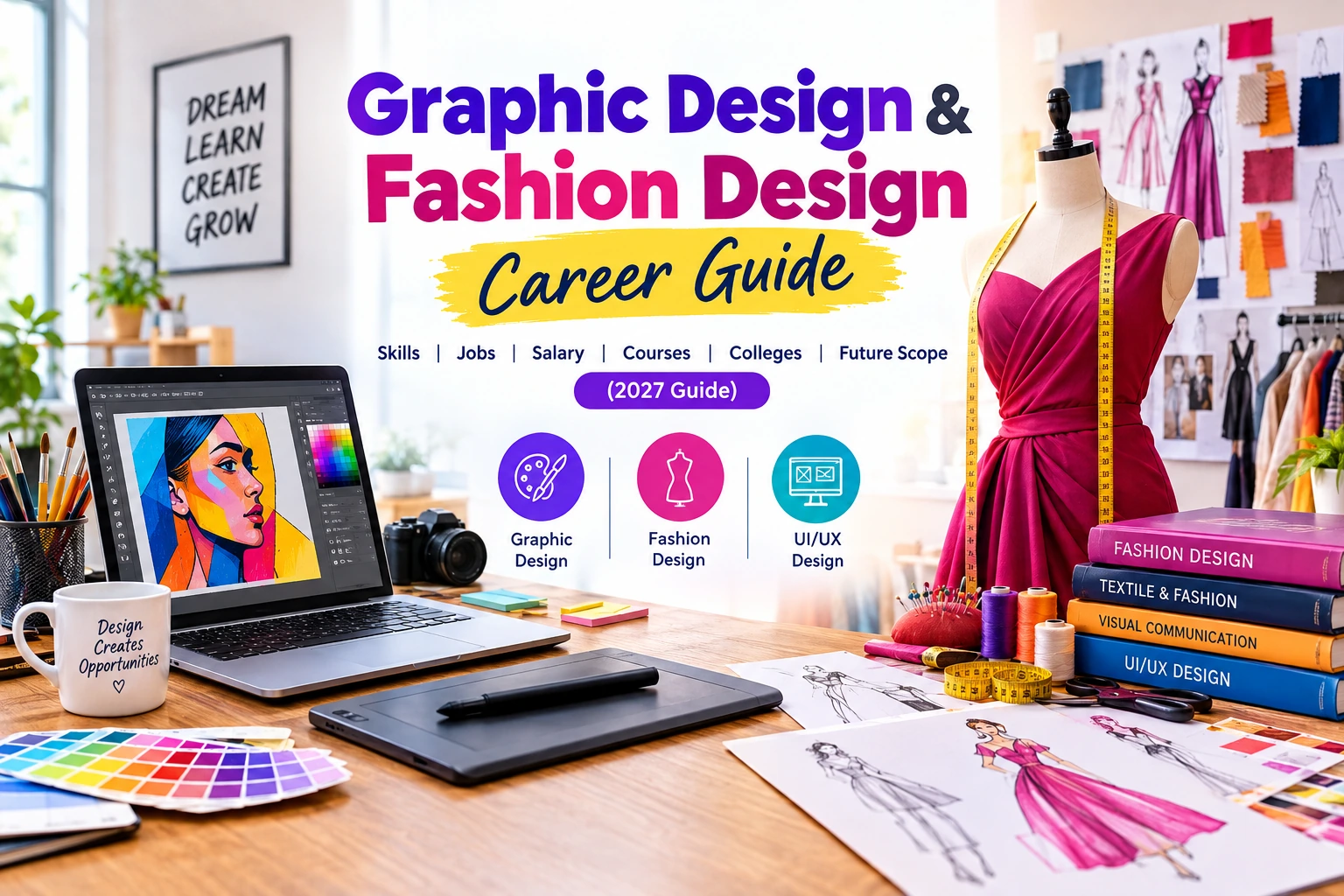
Graphic Design and Fashion Design career paths, skills, courses, jobs and future scope after 12th Arts.
Graphic Design vs Fashion Design vs UI/UX Design
Bahut se students Graphic Design, Fashion Design aur UI/UX Design ko ek hi broad creative field ka part samajh lete hain, lekin practical level par in teenon mein kaam karne ka tareeka kaafi alag hota hai. Graphic Design mein visual communication, branding aur information ko attractive form mein present karna central hota hai, Fashion Design mein garments, textiles, styling aur production process par zyada focus hota hai, jabki UI/UX Design digital products aur users ke interaction ko samajhne par based hota hai. Is difference ko pehle samajhna important hai, kyunki course select karte waqt sirf “design” naam dekhne ke bajay student ko ye bhi dekhna chahiye ki daily work kis type ka hoga aur uski natural interest kis direction mein hai.
Graphic Design
Graphic Design visual communication ki field hai jahan designers text, images, colors aur layouts ka use karke information ko attractive aur effective form mein present karte hain. Companies apni branding, advertising campaigns, social media marketing aur product packaging ke liye graphic designers hire karti hain.
- Logo Design
- Brand Identity Design
- Packaging Design
- Advertising Creatives
- Social Media Graphics
- Magazine & Print Design
Fashion Design
Fashion Design ko sirf naye clothes sketch karne tak limited nahi samajhna chahiye. Is field mein designer ko fabrics, colours, silhouettes, consumer preferences, seasonal requirements aur collection ke overall purpose ko samajhkar design develop karna hota hai. Ek idea sketch se start ho sakta hai, lekin usse actual garment ya collection mein convert karne ke liye material selection, construction, fitting aur production limitations ko bhi consider karna padta hai. Isi wajah se Fashion Design creative interest ke saath observation, patience aur practical understanding bhi demand karta hai.
Fashion industry mein artistic creativity ke saath technical knowledge ka role bhi important hota hai, kyunki ek attractive concept tabhi workable design banta hai jab designer fabric behaviour, pattern making, garment construction aur basic production process ko samajhta ho. Fashion marketing aur consumer behaviour ki understanding bhi useful hoti hai, especially un students ke liye jo future mein apna label, collection ya fashion-related business develop karna chahte hain. Isliye is career ko choose karne wale students ko drawing ke saath technical aur commercial side ko bhi gradually develop karna chahiye.
- Clothing Design
- Fashion Illustration
- Textile Development
- Fashion Styling
- Luxury Fashion
- Fashion Entrepreneurship
UI/UX Design
UI/UX Design digital products ko users ke liye understandable, usable aur visually organised banane se related field hai. UI, yani User Interface, screen par buttons, typography, colours, spacing, icons aur other visual elements ko organise karta hai, jabki UX, yani User Experience, ye samajhne par focus karta hai ki user kisi app, website ya software ke saath interact karte waqt kaha confuse hota hai, kaha difficulty face karta hai aur overall journey ko kaise improve kiya ja sakta hai. Dono areas connected hain, lekin unka problem-solving approach alag ho sakta hai.
Mobile applications, websites, SaaS products, e-commerce platforms aur other digital services ke expansion ke saath companies ko aise professionals ki zarurat hoti hai jo interface ke appearance ke saath user behaviour ko bhi samajh saken. Is role mein sirf attractive screens banana sufficient nahi hota; designer ko research, wireframing, prototyping, usability testing aur development team ke saath collaboration jaise practical steps bhi samajhne pad sakte hain. Isi wajah se UI/UX seekhne wale students ko visual skills ke saath logical thinking aur user-focused problem solving par bhi kaam karna chahiye.
- Mobile App Design
- Website Interface Design
- User Research
- Wireframing
- Prototyping
- Usability Testing
Career select karte waqt student ko pehle ye identify karna chahiye ki usse kis type ka creative work naturally interesting lagta hai. Branding, posters, layouts, digital content aur visual storytelling pasand karne wale students Graphic Design ke projects explore kar sakte hain; fabrics, clothing, styling, textile aur collection development mein interest rakhne wale Fashion Design ko practically samajh sakte hain. Jo students visual creativity ke saath apps, websites, user behaviour aur technology problems mein interest rakhte hain, woh UI/UX projects try karke apni suitability evaluate kar sakte hain. Is tarah decision sirf trend ke basis par nahi, balki actual interest aur working preference ko dekhkar liya ja sakta hai.
Industry Reality – How Design Work Actually Happens
Social media par design career ko aksar sirf creative freedom, attractive projects aur final visuals ke perspective se dikhaya jaata hai, jabki professional environment mein design work ek proper process follow karta hai. Usually project ki beginning client ya organisation ki requirement samajhne se hoti hai, jahan business objective, target audience, available resources aur expected outcome ko clearly define kiya jaata hai. Uske baad designer relevant research karta hai, existing solutions ko observe karta hai, references collect karta hai aur initial concepts develop karta hai. Is stage par creativity ke saath information ko organise karna aur problem ko correctly understand karna equally important hota hai.
Initial concept ko final design maan lena professional workflow ka normal part nahi hai. Client feedback, internal review, usability testing ya production requirements ke according design mein multiple changes karne pad sakte hain. Graphic Design mein brand guidelines aur communication objective important ho sakte hain, Fashion Design mein fabric, construction aur production limitations ko consider karna padta hai, jabki UI/UX projects mein user feedback aur usability observations design decisions ko influence kar sakte hain. Isliye designer ko apne original idea ke saath emotionally attached rehne ke bajay practical feedback ko samajhkar solution improve karna seekhna padta hai.
Professional design work ka ek important part communication aur collaboration bhi hota hai. Designers ko clients, marketing teams, developers, photographers, production teams ya other designers ke saath information share karni pad sakti hai aur apne design decisions ko clear reasoning ke saath explain karna hota hai. Graphic Design projects mein brand guidelines, communication goals aur visual consistency ko follow karna pad sakta hai; Fashion Design mein fabric selection, sampling, production limitations aur collection requirements ko consider karna hota hai; jabki UI/UX projects mein developers ke saath coordination, user feedback aur usability observations design decisions ko influence kar sakte hain. Isliye professional design skill ko sirf software knowledge ya attractive visuals tak limit karna incomplete hoga. Time management, presentation, feedback handling, teamwork aur problem-solving bhi actual project delivery ka part ban sakte hain.
Graphic Design Skills Required at Professional Level
Graphic Design seekhne wale students ke liye software knowledge ek useful starting point hai, lekin professional work sirf tools ke buttons ya features yaad karne se develop nahi hota. Designer ko ye samajhna padta hai ki kis audience ke liye visual create kiya ja raha hai, information ko kis hierarchy mein present karna hai, typography aur colours ka combination kis message ko support karega aur client ki requirement ko practical design solution mein kaise convert karna hai. Portfolio reviews mein isi tarah ke decisions aur execution ko demonstrate karna important hota hai, isliye students ko tutorials ke saath actual projects par bhi regular practice karni chahiye.
- Adobe Photoshop: Photo editing, retouching aur digital artwork creation ke liye.
- Adobe Illustrator: Logo design, vector graphics aur branding projects ke liye industry standard tool.
- CorelDRAW: Print media aur commercial design projects mein commonly used software.
- Typography: Fonts aur text arrangement ke through visual impact create karna.
- Color Psychology: Colors ka human emotions aur buying behaviour par effect samajhna.
- Branding Strategy: Companies ke liye memorable visual identities create karna.
- Layout Design: Information ko visually balanced aur easy-to-read format mein organize karna.
- Creative Thinking: Unique ideas develop karna aur visual problems solve karna.
Software skills professional Graphic Design workflow ka important part hain, lekin kisi designer ki practical ability sirf is baat se decide nahi hoti ki woh kitne tools operate kar sakta hai. Real project mein typography, colour selection, composition, spacing, visual hierarchy aur audience understanding jaise fundamentals ko software ke through correctly apply karna padta hai. Portfolio isi practical understanding ko demonstrate karne ka ek useful medium ban sakta hai, kyunki usme student ke final designs ke saath uski approach, project context aur execution quality bhi dekhi ja sakti hai. Isliye software learning ke saath meaningful projects aur design fundamentals par regular practice maintain karna zyada useful approach hai.
Fashion Design Skills Required in the Industry
Fashion Design ko samajhne ke liye creativity aur technical execution ko ek saath dekhna zaroori hai. Designer ko concept develop karne ke saath fabric, construction, fit, colour combination, pattern aur final production ke practical aspects ko bhi consider karna padta hai. Isi wajah se Fashion Design course ya career mein sketching ke alawa textile knowledge, garment construction, pattern development aur market understanding jaise areas gradually important ho jaate hain. Students jitna jaldi creative idea ko practical garment ya collection ke requirements se connect karna seekhenge, utna hi unka learning process meaningful hoga.
- Fashion Illustration: Design concepts ko visually present karna.
- Fabric Knowledge: Different textiles aur materials ki properties samajhna.
- Pattern Making: Garments ke structural blueprints create karna.
- Garment Construction: Clothing production process ko understand karna.
- Trend Forecasting: Future fashion trends ko predict karna.
- Fashion Styling: Clothing aur accessories ko effectively combine karna.
- Fashion Marketing: Fashion products ko market aur promote karna.
- Brand Development: Fashion labels aur collections ke liye identity create karna.
Fashion industry mein traditional garment skills ke saath technology aur changing consumer expectations ka role bhi gradually important ho raha hai. Sustainable materials, digital design tools, virtual fashion experiences aur technology-assisted production jaise areas students ke learning scope ko expand kar rahe hain. Iska matlab ye nahi ki basic fashion skills ki importance kam ho gayi hai; rather, students ko traditional knowledge ke saath naye tools aur workflows ko samajhne ki habit develop karni chahiye. Regularly updated learning se designer changing project requirements ko better handle kar sakta hai.
UI/UX Design – Skills, Work and Learning Requirements
UI/UX Design un students ke liye relevant ho sakta hai jinko visual design ke saath websites, mobile applications, software products aur user behaviour samajhne mein interest hai. Is field mein interface ka visual appearance important hota hai, lekin designer ko ye bhi samajhna padta hai ki user information kaise find karega, kisi task ko complete karte waqt kaha confusion ho sakta hai aur design ko testing ke basis par kaise improve kiya ja sakta hai. Students ko is area ko explore karte waqt visual design ke saath research, wireframing, prototyping, usability aur basic collaboration workflows ko bhi samajhna chahiye. Isse unhe UI/UX ke actual work ka clearer idea milta hai aur course ya specialisation choose karte waqt decision sirf trend ke basis par nahi lena padta.
Major Skills Required in UI/UX Design
- User Research: Users ki needs, behaviour aur expectations ko understand karna.
- Wireframing: Product structure aur page layouts ka blueprint create karna.
- Prototyping: Product ka interactive model banana taaki final development se pehle testing ki ja sake.
- Figma: Modern UI/UX industry ka sabse popular design tool.
- Adobe XD: Interface design aur prototyping ke liye widely used software.
- Customer Journey Mapping: User ke complete interaction process ko analyse karna.
- Usability Testing: Real users ke through product testing aur improvements identify karna.
- Design Systems: Consistent interfaces create karne ke liye reusable design components develop karna.
UI/UX un students ke liye relevant field ho sakta hai jinko visual design ke saath digital products aur problem-solving mein genuine interest hai. Is career mein sirf screen ko attractive banana objective nahi hota; designer ko user ki problem samajhkar information ko clear way mein organise karna, possible solutions create karna aur testing ke basis par improvements karna pad sakta hai. Mobile applications, websites, software products aur AI-enabled interfaces ke changing landscape ko dekhte hue students ko ek fixed tool par dependent rehne ke bajay design fundamentals, research methods aur adaptable digital skills develop karni chahiye.
Step-by-Step Career Roadmap After 12th
Design career mein progress usually ek gradual process hota hai jahan education, fundamentals, software knowledge, practical projects, portfolio aur professional exposure ek doosre se connected hote hain. 12th ke baad student ko ek hi baar mein sab kuch master karne ki expectation rakhne ke bajay step-by-step learning approach follow karni chahiye. Pehle apni preferred design area ko samajhna, phir basic concepts seekhna, guided ya self-learning ke through tools practice karna aur gradually real projects build karna zyada useful process hota hai. Jaise-jaise practical exposure badhta hai, student ko apne strengths aur preferred specialisation ke baare mein bhi clearer idea milne lagta hai.
Step 1: Complete Your 12th Education
12th complete karna design career ki basic educational starting point hai. Graphic Design, Fashion Design aur UI/UX jaise areas mein eligibility institute aur course ke according vary kar sakti hai, isliye students ko admission se pehle individual programme ki requirements verify karni chahiye. Arts students ke liye design field accessible ho sakti hai, lekin Commerce ya Science background ke students bhi kai design programmes explore kar sakte hain. Stream se zyada important ye hai ki student selected course ki eligibility, entrance requirement aur learning expectations ko pehle samjhe.
Step 2: Learn Design Fundamentals
Software directly seekhne se pehle design fundamentals ko samajhna learning ko much more practical banata hai. Colour theory, typography, composition, spacing, visual hierarchy aur design thinking jaise concepts student ko ye samajhne mein help karte hain ki koi design visually balanced aur communicatively effective kyun hai. Jab fundamentals clear hote hain, tab Photoshop, Illustrator, Figma ya other tools ko sirf features ke collection ki tarah use karne ke bajay actual design problem solve karne ke liye use kiya ja sakta hai.
Step 3: Join a Relevant Course
Course choose karte waqt students diploma, certificate, undergraduate degree ya other structured learning options compare kar sakte hain, lekin decision sirf course title ya institute ke naam par nahi hona chahiye. Curriculum, practical assignments, portfolio development, faculty exposure, internship opportunities, duration aur total cost ko saath mein dekhna useful hota hai. Formal education structured environment provide kar sakti hai, jabki self-learning online resources aur practice projects ke through possible hai; dono approaches ka result student ke consistency aur practical application par bhi depend karta hai.
Step 4: Master Industry Software
Industry software ko systematically seekhna chahiye, lekin ek saath bahut saare tools start karna beginners ko confuse kar sakta hai. Graphic Design students pehle Photoshop, Illustrator ya relevant alternatives ke through image editing, vector design aur layouts practice kar sakte hain; Fashion Design students illustration, pattern development aur digital fashion tools explore kar sakte hain; UI/UX learners Figma aur prototyping workflows par focus kar sakte hain. Tool selection ke saath project-based practice zaroor rakhein, taaki software knowledge actual output mein convert ho.
Step 5: Build a Strong Portfolio
Portfolio ko course complete hone ke baad banane wali cheez samajhne ke bajay learning journey ka part banana better hai. Har meaningful project mein student problem statement, research, design process, iterations aur final outcome ko document kar sakta hai. Branding concept, app interface, fashion collection, packaging design ya illustration project kuch bhi ho sakta hai, lekin portfolio mein work ka context clearly explain hona chahiye. Isse viewer ko sirf final image nahi, balki student ki thinking aur execution process bhi samajh aata hai.
Step 6: Gain Internship Experience
Internship ka purpose sirf certificate collect karna nahi hona chahiye. Professional environment mein student ko deadlines, feedback, client requirements, team communication, file management aur real project constraints ka exposure mil sakta hai. Agencies, startups, design studios, fashion businesses ya relevant organisations mein available opportunities ko course aur specialisation ke according explore kiya ja sakta hai. Har internship paid ho, ye assume nahi karna chahiye; students ko role, learning opportunity, responsibilities aur terms ko pehle clearly check karna chahiye.
Step 7: Start Freelancing and Networking
Freelancing beginners ke liye practical exposure ka ek route ho sakta hai, lekin client work start karne se pehle basic communication, pricing understanding, revisions aur delivery process ko samajhna useful hai. Small projects se start karke student gradually portfolio mein real work add kar sakta hai. Saath hi professional networking bhi important hai, kyunki creative communities, industry events, LinkedIn connections aur portfolio platforms se feedback, collaboration aur work opportunities mil sakti hain. Networking ka purpose sirf job maangna nahi, balki relevant professional relationships build karna bhi hai.
Step 8: Continue Learning and Specialization
Design industry ke tools aur workflows regularly change hote rehte hain, isliye learning ko course completion ke saath stop kar dena practical nahi hai. Basic design ke baad students branding, motion graphics, UX research, product design, fashion business, creative direction ya kisi specific niche ko explore kar sakte hain. Specialisation choose karte waqt market trend ke saath apni interest aur existing strengths ko bhi consider karein, kyunki long-term consistency tabhi maintain hoti hai jab student ko selected area mein genuinely kaam karna interesting lage.
Career Opportunities and Job Roles in Design Industry
Design industry ab sirf traditional Graphic Designer ya Fashion Designer roles tak limited nahi hai. Branding, digital products, e-commerce, advertising, content creation, fashion retail aur technology ke expansion ne specialised roles ko bhi increase kiya hai, jahan responsibilities ek doosre se overlap bhi kar sakti hain. Isi wajah se student ko career title se zyada actual job description dekhni chahiye aur samajhna chahiye ki daily work mein research, visual execution, communication, product thinking ya business understanding ka kitna role hoga.
Career role compare karte waqt sirf salary ya job title ko primary factor banana incomplete picture de sakta hai. Required skills, work environment, learning curve, portfolio expectations, employment type, location, responsibilities aur future specialisation possibilities ko bhi evaluate karna useful hai. Kisi role ka suitability student ke individual interests aur abilities par depend karta hai, isliye table ko ek general reference ki tarah use karein aur actual job descriptions ko separately check karein.
| Career Role | Industry | Main Responsibilities | Key Skills Required | Typical Employers | Career Growth |
|---|---|---|---|---|---|
| Graphic Designer | Advertising, Marketing, Branding | Create logos, posters, social media creatives, brochures and visual campaigns | Photoshop, Illustrator, Typography, Branding | Agencies, Startups, Brands | Senior Designer → Art Director |
| Visual Designer | Digital Media | Develop visual assets for websites, applications and campaigns | UI Design, Layout Design, Creativity | Tech Companies, Agencies | Lead Visual Designer |
| Brand Identity Designer | Branding | Create complete brand systems including logos, colors and visual guidelines | Brand Strategy, Design Systems | Brand Agencies | Brand Consultant |
| Packaging Designer | FMCG, Retail | Design product packaging and retail presentation materials | Packaging Design, Consumer Psychology | Consumer Brands | Packaging Design Lead |
| UI Designer | Technology | Design interfaces for apps, websites and software products | Figma, Prototyping, UI Systems | IT Companies, SaaS Startups | Senior UI Designer |
| UX Designer | Technology | Improve user experience through research and testing | User Research, Wireframing, UX Strategy | Product Companies | UX Lead |
| Product Designer | Technology | Handle complete product experience from research to final interface | UX, UI, Product Thinking | Tech Firms, Startups | Head of Product Design |
| UX Researcher | Technology | Study user behaviour and identify usability improvements | Research Methods, Analytics | Large Tech Companies | Research Manager |
| Fashion Designer | Fashion Industry | Create apparel collections and fashion concepts | Sketching, Fabric Knowledge, Trend Analysis | Fashion Brands | Senior Fashion Designer |
| Fashion Stylist | Media & Fashion | Plan clothing combinations for shoots, celebrities and campaigns | Styling, Fashion Trends | Magazines, Production Houses | Creative Fashion Consultant |
| Textile Designer | Manufacturing | Design fabrics, prints and textile patterns | Textile Science, Pattern Design | Textile Companies | Textile Design Head |
| Fashion Merchandiser | Retail | Manage product planning, sales and market demand | Fashion Business, Market Analysis | Retail Brands | Category Manager |
| Creative Lead | Multiple Industries | Guide creative teams and oversee projects | Leadership, Communication | Agencies, Brands | Creative Director |
| Art Director | Advertising & Media | Manage visual direction of campaigns and brand communication | Creative Strategy, Team Management | Advertising Agencies | Executive Creative Director |
| Creative Director | Branding, Fashion, Media | Lead complete creative vision and business communication | Strategy, Leadership, Branding | Large Brands & Agencies | Top Executive Creative Role |
| Brand Consultant | Consulting | Help businesses improve positioning, branding and communication | Brand Strategy, Marketing | Consulting Firms, Freelance | Independent Consultant |
What Students Should Understand Before Choosing a Role
Career role choose karte waqt student ko apni interest ke saath actual responsibilities ko bhi samajhna chahiye. Graphic Design roles mein branding, advertising, layouts aur visual communication jaise tasks aa sakte hain, jabki UI/UX aur Product Design mein digital interfaces, user flows, research, prototypes aur product-related problems par kaam ho sakta hai. Fashion-related roles mein apparel, textiles, styling, collection development ya merchandising responsibilities alag combination mein aa sakti hain. Experience ke saath responsibilities bhi change ho sakti hain, lekin har professional ka career path same nahi hota. Kuch designers specialist roles mein deepen karte hain, kuch team coordination ya creative leadership ki taraf move karte hain aur kuch independent client work choose karte hain. Isliye career table ko fixed progression samajhne ke bajay different possibilities ko samajhne ke reference ke roop mein use karna better hai.
Freelancing Scope (Real Income System)
Design field mein earning ka level ek fixed figure se decide nahi hota, kyunki experience, portfolio quality, specialisation, location, employment type aur project responsibility jaise factors income ko influence kar sakte hain. Entry-level professionals aksar junior roles, internships ya small projects se practical experience build karte hain, aur experience ke saath unki responsibilities gradually expand ho sakti hain. Is stage par students ko sirf starting income compare karne ke bajay skill development aur real project exposure par bhi attention dena chahiye.
Experience badhne ke saath designers larger projects, specialised responsibilities ya independent client work handle kar sakte hain. Freelancing mein income project availability, client type, pricing, repeat work aur workload ke according vary kar sakti hai, isliye ise guaranteed earning model ke roop mein present nahi karna chahiye. Remote work ke through different locations ke clients ke saath kaam possible hai, lekin uske liye communication, portfolio presentation, deadlines, contracts aur payment terms ko professionally handle karna bhi zaroori hota hai.
Who Should Choose Graphic Design or Fashion Design?
Har student ka creative interest aur preferred working style alag hota hai, isliye design career choose karne se pehle apne daily work preference ko honestly evaluate karna useful hai. Kuch students visual layouts aur branding projects enjoy karte hain, kuch clothing, fabrics aur styling ke practical aspects mein interest lete hain, jabki kuch digital interfaces aur user problems solve karne mein zyada comfortable feel karte hain. Career decision tab zyada meaningful hota hai jab student sirf course ke naam ko nahi, balki us field ke actual tasks ko bhi samajhne ke baad apni preference identify kare.
Graphic Design explore karne wale students branding, posters, social media creatives, packaging, typography aur visual storytelling jaise projects se apni interest test kar sakte hain. Fashion Design mein interest rakhne wale students clothing sketches ke saath fabrics, garment construction, styling aur collection development ko bhi samajh sakte hain. UI/UX mein interest wale students basic app screens, website layouts, user flows aur simple prototypes create karke dekh sakte hain. In small practical experiments se student ko theory ke bajay actual work ke basis par apni preference samajhne mein help milti hai.
Design field mein quick success ki expectation beginners ko unnecessarily pressure mein daal sakti hai, kyunki creative skills practice aur repeated feedback se gradually develop hoti hain. Agar student regular projects complete karne, mistakes analyse karne, feedback lene aur new tools seekhne ke liye prepared hai, to learning process sustainable ban sakta hai. Is career ko choose karte waqt patience ko ek practical requirement samajhna better hai, na ki sirf motivational quality.
- Creative thinking pasand hai
- Visual ideas ko express kar sakte hain
- Observation skills strong hain
- New trends seekhne mein interest hai
- Portfolio build karne ke liye ready hain
A Day in the Life of a Professional Designer
Bahut se students designer ke daily work ko sirf drawing, editing ya software use karne se associate karte hain, lekin professional workflow mein creative execution ke saath planning aur communication bhi hoti hai. Ek project ke beginning mein requirement samajhna, references collect karna, ideas discuss karna aur possible directions decide karna pad sakta hai. Uske baad actual design work, revisions, presentations aur final delivery ka process aata hai. Isliye designer ka routine project type aur organisation ke according kaafi change ho sakta hai.
Graphic designer kisi brand identity, campaign ya digital creative par kaam kar sakta hai, jabki fashion designer collection development, fabric selection, sampling ya styling-related tasks handle kar sakta hai. UI/UX designer user research, wireframes, interface screens, prototypes aur usability feedback par kaam kar sakta hai. Different roles ke daily tasks alag hone ke bawajood ek common requirement communication ki hoti hai, kyunki designer ko apne decisions clients, team members ya other departments ko clearly explain karne padte hain.
Portfolio: The Most Important Asset for Designers
Design industry mein portfolio practical ability ko demonstrate karne ka important medium hai, kyunki isme student ya professional apne actual work ko context ke saath present kar sakta hai. Degree ya certificate education ka background explain karte hain, lekin portfolio ye dikhata hai ki person kisi design problem ko kaise approach karta hai aur final output tak kaise pahunchta hai. Isliye portfolio ko sirf images ka collection banane ke bajay selected projects ki meaningful presentation banana zyada useful hai.
Agar do candidates ke educational backgrounds similar hon, to unke portfolios se unki practical strengths, visual thinking aur execution approach ke baare mein additional information mil sakti hai. Iska matlab ye nahi ki college ya qualification irrelevant ho jaati hai; rather, design roles mein education aur practical work dono apni jagah important ho sakte hain. Portfolio ko role ke according customise karna bhi useful hai, kyunki branding role ke liye relevant work aur UI/UX role ke liye relevant case studies alag tarah ki information show karengi.
Portfolio mein projects ki quantity se zyada unki relevance aur explanation important honi chahiye. Har project ke saath brief, objective, process, important decisions aur final result explain kiya ja sakta hai, taaki viewer ko work ke peeche ki thinking samajh aaye. Beginners ke liye kuch well-developed projects banana zyada practical ho sakta hai, especially jab har project genuinely unki skill aur learning ko represent karta ho.
- Logo design projects
- Brand identity case studies
- UI/UX app concepts
- Social media campaigns
- Fashion collection concepts
- Illustration work
Graphic Design, Fashion Design & UI/UX Colleges in India (2027)
| Institute | Popular Program | Duration | Admission Process | Approx Total Fees | Major Subjects |
|---|---|---|---|---|---|
| NIFT Delhi | B.Des Fashion Design | 4 Years | NIFTEE Entrance Exam | ~₹14 Lakh | Fashion Illustration, Pattern Making, Garment Construction, Textile Science, Fashion Communication |
| NIFT Mumbai | B.Des Fashion Design | 4 Years | NIFTEE | ~₹14 Lakh | Fashion Design, Apparel Production, Fashion Business |
| NID Ahmedabad | B.Des Design | 4 Years | NID DAT | Varies by Category | Visual Communication, Product Design, Design Research |
| UID Ahmedabad | B.Des Communication Design | 4 Years | UID DAT + Interview | ₹18–24 Lakh | Graphic Design, Branding, UI Design, Motion Graphics |
| MIT Institute of Design Pune | B.Des / M.Des | 4 Years | MITID DAT | ₹16–22 Lakh | UX Design, Graphic Design, Product Design |
| Pearl Academy | Fashion & Communication Design | 3–4 Years | Pearl Entrance Test | ₹18–30 Lakh | Fashion Design, Styling, Branding, Media |
| Symbiosis Institute of Design | B.Des | 4 Years | SEED Exam | ₹18–22 Lakh | Communication Design, UX Design, Fashion Communication |
| ISDI Mumbai | Communication Design | 4 Years | ISDI Challenge | ₹20 Lakh+ | Graphic Design, Digital Design, Brand Systems |
Admission rules, entrance examinations, programme structures, fee schedules aur course offerings institute ke updates ke according change ho sakte hain. Table mein diye gaye details ko initial reference ke roop mein dekhein aur application se pehle concerned institute ki official website par current eligibility, entrance process, fee structure, important dates aur programme curriculum verify karein. Specially fee figures ko final payable amount na samjhein jab tak current official fee notice ya admission document se confirmation na mil jaye.
How Students Can Start Without Expensive Courses
Design career start karne ke liye expensive institute hi ek possible route nahi hai. Beginners books, structured online learning, software tutorials, design communities aur practice assignments ke through fundamentals develop kar sakte hain, although self-learning mein consistency aur self-evaluation ki responsibility student par zyada hoti hai. Agar student formal course choose karta hai to curriculum, practical exposure, faculty, portfolio support aur total cost ko compare karna useful hai; agar self-learning karta hai to usse apna learning schedule aur project roadmap khud maintain karna padega.
Initial stage mein software features ya shortcuts memorise karne ke bajay design principles par focus karna better hai. Colour theory, typography, composition, spacing, hierarchy aur visual balance jaise concepts different tools aur design formats mein repeatedly use hote hain. In concepts ko samajhne ke baad student small projects bana kar apne decisions test kar sakta hai aur gradually more complex work ki taraf move kar sakta hai. Regular practice ka purpose sirf speed badhana nahi, balki visual judgement develop karna bhi hai.
Design Thinking: The Skill That Separates Professionals from Beginners
Design thinking ka basic idea ye hai ki designer sirf attractive output create karne ke bajay kisi specific problem ko samajhkar appropriate solution develop kare. Is process mein user ki requirement samajhna, available information analyse karna, different ideas explore karna, prototype ya draft banana aur feedback ke basis par improvement karna shamil ho sakta hai. Business objective aur user expectation ko visual execution ke saath connect karne ki ability professional design work ko more purposeful banati hai.
Aaj ke professional environment mein strong designer se aesthetics ke saath context samajhne ki expectation bhi ho sakti hai. Ek social media creative ka objective brand awareness ho sakta hai, ek app interface ka objective easy navigation ho sakta hai aur fashion collection ka objective particular audience ke liye coherent visual identity create karna ho sakta hai. Isliye design seekhte waqt students ko har project ke peeche ka purpose identify karne ki habit develop karni chahiye, na ki sirf final visual ko evaluate karna chahiye.
Industries and Workplaces Where Designers Can Work
- Advertising Agencies
- Digital Marketing Companies
- E-commerce Brands
- Technology Startups
- IT Companies
- Fashion Houses
- Luxury Brands
- Publishing Industry
- Gaming Industry
- Media & Entertainment
Freelancing vs Full-Time Job
Design students ke liye job aur freelancing dono alag working models hain, aur inke daily responsibilities bhi different ho sakte hain. Full-time job mein organisation ka workflow, team structure, fixed responsibilities aur mentorship environment mil sakta hai, jabki freelancing mein client communication, project search, pricing, deadlines, revisions aur payment follow-up ka responsibility bhi freelancer ko handle karna pad sakta hai. Isliye choice karte waqt flexibility ke saath workload aur business-related responsibilities ko bhi samajhna zaroori hai.
Beginners ke liye ek fixed rule nahi hai ki pehle job hi karni chahiye ya directly freelancing start karni chahiye. Kuch students internship ya junior role ke through workflow samajhna prefer karte hain, jabki kuch small freelance projects se practical experience build karte hain. Hybrid model bhi possible hai, lekin full-time work ke saath additional client projects handle karte waqt employer policies, workload, confidentiality aur deadlines ko carefully manage karna chahiye. Sustainable model wahi hota hai jo student ki current skills aur available time ke according manageable ho.
Graphic Design and Fashion Design Career Outlook for 2030
2030 tak design professionals ke work environment mein technology aur digital workflows ka role aur visible ho sakta hai, lekin different design specialisations par iska effect ek jaisa nahi hoga. Graphic Design mein visual communication aur branding ke formats change ho sakte hain, Fashion Design mein digital tools aur production methods ka use expand ho sakta hai, aur UI/UX mein digital products ke saath research aur interaction design ka scope evolve ho sakta hai. Students ke liye iska practical meaning ye hai ki kisi ek software ya current trend par dependent rehne ke bajay transferable fundamentals, communication, research aur problem-solving skills develop ki jayein. Future ko fixed career guarantee ki tarah dekhne ke bajay changing requirements ke according learning continue karna zyada practical approach hai.
Graphic Design vs Fashion Design vs UI/UX Design: Career Differences
Graphic Design, Fashion Design aur UI/UX Design ko compare karte waqt kisi ek field ko universally better maan lena useful nahi hai, kyunki tino mein work environment, required skills, portfolio expectations aur career responsibilities different ho sakti hain. Graphic Design ka focus visual communication aur branding projects par ho sakta hai, Fashion Design apparel, textiles aur collection development se connected hai, jabki UI/UX digital products aur user interaction par concentrate karta hai. Neeche diya comparison students ko in differences ko ek saath dekhne mein help karta hai, lekin final choice individual interest, skills, course availability aur preferred work style ke basis par honi chahiye.
| Factor | Graphic Design | Fashion Design | UI/UX Design |
|---|---|---|---|
| Industry | Branding, Advertising, Marketing | Fashion & Apparel | Technology & Software |
| Entry Barrier | Low to Medium | Medium | Medium |
| Portfolio Importance | High Portfolio Relevance | Very High | High Portfolio Relevance |
| Remote Work | Available | Limited | Highly Available |
| Freelancing Scope | Role Dependent | Good | Excellent |
| International Demand | Varies by Market | Moderate | Varies by Role |
| Software Usage | Photoshop, Illustrator | CLO 3D, Illustrator | Figma, Adobe XD |
| Average Career Growth | Depends on Experience | Good | Excellent |
| Future Scope 2030 | Depends on Specialisation | Strong | Depends on Specialisation |
In teen fields ko dekhne par clear hota hai ki design career ek single type ka profession nahi hai. Graphic Design mein branding aur communication-oriented projects common ho sakte hain, Fashion Design mein apparel, textiles aur styling-related work important ho sakta hai, jabki UI/UX mein digital products, user research aur interface design par focus hota hai. Technology aur consumer behaviour ke changes ke saath tino areas ke workflows bhi evolve ho rahe hain, isliye students ko current tools aur job descriptions ko dekhkar apni preferred direction identify karni chahiye.
How Recruiters Actually Select Design Students
Bahut se students assume karte hain ki degree complete karne ke baad placement process automatically career start kar dega, lekin design roles mein practical work ko demonstrate karna bhi important ho sakta hai. Recruiter ya client ko portfolio se ye samajh aa sakta hai ki candidate brief ko kaise interpret karta hai, design decisions kaise leta hai aur final output ko kitni clarity ke saath present karta hai. Education background useful hai, lekin portfolio aur practical examples candidate ki applied skills ko additional context provide karte hain.
Portfolio review ke dauraan role ke according different qualities evaluate ki ja sakti hain. Graphic Design position mein visual hierarchy, typography aur branding work relevant ho sakta hai; UI/UX role mein user flows, wireframes, prototypes aur case studies useful ho sakti hain; Fashion Design role mein sketches, textile understanding, collection development aur garment-related work relevant ho sakta hai. Isliye portfolio ko generic rakhne ke bajay target role ke according organise karna useful approach hai.
Design hiring process mein problem solving, originality, visual communication, software proficiency, presentation ability, client understanding aur professional behaviour jaise factors role ke according importance le sakte hain. Marks ya certificate ko completely ignore karna bhi correct approach nahi hai, lekin practical design role mein candidate ko apne skills ko actual work ke through demonstrate karne ke opportunities mil sakte hain.
- Problem solving ability
- Original thinking
- Visual communication
- Software proficiency
- Presentation skills
- Client understanding
- Portfolio quality
- Professional behaviour
The Biggest Industry Shift Happening Right Now
Artificial Intelligence aur automation design workflow ke kai stages ko influence kar rahe hain, especially ideation, visual variations, repetitive editing, content adaptation aur initial concept development jaise tasks mein. Is change ka practical effect har design role mein same nahi hoga, kyunki kisi project mein AI sirf supporting tool ki tarah use ho sakta hai aur kisi workflow mein production ke kuch repetitive steps ko significantly simplify kar sakta hai. Designer ke liye important skill sirf tool operate karna nahi, balki generated output ko evaluate karna, unsuitable results ko identify karna, project objective ke according changes karna aur final design ko appropriate context mein present karna bhi hai. Isliye students ko AI ko blindly replacement ya guaranteed threat samajhne ke bajay ek evolving workflow tool ki tarah samajhna chahiye aur saath mein strong design fundamentals develop karne chahiye.
AI-assisted workflow ke saath creativity, research, visual judgement, user understanding, communication aur problem-solving jaise skills ka practical role bana reh sakta hai. A designer ko client requirement samajhni, available options compare karne, design direction choose karne aur feedback ke basis par output refine karne ki responsibility mil sakti hai. Is wajah se future learning ka focus sirf naye software ya AI tools ki list collect karne par nahi hona chahiye. Students ko ye seekhna chahiye ki technology ko kisi real design problem ke solution mein responsibly kaise use kiya ja sakta hai aur final result ko quality, usability aur project requirements ke basis par kaise evaluate kiya jaye.
- AI Assisted Design
- Digital Fashion
- AR/VR Experiences
- Product Design
- User Experience Research
- Brand Strategy
- Creative Direction
- Design Systems
International Career Opportunities for Indian Designers
Indian designers ke liye international projects remote employment, freelance assignments, global agencies aur digital collaboration platforms ke through possible ho sakte hain, lekin international work ko sirf location change ke roop mein nahi samajhna chahiye. Different countries ke clients ke saath kaam karte waqt project brief ko accurately samajhna, communication style maintain karna, time-zone differences handle karna, deadlines follow karna aur revisions ko professionally manage karna important ho sakta hai. Graphic Design, UI/UX aur Fashion-related digital work mein portfolio ko role ke according present karna bhi useful hai, kyunki client ya employer ko candidate ki practical capability aur working process samajhne ke liye concrete examples chahiye hote hain.
International opportunities explore karne wale students ko apni portfolio presentation, written communication aur professional workflow par gradually kaam karna chahiye. Portfolio website, case studies, project explanations aur relevant professional profiles ko updated rakhna useful ho sakta hai, lekin kisi particular country ya company se work milna guaranteed nahi hota. Different markets mein hiring requirements, contracts, payment arrangements, working hours aur role expectations alag ho sakte hain. Isliye global career planning mein sirf foreign clients ko target karna sufficient nahi hai; student ko apni skill level, communication ability, portfolio quality aur professional responsibilities ko bhi realistically assess karna chahiye.
Final Advice for Students
Graphic Design, Fashion Design aur UI/UX ko career ke roop mein consider karne wale students ko apni expectations ko practical learning process ke saath align karna chahiye. Creative field mein initial stage par confusion normal ho sakta hai, kyunki student ko software, design fundamentals, portfolio development aur real project requirements ek saath samajhne padte hain. Isliye kisi ek result ya short-term outcome par focus karne ke bajay learning process ko manageable stages mein divide karna useful hai. Pehle fundamentals samjhein, phir projects banayein, feedback ke basis par improve karein aur gradually apne preferred specialisation ke according portfolio develop karein.
Tutorials aur courses useful starting points ho sakte hain, lekin unse practical learning tab develop hoti hai jab student khud design decisions leta hai aur un decisions ke results ko evaluate karta hai. Ek project complete karte waqt brief samajhna, research karna, ideas compare karna, revisions accept karna aur final output explain karna seekhna professional preparation ka part hai. Isliye learning ke saath execution ko bhi regular routine mein include karna chahiye, aur portfolio mein wahi work rakhna chahiye jo student ki actual understanding aur improvement ko genuinely represent karta ho.
Frequently Asked Questions (FAQ)
1. Kya 12th Arts ke baad Graphic Design aur Fashion Design dono me admission mil sakta hai?
Haan, Arts stream ke students Graphic Design aur Fashion Design ke kai undergraduate, diploma ya certificate programmes explore kar sakte hain, lekin exact eligibility institute aur programme ke according different ho sakti hai. Kuch institutes entrance test, portfolio, interview ya specific subject requirements rakh sakte hain, jabki kuch programmes mein comparatively different admission process ho sakta hai. Isliye application se pehle selected institute ki current eligibility aur admission notification check karna zaroori hai.
2. Graphic Design aur UI/UX Design me future kis field ka zyada strong mana jata hai?
Graphic Design aur UI/UX Design dono mein career opportunities hain, lekin inka actual work different hota hai. Graphic Design branding, advertising, visual communication aur content-oriented work se connected ho sakta hai, jabki UI/UX digital interfaces, user research, prototypes aur product experience par focus karta hai. Student ko “future kis ka zyada strong hai” ke bajay ye dekhna chahiye ki uski interest aur skills kis type ke work ke saath better match karti hain.
3. Kya Design career me drawing aana compulsory hai?
Professional artist hona har design role ke liye compulsory nahi hai. Basic sketching observation aur idea development mein helpful ho sakti hai, especially Fashion Design mein, lekin Graphic Design aur UI/UX mein typography, composition, visual hierarchy, software skills, research aur design thinking bhi important areas hain. Student ko apne selected specialisation ki actual requirements dekhkar decide karna chahiye ki drawing skills ko kitna depth mein develop karna hai.
4. Kya bina expensive college ke successful designer ban sakte hain?
Haan, expensive college ke bina bhi design skills develop karna possible hai, especially agar student structured self-learning, regular practice aur meaningful projects par consistently kaam kare. Online resources, books, software documentation, design communities aur practice briefs se fundamentals seekhe ja sakte hain. Formal institute ka benefit structured curriculum, peer environment, faculty feedback aur possible industry exposure ho sakta hai, isliye students ko cost ke saath learning support aur practical opportunities ko bhi compare karna chahiye.
5. Design field me pehli job milne me kitna time lag sakta hai?
Pehli design job tak pahunchne ka exact time sab students ke liye same nahi hota. Portfolio quality, software knowledge, specialisation, internship exposure, communication skills, job market aur student ki application activity jaise factors process ko influence kar sakte hain. Kuch students internship ya junior role se start karte hain, kuch freelance projects ke through experience build karte hain, aur kuch formal placement process follow karte hain. Isliye fixed number of months ko guaranteed timeline samajhna practical nahi hai.
6. Kya AI ki wajah se Graphic Designers ki jobs khatam ho jayengi?
AI design work ke kuch repetitive aur production-oriented tasks ko faster bana raha hai, lekin iska exact long-term impact different design roles par alag ho sakta hai. Designers ko AI-generated output ko evaluate, edit aur project requirements ke according refine karna bhi seekhna pad sakta hai. Branding strategy, user research, communication, creative direction aur problem definition jaise areas mein human judgement ka role abhi bhi important hai, isliye students ko AI se compete karne ke bajay responsible way mein AI-assisted workflows samajhne par focus karna chahiye.
7. Design career choose karne se pehle students ko kis baat par sabse zyada dhyan dena chahiye?
Course ya college select karte waqt sirf institute ka naam ya current trend dekhna sufficient nahi hai. Student ko programme curriculum, practical assignments, total cost, eligibility, entrance process, internship exposure, portfolio opportunities aur apni personal interest ko saath mein evaluate karna chahiye. Design skill practice-based profession hai, isliye selected course ke saath regular project work aur feedback lene ki willingness bhi important hai. Ye approach student ko short-term decision ke bajay long-term learning requirements samajhne mein help karti hai.
Students Ke Liye Most Important Advice
-
Portfolio ko practical evidence ki tarah develop karein:
Portfolio mein sirf final images collect karne ke bajay selected projects ka brief, objective, design process aur final result explain karein. Isse student ki practical thinking aur execution dono ko samajhne mein help milti hai. -
Regular project practice maintain karein:
Software tutorials dekhne ke saath small projects complete karte rahna useful hai. Practice ka purpose sirf speed improve karna nahi, balki design decisions lene, mistakes identify karne aur different solutions compare karne ki habit develop karna bhi hai. -
Feedback ko learning process ka part samjhein:
Client, mentor, teacher ya peer se milne wala feedback har baar final answer nahi hota, lekin usse design ki weaknesses aur alternative approaches identify karne mein help mil sakti hai. Feedback ko samajhkar relevant changes karna professional workflow ka important part hai. -
Design fundamentals ko software ke saath develop karein:
Typography, colour, composition, spacing, hierarchy aur visual communication jaise concepts different tools mein repeatedly use hote hain. In fundamentals ko samajhne se student kisi ek software par completely dependent nahi rehta. -
Professional communication par kaam karein:
Design work mein apne ideas ko explain karna, requirements clarify karna, revisions discuss karna aur deadlines communicate karna pad sakta hai. Isliye visual skills ke saath written aur verbal communication ko bhi gradually improve karna useful hai. -
Technology ko carefully adopt karein:
AI aur naye design tools workflow ko change kar sakte hain, lekin har tool har project ke liye equally useful nahi hota. Students ko tool ko trend ke basis par use karne ke bajay uske actual purpose, limitations aur project relevance ko samajhna chahiye. -
Apni specialisation gradually identify karein:
Starting stage par Graphic Design, Fashion Design, UI/UX ya related areas ko small practical projects ke through explore karna useful ho sakta hai. Experience ke saath student ko apni strengths aur preferred working style ke baare mein clearer understanding mil sakti hai. -
Long-term consistency maintain karein:
Design skills ek hi course ya software complete karne se final nahi ho jaati. Regular practice, project exposure, feedback aur changing workflows ko samajhne ki habit professional development ko continuous process banati hai.
Common Mistakes Students Should Avoid
- Sirf software seekhkar khud ko designer samajhna.
- Portfolio banane ko postpone karna.
- Copy-paste designs par depend rehna.
- Client communication ko ignore karna.
- Industry trends aur technology changes ko follow na karna.
- Networking opportunities miss karna.
- Practical projects ke bina sirf certificates collect karna.
Design career mein professional development ko ek continuous process ki tarah dekhna zyada realistic hai. Student ko har stage par apni current skill level ko evaluate karna, practical projects ke through gaps identify karna, feedback ke basis par work improve karna aur relevant tools ya methods ko gradually learn karna pad sakta hai. Har student ka learning speed aur career path different ho sakta hai, isliye immediate results ke comparison ke bajay apne portfolio, project quality, communication aur problem-solving ability mein measurable improvement par focus karna more useful approach hai.
Future of Design Industry (2027–2035 Outlook)
Design industry ka future technology, digital products, branding, consumer behaviour aur changing communication formats se closely connected rahega. Businesses sirf product ya service offer nahi karte; unhe websites, applications, packaging, visual identity, customer experience aur digital communication jaise multiple touchpoints design karne padte hain. Isliye future roles bhi ek fixed format mein nahi rahenge. Students ke liye useful approach ye hai ki woh strong design fundamentals ke saath research, communication, technology aur changing workflows ko samajhne ki habit develop karein.
Artificial Intelligence aur automation tools design workflow ke different stages ko influence kar rahe hain, including ideation, variations, image generation, repetitive production aur content adaptation. Lekin final output ko project objective ke according judge karna, audience ko samajhna, brand context maintain karna aur practical constraints ke andar solution develop karna abhi bhi human decision-making demand kar sakta hai. Future designer ke liye tool knowledge ke saath judgement aur adaptability bhi important skills rahengi.
Major Trends Shaping the Future of Design
-
AI-Assisted Design Workflows:
Designers AI tools ka use ideation, mockups aur productivity improve karne ke liye karenge, lekin final creative direction human professionals hi decide karenge. -
UI/UX Demand Continues to Grow:
Apps, websites, fintech platforms, SaaS products aur digital services ki growth ke saath UI/UX specialists ki requirement continuously increase ho rahi hai. -
Design Systems and Product Design:
Large companies scalable digital products ke liye design systems aur product-focused teams mein investment badha rahi hain. -
Motion Graphics and Interactive Content:
Static visuals ke saath animated aur interactive experiences ki demand bhi rapidly increase ho rahi hai. -
AR, VR and Immersive Experiences:
Augmented Reality aur Virtual Reality technologies naye design opportunities create kar rahi hain. -
Sustainable Fashion:
Fashion industry increasingly eco-friendly materials aur sustainable production practices ki taraf move kar rahi hai. -
Digital Fashion and Virtual Products:
Fashion brands digital collections aur virtual experiences mein investment karna start kar chuke hain. -
Global Remote Opportunities:
Remote work culture designers ko international clients aur companies ke saath collaborate karne ke opportunities provide kar raha hai.
Will AI Replace Designers?
AI design tools ka impact already workflow level par visible hai, lekin future mein different design roles par iska effect same rahega, ye assume nahi kiya ja sakta. Kuch repetitive tasks automate ho sakte hain, jabki research, creative direction, client communication, contextual judgement aur final quality control jaise tasks mein human involvement ki requirement role ke according bani reh sakti hai. Students ko is uncertainty ko samajhte hue adaptable skills develop karni chahiye.
AI visual concepts aur assets generate kar sakta hai, lekin generated output ko appropriate context mein use karna alag skill hai. Brand identity, audience understanding, cultural context, usability, emotional communication aur business objectives ko ek coherent solution mein connect karne ke liye designer ko output evaluate aur refine karna pad sakta hai. Isi wajah se AI ko ek independent replacement ke roop mein dekhne ke bajay design workflow ke ek tool ke roop mein samajhna more practical learning approach hai.
Aane wale years mein design professionals ko traditional design fundamentals ke saath new technology workflows ko bhi understand karna padega. Students ko typography, composition, visual communication, user research aur problem-solving jaise fundamentals ke saath relevant AI tools experiment karne chahiye, lekin tool ke output ko blindly accept nahi karna chahiye. Strong foundation student ko naye software ya technology ke aane par bhi apni learning continue karne mein help karega.
Final Industry Outlook
Graphic Design, Fashion Design aur UI/UX Design un professional fields mein se hain jahan creativity aur business value directly connect hoti hai. Technology evolve hogi, tools change honge aur market trends shift honge, lekin strong design thinking aur human-centred creativity ki demand future mein bhi bani rehne ki sambhavana hai.
Long-term design preparation ka focus kisi ek software, trend ya fixed job title par depend nahi hona chahiye. Students ko strong fundamentals ke saath portfolio development, practical project experience, communication aur changing digital workflows ko samajhne ki ability develop karni chahiye. Career opportunities ka actual nature specialisation, employer, location, experience aur market conditions ke according change ho sakta hai, isliye future planning ko guaranteed outcome ke bajay continuous skill development aur professional adaptability ke perspective se dekhna zyada practical hai.
About the Author & Why You Can Trust This Guide
Ye career guide After12thArtsCareer Editorial Team dwara prepare ki gayi hai. Hamara objective sirf courses ki list dena nahi hai, balki students ko design industry ki real working, career growth, salary trends aur future opportunities ko simple language me samjhana hai.
Is article ko prepare karte waqt government institutes, design colleges, admission notifications, industry hiring trends, creative agencies aur experienced designers ke publicly available career resources ko compare kiya gaya hai. Information ko easy Hindi language me explain kiya gaya hai taaki Class 12th ke students bhi bina confusion ke apna career decision le saken.
Design industry continuously change hoti rehti hai. Isi wajah se hum is guide ko regular interval par update karte hain taaki students ko latest admission process, career scope, software skills aur industry expectations ki updated information mil sake.
Editorial Standards
- A. Information multiple reliable educational sources se verify ki jaati hai.
- B. Kisi bhi institute ko paid ranking nahi di jaati.
- C. Salary figures industry averages par based hote hain.
- D. Content ko regular update kiya jata hai.
- E. Article students aur parents dono ke liye practical language me likha gaya hai.
Last Editorial Review: September 2026
Content Category: Career Guidance • Design Education • Higher Studies After 12th
Recommended Design Resource
Affiliate Disclosure: Is page par kuch links affiliate links ho sakte hain. Agar aap in links ke through purchase ya signup karte hain, to website ko bina kisi extra cost ke commission mil sakta hai. Hum sirf relevant resources ko informational purpose se mention karte hain.