Introduction – HR Executive Role Explained
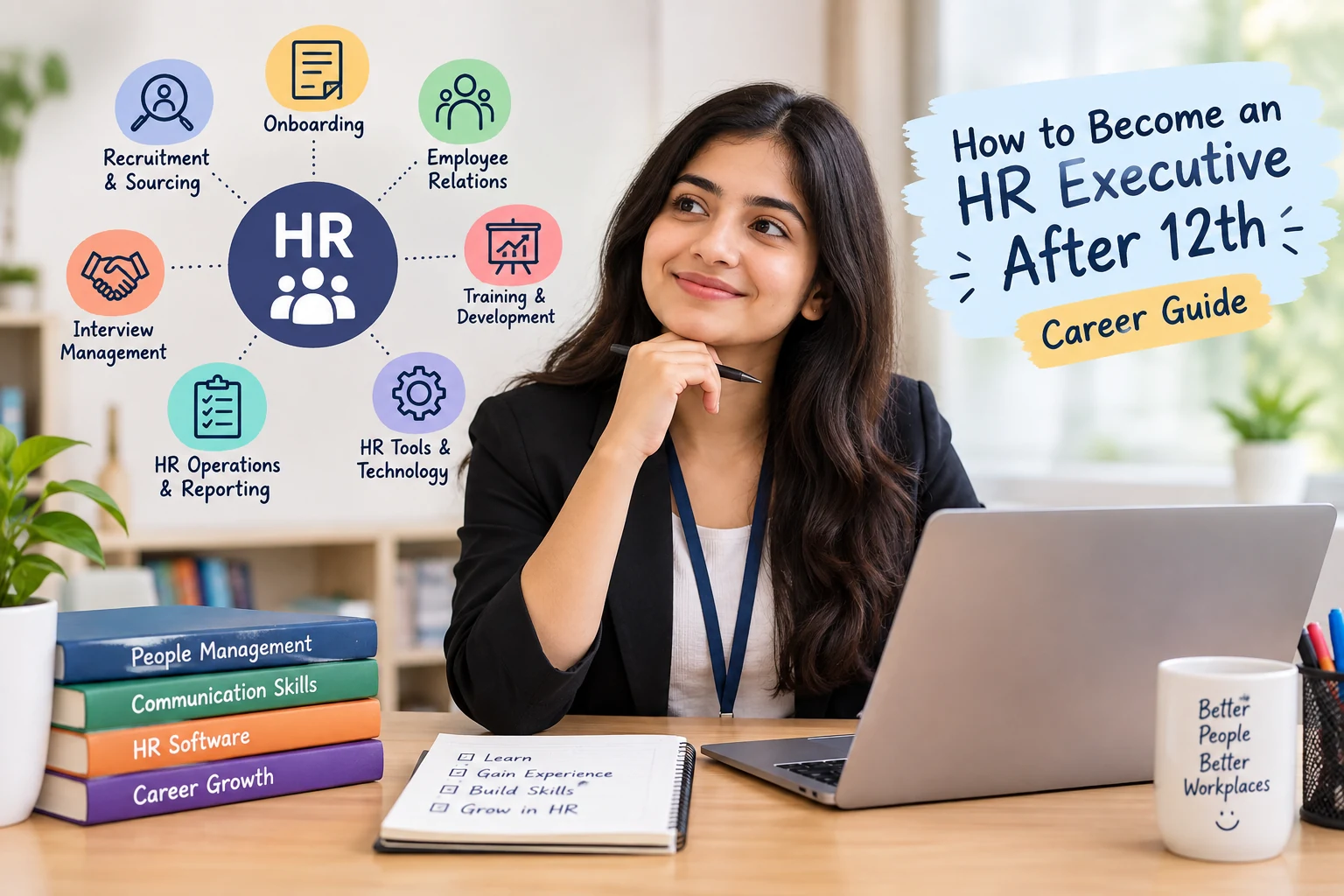
HR Executive ka role sirf recruitment ya employee records maintain karne tak limited nahi hota. Organization ke size aur structure ke according HR professional ko recruitment coordination, onboarding, employee documentation, attendance-related processes, internal communication, training support aur workplace concerns jaise alag-alag responsibilities handle karni pad sakti hain. Isliye 12th ke baad HR field ko samajhne wale student ke liye sabse pehle yeh clear karna useful hai ki HR ek single-task job nahi, balki people management aur organizational processes ka combination hai. Role ki exact responsibilities company, designation aur experience level ke hisaab se badal sakti hain.
Kisi organization me HR team employee ke journey ke kai stages par involved ho sakti hai. Recruitment ke dauran candidate communication aur interview coordination se lekar joining ke baad onboarding, documentation, attendance, employee queries, performance-related processes aur exit formalities tak HR ki responsibilities spread ho sakti hain. Har company me process alag ho sakta hai, lekin HR Executive ko generally people-related information ko organized rakhna, departments ke saath coordination karna aur employees ko relevant company processes samjhana padta hai.
HR ka people-oriented nature is role ko organization ke employees aur management ke beech ek important coordination function banata hai. HR professionals employee communication, workplace policies, recruitment requirements, training activities aur internal processes ko coordinate kar sakte hain. Kuch organizations me culture aur employee-experience activities bhi HR team ke scope me hoti hain, lekin exact responsibilities company ke structure aur HR department ke size par depend karti hain.
- Employee hiring aur onboarding process manage karna
- Workplace culture aur engagement improve karna
- Payroll, attendance aur compliance systems handle karna
- Employee satisfaction aur retention increase karna
- Company policies ko legally compliant rakhna
Simple words me samjhein to HR organization aur employees ke beech communication, policies aur people-related processes ko coordinate karne ka kaam karta hai. Ek HR Executive ko management ki requirements samajhne ke saath employees ki queries aur workplace processes ko bhi properly handle karna pad sakta hai. Isi wajah se is career me communication, documentation, organization skills aur people-handling ability ka practical combination important hota hai.
What HR Professionals Actually Do in an Organization
HR Executive ka actual kaam company ke size, department structure aur current workforce requirements ke according kaafi different ho sakta hai. Kisi organization me role recruitment aur candidate coordination ke around focused ho sakta hai, jabki doosri company me HR Executive ko employee records, onboarding, attendance-related processes, internal communication, HR reporting aur day-to-day employee queries bhi handle karni pad sakti hain. Isi wajah se HR job ko sirf “hiring job” samajhna incomplete hai; kisi position ki actual responsibility samajhne ke liye uski job description aur organization ke working structure ko dekhna zaroori hota hai.
Ek normal working day me HR Executive ko ek hi type ka task continuously karne ke bajay multiple activities ke beech coordinate karna pad sakta hai. Recruitment ke time candidate profiles review karna, shortlisted applicants se communication karna aur interview schedules maintain karna important ho sakta hai, jabki existing employees ke liye documentation, onboarding support, attendance information, internal requests aur reporting jaise kaam priority ban sakte hain. Is tarah HR work me organization, communication aur timely follow-up ka practical role hota hai, kyunki ek task ki information aksar hiring managers, candidates aur employees ke saath coordinate karni padti hai.
- Candidate sourcing: Job portals, professional networks, referrals aur company databases se relevant applicants identify karna
- Profile screening: Resume me education, experience, skills aur role-related requirements ko job description ke according review karna
- Interview coordination: Candidates aur interviewers ke saath suitable time coordinate karna aur interview-related information share karna
- Candidate communication: Interview updates, document requirements, selection status aur joining-related information professionally communicate karna
- Offer & joining support: Offer documentation, required details collection aur joining formalities ke process me coordination karna
- Employee onboarding: New employees ko relevant documents, workplace processes, policies aur initial formalities samajhne me support karna
- HR records & reporting: Employee information, attendance-related records, recruitment data aur routine HR reports ko organized rakhna
- Employee coordination: Routine workplace queries ko understand karna aur zarurat ke according concerned HR team member ya department tak matter coordinate karna
- HR technology: Organization me use hone wale HRMS, recruitment platforms, spreadsheets ya other digital systems ke through routine HR information manage karna
- Training support: Employee training sessions, learning activities aur participation records ko organize karne me HR team ko support karna
Is work ko efficiently handle karne ke liye HR Executive ko sirf people interaction par depend nahi rehna padta. Candidate aur employee information ko accurately maintain karna, spreadsheets ya HR software me records update karna, pending tasks ka follow-up karna aur confidential information ko responsibly handle karna bhi daily work ka important part ho sakta hai. Technology HR processes ko organize karne me support kar sakti hai, lekin uska use company ke systems aur role ki responsibilities ke according different hota hai.
Practical level par HR Executive ka role communication, coordination, documentation aur people-related processes ko ek saath manage karne se samjha ja sakta hai. Isi combination ki wajah se student ko HR career ki preparation karte waqt recruitment concepts ke saath professional communication, basic Excel or reporting skills, workplace documentation aur commonly used HR systems ki understanding bhi gradually develop karni chahiye.
Career Roadmap After 12th
12th ke baad HR field me jaane ke liye ek hi compulsory graduation route nahi hai. Student apni academic interest ke according BBA, BA, BCom ya related graduation programme choose kar sakta hai aur graduation ke dauran HR-related subjects, internships aur practical skills par focus kar sakta hai. Course ke saath practical exposure build karne se student ko recruitment, documentation, communication aur basic HR operations ka actual working environment samajhne me help milti hai.
- Step 1: 12th complete karo (Arts, Commerce ya Science – kisi bhi stream se HR field me entry possible hai)
- Step 2: Graduation choose karo:
- BBA (business aur management fundamentals samajhne ke liye relevant option)
- BA Psychology / Sociology (human behaviour aur social processes ko samajhne me useful academic background)
- BCom (business, accounting aur organizational processes ki understanding ke liye relevant option)
- Step 3: HR specialization courses karo:
- Human Resource Management (HRM)
- Talent Acquisition
- Payroll & Compliance
- Step 4: Internship karo (HR assistant, recruiter trainee ya admin HR role)
- Step 5: Practical tools master karo:
- Advanced MS Excel (reports & dashboards)
- HRMS platforms (Keka, Zoho People)
- ATS systems (resume tracking tools)
- Step 6: Entry-level HR Executive jobs ke liye apply karo (startups, consultancies, corporates)
- Step 7: Experience ke saath growth: HR Executive → HR Generalist → HR Manager → HR Business Partner
HR career me practical skills, communication aur digital tools ki understanding candidate ko day-to-day responsibilities handle karne me help kar sakti hai. Lekin career progression kisi ek skill se automatically decide nahi hoti; role, organization, performance, experience, responsibilities aur available opportunities sab iska part hote hain. Isliye student ko sirf graduation complete karne ke bajay gradually recruitment processes, HR documentation, Excel reporting aur workplace communication jaise practical areas par kaam karna chahiye.
Essential HR Skills (Industry Standard – Requirements)
HR Executive ki preparation sirf academic qualification tak limited nahi rehni chahiye. Daily HR work me candidate communication, interview coordination, documentation, reporting, employee queries aur internal coordination jaise tasks aa sakte hain, isliye communication ke saath basic digital tools aur organized working style develop karna useful hota hai. Student ko skills ko ek checklist ki tarah ratne ke bajay unhe small projects, internship tasks aur practical exercises ke through develop karna chahiye.
- Communication Skills: Professional speaking, email writing aur negotiation skills
- People Management: employee behavior, motivation aur expectations ko samajhna
- Interviewing Skills: structured questions se candidate evaluation karna
- Conflict Resolution: workplace disputes ko neutral aur fair way me solve karna
- Excel & Reporting: attendance sheets, salary reports aur HR dashboards banana
- Decision Making: pressure situations me fast aur accurate decisions lena
- Digital HR Tools: ATS, HRMS aur AI-based hiring systems ka use
Technology ke use ke badhne ke saath HR work me data handling aur digital systems ki importance bhi badh sakti hai. Recruitment reports, attendance information, employee records aur hiring metrics ko organize karne ke liye spreadsheets, HRMS aur other digital systems use kiye ja sakte hain. Student ke liye iska practical meaning yeh hai ki communication ke saath basic data handling aur HR technology ko samajhna future workplace responsibilities ke liye useful preparation ho sakti hai.
HR Interview Process
HR recruitment process company, job level aur hiring requirement ke according alag ho sakta hai. Kuch organizations resume screening ke baad phone ya video discussion, interview rounds, assessment aur final discussion jaise stages use karti hain, jabki smaller organizations me process comparatively simple ho sakta hai. HR Executive ke liye important baat yeh hai ki candidate communication, interview scheduling, documentation aur feedback coordination jaise steps ko systematically manage karna aana chahiye.
- Resume Screening (ATS Filter): AI tools resume ko keywords aur skills ke basis par shortlist karte hain
- Telephonic / Video Interview: communication, confidence aur basic role understanding check hota hai
- HR Behavioral Round: personality, attitude aur teamwork ability evaluate ki jati hai
- Managerial Round: technical + situational judgment test kiya jata hai
- Final Offer Stage: salary negotiation, offer letter aur joining formalities complete hoti hain
HR recruitment roles me communication aur adaptability ka practical use frequently hota hai, kyunki HR professional ko candidates, hiring managers aur internal teams ke saath alag situations me coordinate karna pad sakta hai. Technical knowledge bhi role ke according relevant ho sakta hai, especially jab HR Executive ko Excel reporting, HRMS, ATS ya other workplace systems use karne hote hain. Isliye preparation me communication aur technical skills ko ek doosre ke alternative ke roop me dekhne ke bajay dono ko gradually develop karna better approach hai.
Career Growth Path in HR (Step-by-Step Industry Ladder)
HR career me designation aur responsibilities organization ke structure ke according gradually change ho sakti hain. Entry-level role me recruitment coordination aur documentation se shuruaat ho sakti hai, jabki experience ke saath employee relations, payroll coordination, performance processes, team supervision ya HR planning jaise additional responsibilities mil sakti hain. Actual progression ka timeline fixed nahi hota aur company, role, performance aur available positions ke according vary kar sakta hai.
- HR Intern: basic HR operations, documentation aur recruitment support
- HR Executive: full recruitment cycle aur employee coordination
- HR Officer / HR Generalist: payroll, compliance aur employee relations
- HR Manager: team management aur HR strategy implementation
- HR Director / Head of HR: complete organizational HR policy aur leadership decisions
HR field me responsibilities change hone ke saath learning bhi continue karni padti hai. Excel reporting, HRMS, recruitment platforms, employee documentation aur communication processes jaise areas me practical familiarity candidate ko naye responsibilities handle karne me help kar sakti hai. Iske saath labour-related processes, company policies aur workplace practices ko samajhna bhi experience ke saath important ho sakta hai.
Real HR Work Environment (Office Reality – Practical Insight)
HR ka daily workload fixed pattern follow nahi karta, kyunki responsibilities organization ki immediate requirements ke saath change ho sakti hain. Ek din recruitment calls aur interview scheduling priority ho sakti hai, jabki doosre din onboarding documents, attendance-related queries, employee communication ya internal reporting par zyada time lag sakta hai. Isi variation ki wajah se HR Executive ke liye task prioritization aur proper record keeping practical skills ban jati hain.
- Employee attendance aur workforce tracking manage karna
- New joiners ka onboarding aur induction process conduct karna
- Hiring managers ke saath manpower planning karna
- Employee grievances aur conflicts resolve karna
- Interview scheduling aur coordination handle karna
- Company policies aur compliance ensure karna
HR professional ko workplace me alag-alag stakeholders ke saath coordinate karna pad sakta hai. Employee ki query ko samajhna, relevant policy ya process check karna, concerned manager se information lena aur issue ko appropriate channel tak le jana HR work ka part ho sakta hai. Is role me neutral communication, documentation aur confidentiality jaise professional practices situation ko properly handle karne me important ho sakte hain.
HR Job Me Psychology Ka Role (Hidden but Powerful Skill – Deep Insight)
HR work me human behaviour ko samajhna useful ho sakta hai, kyunki recruitment aur employee management dono me alag personalities, expectations aur workplace situations ke saath deal karna padta hai. HR Executive ko clinical psychologist ki tarah kaam karna nahi hota, lekin listening, observation, communication aur interpersonal behaviour ki basic understanding employee interactions ko professionally handle karne me helpful ho sakti hai.
Har employee ki working style, communication preference aur professional expectations alag ho sakti hain. HR ko in differences ko samajhte hue recruitment communication, onboarding, employee queries aur workplace interactions ko manage karna pad sakta hai. Candidate ya employee ke future performance ke baare me sirf behaviour dekhkar definite conclusion nikalna appropriate nahi hota; HR decisions ko role requirements, documented information aur organizational processes ke context me lena chahiye.
Har employee ki working style, communication preference aur professional expectations alag ho sakti hain. HR ko in differences ko samajhte hue recruitment communication, onboarding, employee queries aur workplace interactions ko manage karna pad sakta hai. Candidate ya employee ke future performance ke baare me sirf behaviour dekhkar definite conclusion nikalna appropriate nahi hota; HR decisions ko role requirements, documented information aur organizational processes ke context me lena chahiye.
1. Employee Motivation Analysis (What drives performance?)
- Salary structure aur financial incentives ka impact samajhna
- Career growth aur promotion opportunities ka analysis karna
- Work culture aur team environment ka influence judge karna
- Individual vs team motivation difference identify karna
Employee motivation ko ek single factor se explain nahi kiya ja sakta. Compensation, recognition, learning opportunities, role clarity, manager support, workload aur workplace environment jaise factors alag employees ke experience ko differently influence kar sakte hain. HR ke liye practical approach yeh hai ki assumptions banane ke bajay employee feedback, workplace data aur relevant discussions ko samajhkar appropriate organizational processes ke through response diya jaye.
2. Work Stress & Burnout Detection (Early warning system)
- Excess workload aur overtime patterns identify karna
- Employee productivity drop ka reason analyze karna
- Burnout symptoms (fatigue, disengagement) detect karna
- Work-life balance maintain karne ke solutions suggest karna
Workload, prolonged pressure aur poor work-life balance employee well-being ko affect kar sakte hain, isliye kuch organizations workplace wellness aur employee-support initiatives par focus karti hain. HR professional ko aise concerns ko identify karte waqt organization ki policies follow karni chahiye aur serious personal or health-related matters ko appropriate professional support systems tak refer karna chahiye. HR ka role support aur workplace process tak ho sakta hai; medical diagnosis ya treatment uski responsibility nahi hoti.
3. Conflict Management (Neutral decision making skill)
- Team members ke beech misunderstanding resolve karna
- Manager vs employee conflict handle karna
- Workplace bias aur favoritism avoid karna
- Fair aur neutral decision lena without emotional influence
Workplace conflict handle karte waqt HR ko involved employees ki concerns samajhne, relevant facts aur policies review karne aur appropriate organizational process follow karne ki zarurat pad sakti hai. Har disagreement ka solution same nahi hota, isliye HR professional ko personal assumptions se bachkar documentation, communication aur company procedure ke basis par matter ko handle karna chahiye.
4. Behavioral Interviewing (Real mindset understanding)
- Situation-based questions (STAR method) use karna
- Candidate ka attitude aur decision-making analyze karna
- Pressure handling aur problem-solving ability test karna
- Honesty aur communication clarity evaluate karna
Behavioral interview questions ka purpose candidate ke past experiences aur specific situations ko samajhna ho sakta hai. Candidate se kisi challenge, teamwork situation ya difficult decision ke baare me poochkar interviewer uske approach aur communication ko better understand kar sakta hai. Lekin interview method company aur role ke according change hota hai, isliye har HR interview me behavioral assessment ka same format follow hona zaroori nahi hai.
5. Culture Fit Analysis (Company psychology matching)
- Candidate company values ke saath align hota hai ya nahi
- Team collaboration aur adaptability level check karna
- Long-term retention probability judge karna
- Work ethics aur discipline evaluate karna
Recruitment decisions me technical qualification ke saath role requirements, communication, teamwork aur organization ke working environment jaise factors bhi consider kiye ja sakte hain. “Culture fit” ko vague personal preference banane ke bajay clearly defined job expectations aur workplace behaviours ke context me evaluate karna more appropriate hota hai. Is approach se hiring discussion ko role ke actual requirements se connected rakha ja sakta hai.
6. Data + Psychology Combination (Modern HR trend)
- Employee behavior ko HR analytics ke through track karna
- Performance reports aur engagement scores analyze karna
- Attrition (job leaving rate) ka psychological reason samajhna
- AI tools se employee sentiment analysis karna
HR teams organization ke size aur available systems ke according employee data, recruitment metrics aur feedback information ka use kar sakti hain. Aise data ko human context ke saath dekhna useful hota hai, kyunki numbers kisi situation ka signal de sakte hain lekin unka reason samajhne ke liye employee feedback aur workplace context bhi relevant ho sakta hai. Isliye HR analytics ko decision-making ka ek supporting input samajhna better hai, complete replacement nahi.
Practical Insight: HR work me recruitment, communication, documentation, employee coordination aur workplace processes ek doosre se connected hote hain. Isliye aspiring HR professional ke liye sirf candidates ko hire karna seekhna enough nahi hai; use information ko properly record karna, people-related conversations ko professionally handle karna, company procedures samajhna aur available HR tools ka responsible use bhi seekhna chahiye. Yeh combination experience ke saath gradually develop hota hai.
HR Resume Kaise Banate Hain (ATS-Friendly 2027 Guide – Industry Standard Format)
HR resume aapke academic background, practical exposure, relevant skills aur career objective ko ek structured format me present karta hai. Fresher ke case me internship, college project, recruitment-related activity, communication ability aur Excel jaise practical skills ko clearly mention karna useful ho sakta hai. Resume ka purpose information ko attractive banane ke bajay recruiter ko aapki relevant qualification aur role-related preparation quickly samajhne me help karna hona chahiye.
Kuch organizations applicant tracking systems ka use resumes ko organize aur search karne ke liye karti hain, lekin ATS ka exact process software aur employer ke setup ke according vary karta hai. Isliye resume ko unnecessarily keywords se fill karne ke bajay job description me genuinely relevant skills aur responsibilities ko clear language me mention karna better practice hai. Jo skills aapke paas actually hain, unhi ko accurately represent karna important hai.
Modern HR resume me structure aur relevance dono important hote hain. Candidate ka education, internship experience, practical projects, tools, communication skills aur relevant achievements logically arranged hone chahiye. Resume ko har job ke liye completely rewrite karne ki zarurat nahi hoti, lekin position ki actual requirements ke according relevant information ko clearly highlight karna application ko more focused bana sakta hai.
1. Career Objective (Clear & Role-Focused Statement)
- 2–3 lines ka short aur focused objective likho
- HR Executive role ko clearly mention karo
- Generic lines jaise “seeking opportunity” avoid karo
- Company value aur contribution hint do
Example mindset: “I want to contribute in recruitment, employee engagement and HR operations using my communication and analytical skills.”
2. Internship & Practical Exposure (Most Important Section)
- HR internship ya recruitment trainee experience mention karo
- Real tasks highlight karo (screening, calling, onboarding)
- Numbers use karo (example: 50+ candidates screen kiye)
- Project-based experience add karo agar internship nahi hai
Internship ka practical benefit yeh hai ki student classroom concepts ko actual workplace tasks se connect kar pata hai. HR internship me candidate screening, interview scheduling, recruitment calling, onboarding documentation, employee records ya reporting jaise tasks ka exposure mil sakta hai. Har internship me responsibilities same nahi hoti, isliye resume me wahi tasks mention karne chahiye jo student ne genuinely perform ya assist kiye hon.
3. Technical Skills (ATS Filter Pass Karne Ka Key Factor)
- Advanced MS Excel (Pivot table, VLOOKUP, dashboards)
- HRMS tools (Keka, Zoho People, Darwinbox)
- ATS systems (resume tracking & keyword matching)
- Basic data entry aur reporting tools
Applicant tracking systems ka use employers resume applications ko organize, search ya filter karne ke liye kar sakte hain, lekin exact filtering method platform aur employer configuration par depend karta hai. Isliye resume me job description se relevant skills ko natural aur accurate language me mention karna useful hai. Candidate ko aise keywords add nahi karne chahiye jo uske actual knowledge ya experience ko represent nahi karte.
4. Soft Skills (HR Role Ka Core Requirement)
- Communication skills (verbal + written)
- Team collaboration aur coordination ability
- Leadership aur decision-making mindset
- Conflict handling aur negotiation skills
HR role me communication, coordination, listening aur conflict-handling jaise interpersonal skills ka regular use ho sakta hai, jabki Excel, HRMS aur recruitment systems jaise technical tools operational work ko support karte hain. Entry-level candidate ke liye dono categories ko gradually develop karna practical approach hai, kyunki actual job responsibilities organization aur designation ke according different combination demand kar sakti hain.
5. Resume Format (ATS-Friendly Structure – Standard)
- Single page resume (freshers ke liye best)
- Simple fonts (Arial, Calibri preferred)
- No heavy graphics or design elements
- Clear headings aur bullet points use karo
- PDF format me save karo (editable format avoid karo)
Resume ko simple aur clearly structured rakhna generally practical hota hai, kyunki recruiter ko education, experience aur skills jaise important sections easily locate karne chahiye. Agar kisi employer ka application system specific formatting instructions deta hai, to un instructions ko priority deni chahiye. Decorative design ke comparison me readable headings, consistent spacing aur accurate information fresher resume ke liye zyada useful focus areas hain.
6. Recruiter Psychology Insight (Important Hidden Factor)
- Recruiter resume ko 10–15 seconds me scan karta hai
- First impression skills section se banta hai
- Keywords match hona primary filter hota hai
- Irrelevant information resume reject kar sakti hai
HR position ke liye resume banate waqt relevant information ko priority dena useful hai, lekin iska matlab yeh nahi ki candidate apni complete academic background ya transferable skills remove kar de. Education, internships, projects, software knowledge, communication-related activities aur relevant achievements ko role ke context me present kiya ja sakta hai. Main objective yeh hona chahiye ki recruiter ko candidate ki preparation aur suitability se related information clearly mil jaye.
HR Field Me Growth Reality
HR career me progression ek fixed timetable follow nahi karti. Candidate ki responsibilities experience ke saath expand ho sakti hain, lekin actual designation aur promotion timeline organization structure, performance, available vacancies, role requirements aur individual experience par depend karti hai. Isliye 1, 3 ya 5 saal ke numbers ko guaranteed career milestones ki tarah nahi dekhna chahiye.
HR departments me technology, employee experience, recruitment analytics aur workforce planning jaise areas ka use organization ke size aur business requirements ke according vary karta hai. Experience ke saath HR professional ko ek specific area me specialization mil sakti hai ya recruitment, operations aur employee relations jaise multiple functions handle karne ka exposure mil sakta hai. Career direction individual role aur organization ki needs ke according develop hoti hai.
- 1–2 Years (Learning Phase):
- Recruitment coordination aur resume screening
- Interview scheduling aur candidate communication
- Basic HR documentation aur Excel reporting
- 3–5 Years (HR Executive → HR Generalist):
- Full recruitment lifecycle handle karna
- Payroll processing aur attendance management
- Employee engagement aur grievance handling
- 5–8 Years (HR Manager Level):
- Team leadership aur hiring strategy planning
- Performance management systems implement karna
- Policy making aur compliance handling
- 10+ Years (HR Head / HR Director):
- Complete HR strategy design karna
- Company culture aur workforce planning control karna
- Business-level decision making me HR role lena
Different types of organizations HR professionals ko different kinds of exposure de sakti hain. Larger organizations me recruitment, HR operations, payroll coordination, employee relations aur specialized HR functions separate teams me divided ho sakte hain, jabki smaller organizations me ek HR professional ko multiple responsibilities handle karni pad sakti hain. Career growth ko company type se automatically connect karne ke bajay actual job responsibilities, learning opportunities aur role progression ko separately evaluate karna more useful hai.
HR Career Challenges (Real Industry Truth – No Filter Reality)
HR role me people-related responsibilities ke saath administrative aur coordination work bhi hota hai, isliye workload organization ke current requirements ke according change ho sakta hai. Recruitment deadlines, employee queries, documentation, interviews aur internal coordination ek hi period me aa sakte hain. Student ko HR career consider karte waqt sirf job title nahi dekhna chahiye, balki role description me listed responsibilities aur expected working style ko bhi samajhna chahiye.
- Urgent hiring requirements aur tight deadlines handle karna
- Employees ke emotional, behavioral aur personal issues manage karna
- Team conflicts ko neutral aur unbiased way me solve karna
- Rejected candidates ko professional feedback dena
- Peak recruitment seasons me high workload aur pressure handle karna
- Multiple departments ke saath coordination maintain karna
HR work me difficult conversations, changing priorities aur employee-related concerns aa sakte hain, isliye patience, professional communication aur organized working style useful qualities hain. Har organization ka workload aur work environment alag hota hai, isliye HR career ko automatically stress-free ya stressful assume karna appropriate nahi hai. Student ko apni communication style, people-handling comfort aur work expectations ko actual job responsibilities ke saath compare karke career decision lena chahiye.
HR Job Ka Future Scope (2027 & Beyond – Industry Transformation)
HR technology aur workplace practices time ke saath change ho rahe hain. Recruitment platforms, HRMS, employee databases, reporting systems aur digital communication tools ne kai HR processes ko technology-supported bana diya hai. Saath hi organizations employee onboarding, engagement, workforce planning aur internal communication jaise areas ko bhi HR processes ka part bana sakti hain. In changes ka exact impact company ke size, industry aur technology adoption par depend karta hai.
Aane wale years me HR professionals ke liye people-related understanding ke saath digital systems aur basic data interpretation ko samajhna useful ho sakta hai. Iska matlab yeh nahi ki har HR role highly technical hoga; role ke according technology ka use limited bhi ho sakta hai. Student ko apne target HR function ke according tools aur skills develop karne chahiye.
AI aur Automation ka Impact (Recruitment ka naya system)
Kuch recruitment systems resume information ko organize karne, relevant keywords ya criteria identify karne aur recruiters ko applications manage karne me support karte hain. AI-enabled features ka exact use employer aur software platform ke according different ho sakta hai, aur automated screening ko human review ke saath use kiya ja sakta hai. Isliye HR student ke liye AI ko ek supporting recruitment technology ke roop me samajhna useful hai, na ki complete replacement ke roop me.
HR professionals ko digital recruitment tools use karte waqt data accuracy, candidate communication aur organizational procedures par bhi attention dena padta hai. Technology screening ya scheduling ke kuch parts ko simplify kar sakti hai, lekin candidate interaction, hiring requirements ko samajhna aur final organizational decisions ke liye human judgment ki zarurat role aur company ke according bani reh sakti hai.
Data-Driven HR Decision Making (Numbers matter more than opinion)
HR analytics ka use employee attendance, recruitment activity, attrition information, performance-related indicators ya training data jaise areas ko understand karne ke liye kiya ja sakta hai. Data se patterns identify karne me help mil sakti hai, lekin kisi employee ya team ke situation ko samajhne ke liye context aur qualitative information bhi relevant ho sakti hai. Isliye HR data ko organizational decisions ka supporting input samajhna more practical approach hai.
- Attrition rate analysis (employees kyun job chhod rahe hain)
- Performance tracking dashboards
- Hiring success rate measurement
Is approach ki wajah se HR work me people management ke saath basic data interpretation ki value bhi ho sakti hai. Student ke liye Excel reporting, simple charts, attendance data, recruitment metrics aur structured record keeping jaise skills se shuruaat karna practical rahega. Advanced analytics ki requirement har HR position me same nahi hoti.
Remote Work aur Global Hiring Culture
Remote aur hybrid working arrangements kuch organizations me HR processes ko different tarike se manage karne ki requirement create kar sakte hain. Online onboarding, digital documentation, virtual interviews, employee communication aur attendance or work-tracking systems jaise processes role ka part ho sakte hain. Lekin working model company aur job ke according different hota hai, isliye har HR position ko remote-work related responsibilities nahi milengi.
Agar organization multiple locations ya countries me employees ke saath kaam karti hai, to HR ko time-zone coordination, documentation requirements, communication practices aur location-specific policies jaise additional factors handle karne pad sakte hain. In responsibilities ka scope organization ke size aur workforce structure par depend karta hai.
Employee Experience (New HR Priority)
Employee experience HR ke liye ek broader area ho sakta hai jisme onboarding, internal communication, workplace feedback, learning opportunities aur employee support processes include ho sakte hain. Har organization is area ko same priority ya structure ke saath handle nahi karti. HR student ke liye important point yeh hai ki employee experience ko sirf salary ya workplace culture tak limit na samjhe, balki employee ke organization ke saath complete work journey ke context me dekhe.
- Better onboarding experience
- Friendly work culture
- Career growth opportunities
- Regular feedback systems
Is broader approach me HR ka role sirf recruitment stage tak restricted nahi rehta. Employee joining ke baad onboarding, communication, feedback, training coordination aur workplace processes bhi HR responsibilities ka part ho sakte hain. Exact role company ke HR structure aur designation ke according decide hota hai.
Mental Health aur Work-Life Balance Focus
Workplace well-being ke context me organizations workload management, flexible work arrangements, employee assistance resources ya wellness activities jaise initiatives use kar sakti hain. In initiatives ka availability aur scope employer ke policies par depend karta hai. HR professional ko employee concerns ko appropriate workplace process ke through handle karna chahiye aur medical or clinical issues ko qualified professionals ke domain me hi refer karna chahiye.
HR ka responsibility employee productivity ke saath workplace processes ko manage karna ho sakta hai, lekin employee ki personal health ka complete responsibility HR ki nahi hoti. Professional boundaries maintain karna important hai, especially jab employee kisi serious personal, psychological ya medical concern ke baare me information share kare.
Final Reality (Future HR Skill Set)
Future HR roles me required skills designation aur organization ke according change ho sakti hain. Recruitment-focused role me sourcing aur interview coordination important ho sakte hain, jabki HR operations role me documentation, reporting aur employee processes par zyada focus ho sakta hai. Isliye student ko ek fixed skill list ke bajay apne target HR function ke according skills develop karni chahiye.
- Technology understanding (AI tools + HR software)
- Human psychology aur behavior analysis
- Data interpretation aur reporting skills
Practical terms me HR career people-related responsibilities aur technology-supported processes ka combination ho sakta hai. Communication, human behaviour ki basic understanding, data handling aur HR software ka knowledge alag-alag roles me different levels par useful ho sakta hai. In skills ko graduation, internship, projects aur entry-level work ke through gradually develop kiya ja sakta hai.
Final Advice for Students (Real Career Guidance – Practical Approach)
Agar aap HR field me career consider kar rahe hain, to graduation ke saath practical exposure build karna useful rahega. HR ke concepts ko sirf books tak limited rakhne ke bajay recruitment workflow, employee documentation, interview coordination, Excel reporting aur professional communication jaise areas ko practically samajhne ki koshish karein. Isse aapko graduation complete hone se pehle hi HR work ki basic expectations ka clearer idea mil sakta hai.
- Internship Priority: College ke saath HR internship zaroor karo taaki real exposure mile
- Communication Practice: Daily English speaking aur professional writing improve karo
- LinkedIn Presence: Professional profile banao aur HR content follow karo
- Technical Skills: Excel, HRMS aur ATS tools ka hands-on knowledge lo
- Interview Practice: Mock interviews aur real HR questions practice karo
- Industry Awareness: HR trends aur hiring processes ko regularly follow karo
HR career ko ek single formula se define nahi kiya ja sakta. Communication, empathy, organized working, digital tools aur practical experience alag situations me alag importance rakh sakte hain. Student ke liye useful approach yeh hai ki degree ke saath real workplace exposure le, apni skills ko regularly improve kare aur har new responsibility se practical learning collect kare.
Salary Structure Estimated Salary Range in India (Figures may vary by company and location)
India me HR Executive ki salary ek fixed amount nahi hoti. Compensation company, location, industry, candidate ke experience, role responsibilities aur organization ke salary structure ke according vary kar sakta hai. Neeche diye gaye figures ko guaranteed salary nahi samajhna chahiye; ye sirf article me diye gaye estimated ranges hain aur actual offer ko samajhne ke liye current job listings aur employer-specific information ko separately check karna useful rahega.
- Freshers (0–1 Year Experience):
- ₹18,000 – ₹25,000/month (small companies & local firms)
- ₹25,000 – ₹35,000/month (startups & mid-level companies)
- HR Executive (1–3 Years Experience):
- ₹25,000 – ₹45,000/month (general HR roles)
- ₹40,000 – ₹55,000/month (IT companies / fast-growing startups)
- HR Generalist / Senior Executive (3–5 Years):
- ₹50,000 – ₹80,000/month
- Recruitment + Payroll + Employee relations handle karna hota hai
- HR Manager (5–8 Years):
- ₹80,000 – ₹1,50,000/month
- Team leadership + hiring strategy + policy making
- HR Head / HR Director (8–12+ Years):
- ₹1.5 Lakh – ₹4 Lakh+ per month (MNC level)
- Complete HR strategy aur organizational culture control
Salary comparison karte waqt sirf company category dekhna sufficient nahi hota. HR compensation location, job level, organization size, industry, candidate experience, responsibilities aur employer ke internal salary structure ke according change ho sakta hai. Isliye kisi specific HR role ke liye expected salary samajhne ke liye same designation, location aur experience level ki current job listings ko compare karna more meaningful approach hai.
Real-Life Example (HR Career Growth Journey Step-by-Step)
Neeche diya gaya example ek possible HR career pathway ko samjhane ke liye hai, guaranteed timeline nahi. Real career path student ki graduation, internship, first job, responsibilities, organization structure aur available opportunities ke according alag ho sakta hai. Is example ka purpose designation ki fixed prediction dena nahi, balki yeh dikhana hai ki education se practical HR responsibilities tak transition kis tarah ho sakta hai.
- Step 1: Student BBA / BA / BCom complete karta hai
- Step 2: HR internship join karta hai (recruitment + admin support)
- Step 3: Resume screening, interview scheduling aur candidate coordination seekhta hai
- Step 4: HR tools use karna start karta hai (Excel, ATS, HRMS systems)
- Step 5: HR Executive role milta hai aur independent hiring handle karta hai
- Step 6: 3–5 saal me HR Generalist / Team lead ban jata hai
- Step 7: 5–8 saal me HR Manager level tak growth hoti hai
Important point: Communication aur HR tools ki practical understanding entry-level responsibilities ko handle karne me useful ho sakti hai, lekin promotion ka timeline sirf in do skills se decide nahi hota. Performance, experience, organizational structure, role availability aur additional responsibilities bhi career progression ko influence kar sakte hain.
Common Mistakes Students Make (HR Career Reality – Deep Analysis)
HR career prepare karte waqt kuch common gaps students ke practical preparation ko affect kar sakte hain. Inme HR role ko sirf interview-taking job samajhna, internship ya project exposure ignore karna, professional communication par practice na karna aur basic HR software se unfamiliar rehna include ho sakta hai. Har student ki situation different hoti hai, isliye in points ko general checklist ki tarah use karke apni current preparation identify karna more useful hai.
- HR ko easy job samajhna: Log sochte hain HR sirf interview lene ka kaam hai, lekin actual me yeh people management role hai.
- Communication skills ignore karna: Weak English aur unclear communication HR career ko directly affect karta hai.
- Internship skip karna: Without real exposure, interview me confidence nahi aata.
- HR tools na seekhna: Excel, ATS aur HRMS ka knowledge na hona major disadvantage hai.
- Interview practice na karna: Mock interviews ki kami se confidence low rehta hai.
- Behavioral understanding ignore karna: HR me psychology aur human behavior understanding critical skill hai.
Practical HR knowledge classroom concepts ke saath workplace exposure se gradually develop hoti hai. Recruitment workflow, candidate communication, documentation, Excel reporting, onboarding aur employee coordination jaise tasks ko real situations me observe ya perform karne se student ko role ki practical expectations better samajh aa sakti hain. Isliye theory ko internship, project work aur entry-level experience ke saath connect karna useful preparation hai.
FAQ – HR Executive Career
Q: Can I become HR after 12th?
Yes. 12th ke baad graduation programme jaise BBA, BA ya BCom choose karke HR-related subjects, internship aur practical skills par focus kiya ja sakta hai. Graduation ke baad candidate internship, recruitment trainee, HR assistant ya other entry-level HR roles ke through field me entry seekh sakta hai. Exact eligibility employer aur role ke according vary kar sakti hai.
Q: Is HR a good career option in 2027?
HR ke har role me coding required nahi hoti. However, role ke according Excel, HRMS, ATS, reporting systems aur other digital tools ka use karna pad sakta hai. Isliye coding se zyada important yeh samajhna hai ki jis HR position ke liye apply kiya ja raha hai, usme kaunse software aur technical tasks actually listed hain.
Q: Do HR jobs require coding or technical skills?
HR ke har role me coding required nahi hoti. However, role ke according Excel, HRMS, ATS, reporting systems aur other digital tools ka use karna pad sakta hai. Isliye coding se zyada important yeh samajhna hai ki jis HR position ke liye apply kiya ja raha hai, usme kaunse software aur technical tasks actually listed hain.v
Q: What skills are most important for HR Executive?
HR Executive role ke liye communication, candidate coordination, basic recruitment knowledge, documentation, organization skills aur relevant digital tools ki understanding useful ho sakti hai. Exact skill requirements company aur job description ke according change hoti hain, isliye student ko target vacancies ki requirements bhi review karni chahiye.
Q: What is the starting salary of HR Executive in India?
HR Executive ki starting salary company, location, role responsibilities, qualification, experience aur employer ke salary structure ke according vary karti hai. Is page par diye gaye salary figures estimates hain, guaranteed offers nahi. Actual salary samajhne ke liye current job listings aur specific employer information ko separately check karna better hai.
Disclosure: Some links on this page may be affiliate links. We may earn a small commission at no extra cost to you.
HR Learning Resource
Buy HR Management Complete Guide
Disclosure: Some links on this page may be affiliate links. We may earn a small commission at no extra cost to you.
EarnKaro Resource
About Author & Content Trust (Why You Can Rely on This Guide)
This guide is intended to give students a practical introduction to HR careers after 12th, including education routes, entry-level responsibilities, workplace skills, recruitment processes and possible career directions. Because HR roles differ across employers, the article explains common patterns rather than presenting one fixed pathway for every student.
HR work continues to change as organizations adopt digital recruitment systems, HR software, data reporting and different workplace arrangements. For that reason, students should treat the skills discussed in this guide as a foundation and also review the requirements of current HR vacancies when preparing for a specific role.
The guide is organized around the practical areas a student is likely to encounter while exploring an HR career: education, internships, recruitment activities, communication, digital tools, employee coordination and career progression. The aim is to connect academic preparation with the type of responsibilities commonly described in HR job roles.
Content Quality Standards Followed
- Information is based on publicly available industry resources, job trends and educational research available at the time of writing.
- Focus on practical knowledge instead of only textbook theory
- Real corporate hiring process and workplace scenarios included
- Simple language for better understanding of students
- Updated insights based on modern HR tools and systems
How This Content is Prepared
This guide is structured after analyzing modern HR job roles, recruitment systems, and skill requirements used in companies today. The aim is to help students understand what actually happens in the HR profession beyond academic studies.
Every section is written to reflect real workplace expectations such as communication skills, digital HR tools, employee psychology, and career growth patterns.
Who This Content is For
- Students after 12th planning HR career
- Graduates exploring HR job opportunities
- Beginners who want to understand real HR roles
- Career switchers interested in HR field
Disclaimer
This content is provided for educational and general career guidance purposes. Information about HR job responsibilities, salary figures, hiring practices, required skills, and possible career paths can differ from one organization to another. Actual opportunities and compensation may depend on factors such as the employer, job location, educational background, practical skills, previous experience, role responsibilities, and changing employment conditions. Readers should review the details of a specific job, course, or organization before making an education or career-related decision.
The practical steps discussed in this guide are intended to help students understand the type of preparation that may be useful for an HR career. Along with academic learning, students can develop their understanding through internships, projects, workplace exposure, communication practice, documentation work, and familiarity with commonly used HR tools. The type and availability of such opportunities can vary, so students should consider their own circumstances and the requirements of the roles they are interested in.
Final Trust Note
Our focus is to provide honest, practical and updated career guidance so that students can make informed decisions about their future. The goal is not just to describe jobs, but to help you understand how the real industry works.