Introduction – What is Innovative Thinking?
Innovative thinking ka simple meaning hota hai — kisi bhi problem ko normal tareeke se nahi, balki naye aur better solution ke through solve karna. Ye sirf “new idea sochna” nahi hota, balki us idea ko real life me kaam aane layak banana hota hai, Agar hum real world ko dekhe to har bada innovation kisi na kisi problem se start hua hai. For example, mobile payment apps isliye banaye gaye kyunki logon ko cash carry karna difficult lagta tha. Food delivery apps isliye successful hue kyunki busy lifestyle me log ghar se bahar jaake khana order karna avoid karna chahte the.
2027 ke time me innovation sirf engineers ya scientists tak limited nahi hai. Aaj ek normal student bhi YouTube, Instagram, AI tools ya startup ideas ke through apna innovative solution duniya tak pahucha sakta hai, Simple words me, innovative thinking ka matlab sirf kisi bilkul naye idea ko invent karna nahi hai. Iska practical meaning ye hai ki hum kisi existing situation, process ya problem ko dhyan se dekhein aur sochein ki ise aur useful, simple, accessible ya effective kaise banaya ja sakta hai. Ek student ke liye ye approach daily study routine, college activities, technology use, communication, projects aur future work tak apply ho sakti hai. Jab student kisi problem ko sirf accept karne ke bajay uske reason ko samajhne aur possible improvements ke baare me sochne lagta hai, tab dheere-dheere uski innovative thinking develop hoti hai.
After 12th Students Ka Biggest Confusion (Reality Check)
12th ke baad har saal lakhon students ek hi confusion me hote hain — “Kaunsa course choose kare jo future secure bhi ho aur earning bhi de?” Ye confusion normal hai, kyunki education system abhi bhi mostly marks aur traditional career options (engineering, medical, commerce) tak hi limited hai.
Lekin 2027 ka job market purane time jaisa nahi raha. Ab companies sirf degree nahi dekhti, wo dekhti hain ki student real problems solve kar sakta hai ya nahi. India me AI, automation, freelancing aur startup economy itni fast grow kar rahi hai ki skill-based earning degree se zyada important ho gayi hai.
- Aaj sirf degree hone se job guarantee nahi milti, especially competitive fields me
- Companies practical thinking, communication aur problem-solving ko zyada value deti hain
- AI tools ne basic jobs replace kar diye hain, isliye creativity aur thinking skills ki demand badh rahi hai
Isliye 12th ke baad course choose karte waqt sirf degree ka naam dekhna sufficient approach nahi hai. Student ko ye bhi samajhna chahiye ki us course ke saath kaunsi practical skills develop hongi, kis type ke problems solve karne ka exposure milega aur apni interests ko kis direction me explore kiya ja sakta hai. Innovative thinking isi process me useful hoti hai, kyunki ye student ko options ko blindly follow karne ke bajay questions poochne, information compare karne, small experiments karne aur apne interests ke basis par gradually direction samajhne me help karti hai.
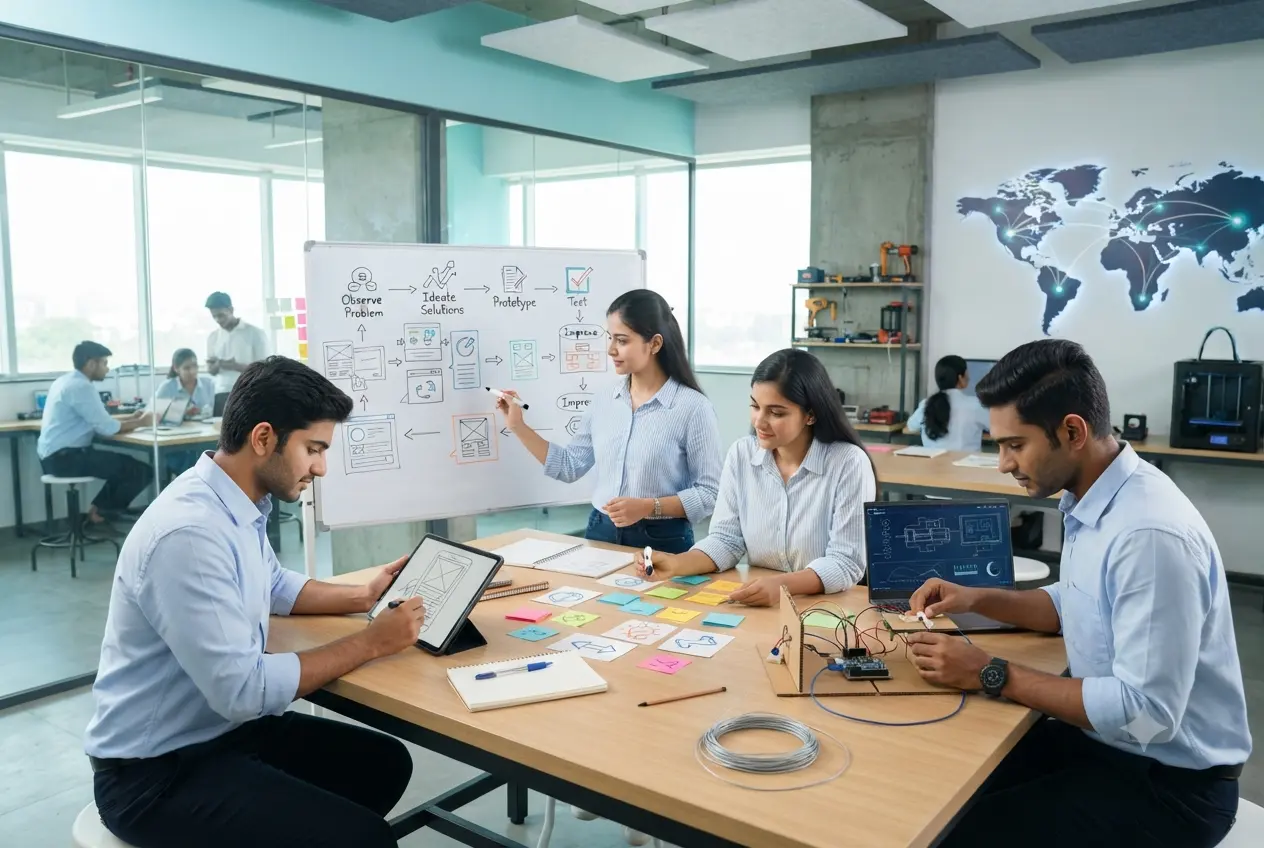
Students exploring creativity, problem-solving and innovative thinking through practical ideas and projects.
Real-Life Startup Example: How a Problem Can Turn Into an Idea
Startup thinking ko samajhne ka ek simple tareeka hai ki hum kisi business ko uske final form me dekhne ke bajay us problem se samjhein jiske around uska solution develop hua. Daily life me bahut si situations aisi hoti hain jahan log kisi process ko inconvenient hone ke bawajood use karte rehte hain, kyunki unhe uska better alternative clearly available nahi hota. Innovation ki thinking wahi se shuru ho sakti hai—jab koi person existing process ko dhyan se observe karta hai, users ko kya difficulty ho rahi hai ye samajhne ki koshish karta hai, aur phir sochta hai ki isi kaam ko kisi different tareeke se kaise kiya ja sakta hai. Iska matlab ye nahi ki har observed problem automatically ek successful business ban sakti hai; pehle problem ki actual need, possible solution aur users ki response ko samajhna zaroori hota hai.
Food delivery ko ek familiar example ke roop me dekha ja sakta hai. Traditional situation me customer ko restaurant tak jaana, phone par order dena ya available local delivery arrangement par depend karna pad sakta tha. Digital platforms ne is process ke different parts—restaurant information, menu selection, order placement, payment aur delivery coordination—ko ek connected interface me bring karne ka approach use kiya. Customer ke liye process ka ek hissa mobile screen par shift hua, jabki restaurants ke liye orders aur customers tak pahunchne ka ek additional channel create hua. Yahan important learning sirf food delivery app banana nahi hai; important point ye hai ki ek existing process ke alag-alag steps ko observe karke unhe ek different system ke through organise kiya ja sakta hai.
- Customer ko available restaurants aur menu options ek digital platform par dekhne ka option mila.
- Restaurant aur customer ke beech order information ko digitally manage karne ka process develop hua.
- Delivery coordination ko technology ke through ek organised service model ka part banaya gaya.
Isi tarah ki thinking ko transport, education, payments, local services aur communication jaise areas me bhi observe kiya ja sakta hai, lekin har sector ki problem aur solution alag hota hai. Kisi transport service me main issue booking aur availability ho sakta hai, education me learning material tak access ya course delivery ka process important ho sakta hai, jabki local services me customer aur service provider ke beech coordination challenge ho sakta hai. Isliye innovative thinking ka useful part kisi existing startup ka idea copy karna nahi, balki ye samajhna hai ki us solution ne kis specific problem ko address karne ki koshish ki, users ko kya value mili aur implementation ke dauran kaunse practical challenges aa sakte hain.
Students ke liye is example ka sabse useful lesson ye hai ki startup idea dhoondhne ke liye hamesha koi extraordinary invention imagine karna zaroori nahi hota. Apne college, neighbourhood, online learning, public transport, shopping, communication ya daily routine me repeatedly aane wali choti difficulties ko observe karna ek practical starting point ho sakta hai. Uske baad student khud se kuch basic questions pooch sakta hai: problem exactly kis person ko ho rahi hai, existing solution me difficulty kya hai, kya log actually kisi alternative ki need feel karte hain, aur proposed solution ko bina large investment ke small scale par kaise test kiya ja sakta hai. Isi observation, questioning, testing aur feedback ke process se ek raw idea gradually clearer ho sakta hai. Har idea business nahi banta, lekin is process ki practice students ko problems ko structured way me dekhne aur solutions ko realistically evaluate karne ki habit develop karne me help kar sakti hai.
Traditional Thinking vs Innovative Thinking (Comparison Table)
| Aspect | Traditional Thinking | Innovative Thinking |
|---|---|---|
| Approach | Follow fixed rules | Break rules to find better solutions |
| Focus | Memorization | Problem solving |
| Risk Handling | Avoid risk | Experiment with ideas |
| Learning Style | Theory based | Practical + experimental |
| Career Impact | Stable jobs | Startups + high-growth careers |
Career Importance of Innovative Thinking (2027 Reality)
Innovative thinking aaj ke time me kisi ek career field tak limited nahi hai. Ye ek universal skill ban chuki hai jo almost har industry me required hai. Current hiring practices role aur industry ke according different hoti hain, lekin kai professional settings me formal qualification ke saath practical skills aur problem-solving ability bhi relevant ho sakti hai, India aur global level par AI, automation aur digital transformation ke badhne se traditional jobs change ho rahi hain. Is situation me wahi log grow karte hain jo naye ideas soch sakte hain aur unko practical solutions me convert kar sakte hain.
- Entrepreneurship: Apna startup start karne ke liye problem identification aur solution thinking zaroori hai
- Technology Sector: Software, AI aur product development me creative thinking high demand skill hai
- Marketing: Brands ko unique ideas aur strategy chahiye hoti hai jo audience ko attract kare
- Design & UX: User experience improve karne ke liye innovative approach use hoti hai
- Engineering: Real-world problems solve karne ke liye practical innovation required hoti hai
Iska practical takeaway ye hai ki degree aur innovative thinking ko ek doosre ke replacement ke roop me nahi dekhna chahiye. Degree kisi field ki formal education aur qualification provide kar sakti hai, jabki innovative thinking student ko problems ko observe karne, questions develop karne, alternatives consider karne aur ideas ko practical form me test karne ki ability develop karne me help kar sakti hai. Different careers me in dono ki importance alag ho sakti hai, lekin problem-solving aur adaptability jaise skills ko develop karna students ke liye useful preparation ho sakta hai.
Recommended Book for Innovative Thinking
Agar aap innovative thinking ko deep level par samajhna chahte ho, to sirf theory par depend nahi rehna chahiye. Real mindset develop karne ke liye books ka practical impact hota hai jo thinking pattern change kar deti hain.
Agar aap innovative thinking ko theory ke saath practical examples ke through explore karna chahte hain, to books ek additional learning resource ho sakti hain. Neeche diya gaya resource innovation aur creative thinking ke topic se related hai; purchase ya use karne se pehle book ka description, edition, author information aur reader suitability check karna useful rahega, kyunki har student ke learning goals aur preferred reading level alag ho sakte hain.
The Innovator’s Mindset / Innovation Thinking Guide (Recommended Edition)
Affiliate Disclosure: Some links on this page are affiliate links. If you purchase through these links, we may earn a small commission at no extra cost to you.
Is type ki book ko padhte waqt focus sirf concepts ya examples yaad karne par nahi hona chahiye. Student har chapter ke kisi ek idea ko apni daily life, studies, college project ya kisi observed problem ke saath connect kar sakta hai. Is approach se reading ek passive activity rehne ke bajay observation aur problem-solving practice ka part ban sakti hai. Book ka actual content samajhne ke liye readers ko description aur relevant chapters ko khud review karna chahiye.
Reading ko practical exercise banane ke liye har chapter ke baad ek real-life problem ya observation note ki ja sakti hai aur uske possible solutions ke baare me kuch lines likhi ja sakti hain. Student baad me dekh sakta hai ki us idea ko improve karne ke liye aur information, feedback ya testing ki zarurat hai ya nahi. Is tarah reading ke saath observation, questioning aur idea development ki practice bhi gradually build ki ja sakti hai.
Colleges & Universities with Innovation, Startup & Entrepreneurship Opportunities (India 2027)
| Institute | Courses | Admission | Duration | Approx Fee | Special Focus |
|---|---|---|---|---|---|
| IIT Bombay | B.Tech, Innovation & Design, Entrepreneurship Cell | JEE Advanced | 4 Years | ₹2–10 Lakhs | Startup incubation + tech innovation |
| IIT Delhi | Engineering + Design Thinking Programs | JEE Advanced | 4 Years | ₹2–10 Lakhs | AI, robotics, startup ecosystem |
| IIM Ahmedabad | BBA (DBE), Management & Innovation | CUET / Entrance | 3 Years | ₹6–15 Lakhs | Business innovation & leadership |
| IIIT Hyderabad | Computer Science, AI & Product Design | JEE / UGEE | 4 Years | ₹3–12 Lakhs | AI product innovation |
| Delhi University (DU) | BMS, Economics, Entrepreneurship | CUET | 3 Years | ₹50K–2 Lakhs | Affordable innovation learning |
| SRM University | Engineering + Startup Labs | SRMJEEE | 4 Years | ₹8–20 Lakhs | Private innovation ecosystem |
Future Career Paths After Learning Innovative Thinking (2027 Outlook)
Innovative thinking develop karne ke baad students ko kisi ek fixed career role tak apni possibilities ko limit karne ki zarurat nahi hoti, lekin iska matlab ye bhi nahi hai ki ye skill automatically kisi particular career ka path decide kar deti hai. Is skill ka practical use alag-alag roles me ho sakta hai, jaise product development, design, marketing, entrepreneurship, education, technology aur business-related work. Career direction choose karte waqt student ko apni education, interests, technical or non-technical skills, available opportunities aur required qualifications ko saath me consider karna chahiye.
Current workplace me degree aur formal qualification ke saath practical skills, communication, collaboration aur problem-solving ability bhi kai roles me relevant ho sakti hain. However, in skills ki importance industry, employer aur specific job role ke according change hoti hai. Innovative thinking ka benefit ye ho sakta hai ki student kisi problem ko ek hi approach se dekhne ke bajay alternatives explore kare, assumptions question kare aur solution ko feedback ke basis par improve kare. Isliye ise guaranteed career advantage ke roop me nahi, balki transferable skill ke roop me samajhna zyada practical hai.
- Startup Founder: Apni company start karna jo kisi real-life problem ko solve kare — jaise education, health, finance ya daily services
- Product Manager: Apps aur digital products ko design aur improve karna, user experience ko better banana
- UX/UI Designer: Websites aur apps ko aisa design karna jo simple, attractive aur user-friendly ho
- AI / Tech Innovator: AI-based tools, software ya digital systems ke development aur improvement par kaam karna
- Business Consultant: Companies ko problems solve karne aur growth strategy banane me help karna
- Digital Entrepreneur: Online business, content creation, e-commerce ya digital services ke through a business model develop karna
Skills vs Degree – Reality Check (Job Market Truth)
Pichle kuch saalon me job market completely change ho chuka hai. Pehle degree ko success ka main factor mana jata tha, lekin 2027 me companies ka focus shift ho gaya hai — ab skill, thinking ability aur real-world problem solving sabse important factors ban gaye hain, Aaj ke time me sirf degree lena enough nahi hai, kyunki automation aur AI ne basic level ke kaafi jobs ko replace ya simplify kar diya hai. Isliye companies aise candidates dhoond rahi hain jo sirf kaam na karein, balki naye solutions bhi create karein.
- Degree ka role: Entry-level opportunity aur basic qualification provide karta hai, lekin growth guarantee nahi deta
- Skill ka role: Aapko job market me stand out karta hai aur real earning potential increase karta hai
- Thinking ability: Aapko normal employee se leader ya innovator banata hai
India aur global market me ab ek clear pattern dikh raha hai — startups, tech companies aur digital industries me wahi log fastest grow karte hain jo problem ko samajhkar uska creative solution nikal sakte hain, For example, education background aur practical ability ke beech difference ko samajhne ke liye do hypothetical situations consider ki ja sakti hain:
- Ek candidate IIT se pass ho sakta hai, lekin agar uske paas practical product thinking nahi hai to wo average role me reh sakta hai
- Dusra student bina top college ke bhi apna startup ya digital business grow kar sakta hai agar uske paas strong problem-solving mindset ho
Practical takeaway ye hai ki degree aur skills ka role alag ho sakta hai, aur kisi student's career outcome ko sirf ek factor se explain nahi kiya ja sakta. Degree formal qualification aur subject knowledge provide kar sakti hai, jabki practical skills aur innovative thinking student ko concepts ko apply karne, problems ko analyse karne aur different solutions explore karne me help kar sakti hain. Career progress par education ke saath experience, communication, industry requirements, individual performance aur changing opportunities jaise factors bhi influence karte hain.
Innovation Thinking Process – Structured Diagram (Step Flow Model)
Neeche diya gaya flow students ko innovative thinking ko ek practical sequence ke roop me samajhne me help karta hai. Isme observation se lekar problem definition, idea generation, prototype, feedback aur further development tak ke common stages dikhaye gaye hain. Real projects me ye process hamesha exactly isi order me nahi chalta; feedback ke baad problem ko dobara define karna, idea change karna ya prototype ko repeat karna bhi normal ho sakta hai.
Real-world problems ko notice karna (daily life, society, technology gaps)
Exact problem define karna — kya issue hai aur kyu hai
Multiple creative solutions sochna without limitation
Simple model ya MVP (Minimum Viable Product) banana
Real users se feedback lena aur improvements karna
Idea ko large level par launch karna (startup or product growth)
Ye flow students ko innovation project ko structured way me dekhne ka ek simple framework provide karta hai. Startups, student projects, product development ya academic activities me actual workflow project ke nature ke according different ho sakta hai, aur kai baar testing ke baad earlier stage par wapas jaana padta hai. Student is framework ka use kisi daily-life problem ko select karke, uske possible solutions likhkar, ek simple prototype ya explanation banakar aur feedback ke basis par us idea ko improve karne ke practice exercise ke roop me kar sakta hai.
Innovative Thinking Skills Roadmap: From Basics to Practical Application
Innovative thinking ko ek fixed-time course ki tarah develop nahi kiya ja sakta; ye repeated observation, questioning, practice, experimentation aur feedback se gradually strengthen ho sakti hai. Sirf ideas generate karna aur un ideas ko examine, test ya improve karna alag activities hain, isliye students ke liye useful approach ye ho sakti hai ki wo thinking ke saath small actions bhi karein. For example, kisi daily problem ko observe karke uske possible causes likhna, multiple solutions consider karna aur ek simple version ko test karna learning ko more practical bana sakta hai.
Agar aap apni thinking ko systematically practice karna chahte hain, to neeche diya gaya roadmap ek learning framework ki tarah use kiya ja sakta hai. Iska purpose kisi student ko ek fixed formula dena nahi hai, balki observation se lekar questioning, idea generation, prototype aur feedback tak thinking process ko gradually practice karwana hai. Student apne interest ke according examples ko studies, college projects, content creation, design, entrepreneurship ya kisi everyday problem par apply kar sakta hai.
- Level 1 – Awareness Stage: Apne surroundings ko observe karna start karo. Daily life me choti problems note karo jaise traffic issues, college management, online learning problems.
- Level 2 – Questioning Stage: Har problem ke peeche “why” aur “how” pucho. Example: “Ye problem exist kyu karti hai?” aur “Isko simple kaise banaya ja sakta hai?”
- Level 3 – Idea Generation Stage: Ek problem ke liye multiple solutions sochna start karo. Is stage par quantity important hoti hai, quality nahi. Har problem ke 5–10 ideas likho bina judge kiye.
- Level 4 – Practical Thinking Stage: Ab ideas ko real-world format me convert karo. Socho ki agar ye idea implement hota hai to kaise kaam karega, users kaise use karenge, aur kya issues aa sakte hain.
- Level 5 – Prototype Mindset: Apne idea ko simple form me represent karo — sketch, flowchart, app concept, ya basic model. Goal perfect banana nahi, balki idea ko visible banana hota hai.
- Level 6 – Validation Stage: Apne idea ko dusron ko explain karo aur feedback lo. Real users ki opinion se idea improve hota hai aur practical direction milti hai.
- Level 7 – Advanced Innovation Stage: Ab aap real-world problem solving aur scaling mindset develop kar lete ho. Yahi stage startup founders aur product managers ki hoti hai.
Is roadmap ka central idea ye hai ki innovative thinking ko sirf mental exercise ke roop me nahi, balki thinking, action aur improvement ke repeated cycle ke roop me practice kiya ja sakta hai. Student pehle kisi problem ko observe kar sakta hai, phir questions aur possible solutions develop kar sakta hai, ek small version ko test kar sakta hai aur feedback ke basis par apni approach ko modify kar sakta hai. Repeated practice se student ko ye samajhne me help mil sakti hai ki har idea ko final solution maan lena zaroori nahi hota; testing aur revision bhi innovation process ka important part hain.
Frequently Asked Questions (FAQ)
Q1: Kya innovative thinking se job mil sakti hai?
Innovative thinking ko kisi job ki guarantee ke roop me nahi dekhna chahiye. Lekin problem-solving, idea development, communication aur adaptability jaise related abilities kuch roles me useful ho sakti hain. Actual employment opportunities education, qualification, experience, portfolio, technical or domain skills aur specific employer requirements par depend karti hain. Isliye student ko innovative thinking ko apni existing education aur career skills ke saath develop karna chahiye.
Q2: Kya bina technical degree ke innovation possible hai?
Haan, innovation sirf technical degree tak limited nahi hai. Kisi problem ko observe karna, uske causes samajhna, questions poochna, different solutions imagine karna aur feedback ke basis par idea improve karna non-technical fields me bhi apply kiya ja sakta hai. Arts, humanities, management, education, design aur social sciences ke students bhi apne subject knowledge ko use karke problems identify aur solutions develop kar sakte hain.
Q3: Is skill ko develop karne me kitna time lagta hai?
Innovative thinking ko develop karne ka koi fixed timeline nahi hota, kyunki improvement student ki existing habits, practice frequency, learning environment aur type of activities par depend kar sakti hai. Regular observation, idea writing, problem analysis aur small experiments se practice start ki ja sakti hai. Isliye 3–6 months ko guaranteed improvement period batane ke bajay students ko progress ko apni practice aur work quality ke basis par observe karna chahiye.
Q4: Kya students startup start kar sakte hain?
Students kisi idea ko explore karke startup project ya small business experiment se beginning kar sakte hain, lekin startup banana sirf idea hone se possible nahi hota. Problem validation, target users, resources, basic business understanding, legal requirements, execution aur feedback jaise factors bhi important hote hain. Student ke liye pehle small project, prototype ya research exercise se idea test karna practical learning approach ho sakta hai.
Q5: Kya innovative thinking sirf business ya startup ke liye useful hai?
Nahi. Innovative thinking ko business ke alawa studies, government exam preparation, teaching, design, content creation, research aur regular workplace situations me bhi apply kiya ja sakta hai. Iska basic purpose kisi problem ko different angles se dekhna, assumptions question karna aur possible solutions compare karna hai. Isliye student apne chosen career field ke according is skill ko different practical activities ke through develop kar sakta hai.
Q6: Innovative thinking improve karne ke liye roz kitna time dena chahiye?
Iske liye koi universally fixed daily time requirement nahi hai. Student apne schedule ke according short observation exercises, idea writing, problem analysis ya project work ke liye regular time allocate kar sakta hai. 20–30 minutes ek possible practice routine ho sakta hai, lekin actual benefit duration se zyada activity ki quality, consistency aur feedback par depend karega.
Q7: Kya Arts students bhi innovation aur startup field me successful ho sakte hain?
Arts students bhi innovation aur entrepreneurship-related activities explore kar sakte hain, especially jab wo communication, research, psychology, sociology, design, writing, content, marketing ya other practical skills ko apni subject knowledge ke saath combine karte hain. Kisi particular outcome ki guarantee nahi hoti, lekin Arts background students ko human behaviour, communication aur social problems ko samajhne ke useful perspectives de sakta hai. Career direction choose karte waqt student ko apni actual interests, skills aur required qualifications ko consider karna chahiye.
Q8: Innovative thinking aur critical thinking me kya difference hai?
Critical thinking ka main focus information, assumptions, evidence aur reasoning ko analyse karna hota hai, jabki innovative thinking ka focus existing problem ke liye different possibilities aur potential solutions explore karne par hota hai. Practical situations me dono approaches ek saath kaam kar sakti hain: student pehle problem aur available information ko critically analyse kar sakta hai, phir multiple solutions develop karke unhe practical criteria aur feedback ke basis par evaluate kar sakta hai.
Conclusion – Innovative Thinking Future Ka Real Skill Hai
Innovative thinking ko students ke liye ek practical, transferable skill ke roop me samjha ja sakta hai. Iska purpose sirf startup idea banana ya unusual solution create karna nahi, balki problems ko observe karna, assumptions ko question karna, different possibilities consider karna aur useful ideas ko testing aur feedback ke through improve karna hai. 12th ke baad student chahe kisi traditional degree, professional course, creative field, competitive-exam preparation, entrepreneurship ya workplace-oriented path ko choose kare, ye approach uski learning aur problem-solving practice ka part ban sakti hai. Is skill ko develop karne ke liye kisi instant formula ki zarurat nahi hai; regular observation, questioning, experimentation aur reflection se student apni thinking ko gradually strengthen kar sakta hai.