Beginner Level (A1 - A2)
Basic alphabets, pronunciation, daily words aur simple conversation sikhein. Yahi foundation stage hota hai.
French is one of the most widely spoken international languages and offers excellent career opportunities in India and abroad. After 12th, students can build a strong career in translation, interpretation, tourism, international business, and MNCs by learning French.
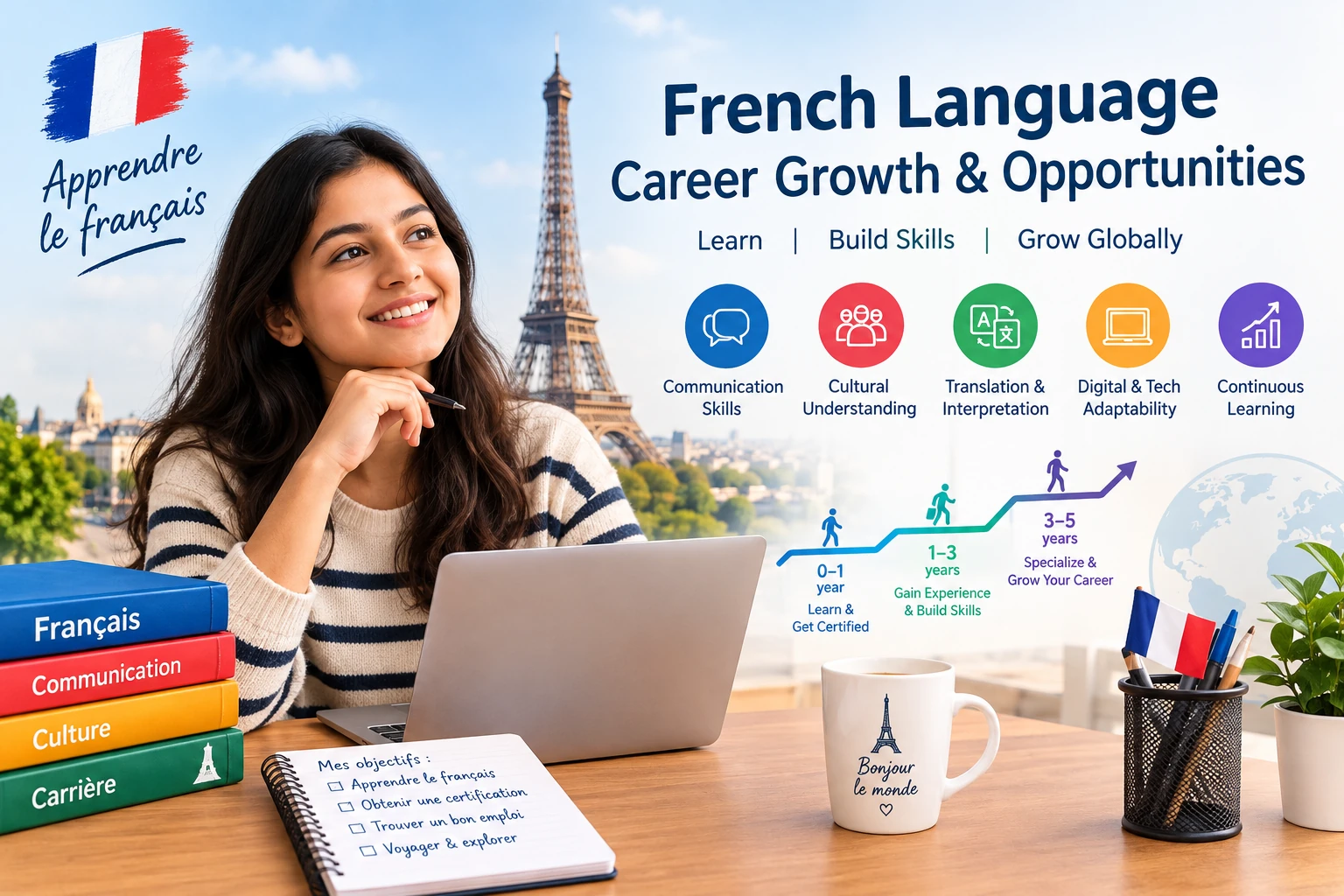
12th ke baad French language seekhna possible hai, chahe student Arts, Commerce ya Science background se ho. French ko ek additional language skill ke roop mein start kiya ja sakta hai, aur learning ka level student ke available study time, previous language exposure aur regular practice par depend karega. Beginner stage par pronunciation, common vocabulary, sentence formation aur basic listening se shuruaat karna generally easier hota hai.
French seekhne ke liye students ke paas alag-alag learning routes available ho sakte hain. Kuch learners short-term certificate ya language classes se start karte hain, jabki others university-level French studies choose karte hain. Agar career goal translation, teaching, tourism, customer communication ya another specialised area hai, to course select karte waqt sirf duration nahi balki syllabus, proficiency level, assessment method aur practical language practice ko bhi compare karna useful rahega.
Early start ka benefit ye ho sakta hai ki student ke paas language practice ko gradually build karne ke liye more time hota hai. Lekin French fluency kisi fixed number of months mein automatically achieve nahi hoti. Regular speaking, listening, reading aur writing practice ko long-term routine ka part banana zyada practical approach hai, especially jab student future mein French ko professional work ke saath connect karna chahta ho.
India mein French language padhne ke liye universities, colleges aur specialised language institutes jaise different options available hain. In options ka focus ek jaisa nahi hota: kuch programmes academic study aur literature par zyada focus kar sakte hain, jabki language institutes practical communication aur proficiency development par concentrate karte hain. Isliye institute choose karne se pehle course level, duration, eligibility, fees, examination pattern aur class format ko official website par check karna useful rahega.
Kisi institute ko choose karte waqt sirf reputation ya course name par depend karna zaroori nahi hai. Student ko ye dekhna chahiye ki programme uske target level tak language development provide karta hai ya nahi, classes ka format convenient hai ya nahi, speaking practice kitni milti hai, examination support available hai ya nahi aur total cost uske budget ke according hai ya nahi. Ye comparison student ko apne learning goal ke according option select karne mein help karega.
French language ko professional skill ke roop mein use karne wale students ke liye career options ek hi job title tak limited nahi hote. Opportunities ka nature language proficiency ke saath candidate ki education, domain knowledge aur work experience par depend karta hai. Translation, tourism, hospitality, customer support, localisation, content work, teaching aur international business coordination jaise areas mein French different responsibilities ke saath use ho sakti hai.
Higher-level roles ke liye French ke saath subject knowledge aur practical experience bhi important ho sakte hain. For example, localisation mein digital content skills useful ho sakti hain, tourism mein travel-industry knowledge ka benefit ho sakta hai, aur business communication roles mein documentation aur client-handling skills relevant ho sakti hain. Isliye career plan banate waqt French ko ek standalone skill ke bajay broader professional profile ka part banana practical approach ho sakta hai.
French language jobs mein salary ka koi single fixed amount nahi hota. Compensation role, employer, city, candidate ki education, French proficiency, previous experience aur additional professional skills ke according change ho sakta hai. Entry-level language support role aur specialised translation or corporate position ko same salary range mein place karna accurate nahi hoga, isliye students ko online salary figures ko approximate market information ke roop mein dekhna chahiye rather than a guaranteed earning figure.
Beginning stage par candidates language support, customer service, training, content assistance ya junior translation-related work explore kar sakte hain. Experience ke saath responsibilities change ho sakti hain, aur specialised roles mein subject knowledge, strong French communication, editing ability, client handling ya industry expertise ki requirement ho sakti hai. Freelancing mein income aur bhi variable hoti hai because projects, rates, client volume and working hours har person ke liye different hote hain.
French ko IT, tourism, digital marketing, business communication ya another professional area ke saath combine karne se candidate different types of jobs ke liye apply kar sakta hai, lekin is combination se salary automatically multiple times increase hone ki guarantee nahi hoti. Career growth ko realistic way mein assess karne ke liye students ko actual job descriptions, eligibility requirements, experience level aur employer-provided salary information compare karni chahiye.
India me French language seekhne ke liye kai reputed universities aur internationally recognized institutes available hain. Yeh institutions sirf language teaching nahi karte, balki students ko real-world communication skills, cultural understanding, aur global career opportunities ke liye prepare karte hain.
French language ka career growth tabhi strong hota hai jab aap sahi institute choose karte ho. Ek good institute aapko grammar ke saath-saath speaking fluency, listening comprehension, aur professional usage tak le jata hai, jo multinational companies aur embassies me job ke liye essential hota hai, Neeche kuch top universities aur institutes diye gaye hain jo India me French language education ke liye sabse zyada trusted aur career-oriented maane jaate hain:
Different French-learning institutes can serve different purposes, so students should compare the exact course structure before enrolling. Check the level covered, duration, class format, examination pathway, fees, and opportunities for speaking and listening practice. If certification is part of your plan, also check which proficiency examination the course prepares students for.
Joining a course is only one part of language development. Students should continue practising French through conversations, listening exercises, reading, writing tasks, and vocabulary revision. Those preparing for a proficiency examination should also become familiar with the examination format instead of depending only on classroom lessons.
Learning French can support several career paths, but the actual work depends on the profession in which the language is used. Translation involves written language work, interpretation focuses on spoken communication, while tourism, customer support, teaching, content, and international business combine French with different professional responsibilities.
Employers generally look at French proficiency together with the requirements of the position. A customer-support role may require communication and computer skills, while translation or interpretation can require stronger language accuracy and specialised knowledge. Students therefore benefit from developing French alongside a practical skill related to their intended industry.
French can also appear in roles connected with aviation, export-import operations, NGOs, education, and international organisations. The responsibilities and eligibility requirements vary by employer, so students should check individual job descriptions rather than assuming that French proficiency alone is sufficient for every position.
Career progression can involve greater responsibility, specialised language work, coordination, or management depending on the chosen field. For example, an experienced translator may move toward specialised translation or localisation, while a professional working in an international company may take on coordination or project-related responsibilities, French-related work can be found in different working arrangements, including office-based employment, teaching, contract assignments, and freelance projects. The suitable route depends on the student's proficiency, professional skills, experience, and preference for a particular type of workplace.
French language se earning ek fixed amount par depend nahi karti. Aapki income par French proficiency, relevant certification, practical communication skills, work experience aur aap kis industry mein kaam kar rahe hain, in sabka effect padta hai. Shuruaat mein salary comparatively modest ho sakti hai, lekin language ke saath agar aap professional experience aur domain-specific skills develop karte hain, to better-paying roles ke liye opportunities expand ho sakti hain.
Career ke starting stage par students aur freshers commonly support, translation assistance, trainee ya language-training related positions se experience build karte hain. Is stage par actual work experience important hota hai because it helps you understand how French is used in professional conversations, client communication and day-to-day business situations. Aage chal kar stronger fluency aur specialised experience ke saath professionals higher-responsibility positions ke liye apply kar sakte hain.
French ka ek practical benefit yeh hai ki language skill ko India ke bahar ke clients aur organisations ke saath kaam karne ke liye bhi use kiya ja sakta hai. Remote projects mein translators, language professionals aur other service providers ko Europe, Canada ya African markets se work mil sakta hai. Foreign-currency projects ki final earning exchange rate, client budget, project scope aur professional experience par depend karegi, isliye overseas work ko guaranteed higher income ke roop mein nahi dekhna chahiye.
Long-term growth ke liye sirf French language par depend rehna zaroori nahi hai. Agar koi professional French ke saath business communication, IT, tourism, customer support ya kisi relevant domain ki understanding develop karta hai, to woh apni profile ko specific job requirements ke according position kar sakta hai. Isi combination se language ko ek standalone qualification ke bajay practical career skill ke roop mein use karna easier ho jata hai.
Recommended Study Materials:
French Language Learning Books (Beginner to Advanced)
French Grammar & Vocabulary Guide
Affiliate Disclosure: This page may include affiliate links to books, courses, tools, or other learning resources that may be useful for students exploring French language studies and career options. If you decide to purchase a product or service through one of these links, we may receive a small commission from the provider at no additional cost to you. Our content and recommendations are prepared independently, and the presence of an affiliate link does not change the information presented on this page.
French seekhne ke liye sirf books padhna ya grammar rules yaad karna enough nahi hota. Language tab gradually comfortable lagne lagti hai jab reading, listening, writing aur speaking ko ek regular routine ka part banaya jaye. Beginners ke liye sabse useful approach yeh hai ki pehle basic foundation strong ki jaye, uske baad vocabulary aur listening ko improve kiya jaye, aur phir daily conversations ke through language ko practical situations mein use karne ki aadat banayi jaye.
Sabse important baat consistency hai. Ek din bahut zyada padhne ke bajay regular practice ko manageable routine ke saath continue karna zyada practical approach hai. Students apne weekly routine mein listening, vocabulary revision, reading, writing aur speaking ke liye alag time rakh sakte hain. Jaise-jaise basic communication comfortable hoti hai, learning material ko gradually more challenging content aur real conversations ki taraf le jana useful rahega.
French learning mein consistency ka role kaafi important hota hai, lekin har student ke liye ek hi fixed routine suitable nahi hota. School, college ya other responsibilities ke according study time adjust kiya ja sakta hai. Beginners ke liye useful approach yeh hai ki daily routine mein vocabulary, grammar, listening aur speaking ko balance kiya jaye, taaki language ke kisi ek aspect par hi focus na rahe.
Agar daily schedule busy ho, to poora routine ek hi sitting mein complete karna necessary nahi hai. Vocabulary aur grammar ko ek session mein, while listening practice ko travel ya free time ke dauran kiya ja sakta hai. Speaking ko bhi short sessions mein divide kiya ja sakta hai. Regular practice se learner ko apni progress identify karne, weak areas par dobara kaam karne aur gradually more comfortable French communication ki taraf badhne ka opportunity milta hai.
French language ka future scope ek single industry tak limited nahi hai. Students apni French proficiency ko translation, tourism, hospitality, customer support, content localisation, education, international business communication aur other language-related roles ke saath use kar sakte hain. Available opportunities role, language level, qualification, experience aur employer ki requirements ke according change hoti hain.
French ko kisi additional professional skill ke saath combine karna career options ko more specific direction de sakta hai. For example, tourism knowledge ke saath French travel and hospitality roles mein useful ho sakti hai, jabki digital skills ke saath multilingual content, customer communication ya localisation-related work explore kiya ja sakta hai. Isliye future scope ko sirf language certificate ke basis par nahi, balki complete skill profile ke context mein dekhna better hai.
French language ko long-term career skill ke roop mein develop karne ke liye students ko proficiency ke saath practical communication, digital tools aur apne selected industry ki knowledge par bhi kaam karna chahiye. Career outcome fixed nahi hota, isliye course select karte waqt actual job requirements aur qualification criteria ko check karna important hai.
French mein progress karne ke liye bahut saare courses ya learning resources collect karna zaroori nahi hai. Ek manageable routine choose karke usse regularly follow karna zyada practical hota hai. Agar aap baar-baar books, apps ya study methods change karte rahenge, to learning process fragmented ho sakta hai. Isliye ek reliable primary resource ke saath practice activities ko gradually add karna better approach hai.
Professional environment mein French knowledge ka practical use sirf vocabulary ya grammar yaad rakhne se decide nahi hota. Employers ke liye communication ko situation ke according use kar pana bhi important ho sakta hai. Ismein instructions samajhna, clearly respond karna, basic professional writing handle karna aur conversation ke context ko correctly follow karna jaise skills include ho sakte hain.
French-speaking clients, customers ya business contacts ke saath kaam karne wale roles mein language proficiency ke saath professional behaviour bhi matter karta hai. Clear communication, listening ability, attention to detail aur apne work area ki understanding ek candidate ko workplace situations handle karne mein help kar sakti hai. Isi wajah se students ko French ke saath apne chosen career field ki practical skills par bhi gradually kaam karna chahiye.
French ko workplace mein use karte waqt sirf vocabulary aur grammar jaana enough nahi hota. Email likhna, formal conversations handle karna, meetings mein apni baat clearly rakhna aur customers ke questions ko properly understand karke response dena bhi important ho sakta hai. Students ko language practice ke saath professional situations mein polite, clear aur context-appropriate communication develop karne par bhi dhyan dena chahiye.
French-speaking clients aur colleagues ke saath kaam karte waqt unke communication patterns aur professional expectations ko samajhna useful ho sakta hai. Different countries aur organisations mein communication ka style same nahi hota, isliye cultural awareness misunderstandings ko avoid karne aur international teams ke saath smoother interaction maintain karne mein help kar sakti hai. Yeh skill especially un roles mein relevant ho sakti hai jahan regular cross-cultural communication involved ho.
Jo students French ko professionally translation ya interpretation ke field mein use karna chahte hain, unhe language conversion se aage bhi skills develop karni hoti hain. Original message ka meaning, context, tone aur intended information accurately understand karna important hai. Practice ke saath learners different types ke written material aur conversations par kaam karke accuracy aur clarity improve kar sakte hain.
Aaj language-based work kaafi baar digital platforms par bhi hota hai, isliye basic technology skills useful reh sakti hain. Online meetings, email communication, shared documents, collaboration platforms aur digital work tools ko comfortably use kar pana remote ya multinational work environment mein practical advantage de sakta hai. French ke saath in tools ki familiarity students ko workplace tasks handle karne mein more independent bana sakti hai.
French proficiency ek aisi skill hai jise regular use ke saath gradually maintain aur improve kiya ja sakta hai. Reading, listening, writing aur speaking ke alawa learners ko apni common mistakes identify karke un par dobara practice karni chahiye. Professional life mein bhi language requirements change ho sakti hain, isliye naye vocabulary, industry-specific expressions aur communication situations se familiar rehna useful approach hai.
French ko career skill ke roop mein develop karte waqt language proficiency ke saath communication, cultural awareness, digital working ability aur apne chosen field ki understanding ko bhi gradually strengthen karna useful rahega. In skills ka combination student ko different workplace situations ke liye better prepared kar sakta hai, chahe future role language-focused ho ya kisi broader professional field se connected ho.
French ka use France ke alawa Canada, Belgium, Switzerland aur kai African countries mein bhi hota hai, isliye international communication ke context mein is language ki relevance kaafi broad hai. Students ke liye iska career value tab aur practical ho jata hai jab French ko kisi specific profession ya industry ke saath combine kiya jaye. Tourism, international customer support, translation, hospitality aur cross-border business communication jaise areas mein French knowledge different types ke roles mein kaam aa sakti hai.
India se bhi French-speaking markets ke liye kaam karne wali companies aur service teams mein language skills ka use hota hai. Job ka actual requirement organisation aur position ke according change hota hai; kuch roles mein basic communication sufficient ho sakti hai, jabki translation, interpretation ya client-facing positions ke liye stronger proficiency ki zarurat pad sakti hai. Isi wajah se students ko sirf language seekhne ke bajay apne target role mein required French level aur additional qualifications ko bhi samajhna chahiye.
French ko kisi additional skill ke saath develop karna students ke liye practical approach ho sakta hai. For example, French ke saath IT, digital marketing, tourism, business communication ya customer service ki understanding develop karne se student apni profile ko specific types of jobs ke according shape kar sakta hai. Is combination ka actual benefit role, employer requirements, proficiency level aur candidate ke overall experience par depend karega.
Neeche diya gaya roadmap aapko beginner level se professional French language career tak ka clear structure samjhata hai. Ye structured path follow karne se aap faster fluency aur better job opportunities achieve kar sakte ho.
Basic alphabets, pronunciation, daily words aur simple conversation sikhein. Yahi foundation stage hota hai.
Grammar strong karein, sentences banana seekhein aur daily communication practice start karein.
DELF A2/B1 certification complete karein jo jobs aur internships ke liye important hota hai.
Fluency develop karein, professional writing aur speaking skills improve karein.
Translator, interpreter, tourism executive, MNC job ya freelancing start karein.
Agar aap French ko sirf basic conversation ke liye nahi, balki career skill ke roop mein develop karna chahte hain, to DELF (Diplôme d’Études en Langue Française) aur DALF (Diplôme Approfondi de Langue Française) jaise recognised certifications useful ho sakte hain. Ye certifications French language proficiency ko a structured level ke through demonstrate karne ka ek formal way provide karti hain, jo further studies, professional applications ya language-related roles ke context mein kaam aa sakta hai.
DELF aur DALF certification system mein proficiency ko A1 se C2 tak levels mein divide kiya jata hai. Beginner learners usually A1 ya A2 se start karte hain, jabki B1 aur B2 par learners everyday as well as professional situations mein French ko comparatively independently use karne ki practice develop karte hain. C1 aur C2 advanced proficiency ko represent karte hain aur higher-level language work ke liye relevant ho sakte hain.
India mein students French learning ke saath certification preparation bhi kar sakte hain. Alliance Française jaise recognised French-language institutions courses aur examination-related guidance provide karte hain. Certification ka practical value candidate ke target role, actual French proficiency, education aur professional skills par depend karta hai, isliye certificate ko language practice aur relevant career skills ke saath develop karna zyada useful approach hai.
Foreign language choose karte waqt sirf language ki popularity dekhna sufficient nahi hota. French ke saath Spanish, German aur Japanese jaise options bhi students consider karte hain, lekin har language ka learning structure, geographic relevance, professional use aur required proficiency alag ho sakti hai. Neeche comparison ko in practical factors ke basis par dekha gaya hai, taaki students apne interest aur intended career field ke according options ko samajh saken.
| Criteria | French | German | Spanish | Japanese |
|---|---|---|---|---|
| Global Reach | 29+ countries (Europe, Africa, Canada) | Mainly Europe (Germany, Austria, Switzerland) | 20+ countries (Spain, Latin America) | Limited (Japan only but strong business market) |
| Job Demand | High in MNCs, embassies, tourism | High in engineering & manufacturing | Moderate to high in global support roles | High in IT, gaming & automotive sector |
| Learning Difficulty | Medium (grammar + pronunciation) | Medium to Hard | Easy to Medium | Hard (writing system complex) |
| Starting Salary in India | ₹25,000 – ₹50,000/month | ₹30,000 – ₹60,000/month | ₹20,000 – ₹45,000/month | ₹35,000 – ₹70,000/month |
| International Scope | Very High (Canada, EU, Africa) | High (Germany EU jobs) | High (Latin America + Spain) | Very High (Japan corporate sector) |
| Freelancing Opportunities | Very High | High | Very High | Moderate |
| Best For | Diplomacy, tourism, MNC jobs | Engineering & technical careers | Customer support & travel industry | IT, gaming, Japanese companies |
Conclusion: French can be a useful foreign-language choice for students interested in international communication, tourism, translation, customer-facing roles, or careers connected with French-speaking markets. Its practical value will depend on the student’s proficiency, qualifications, experience, and chosen career field.
With the rise of remote work culture, French language skills are now being used in freelancing platforms and online global jobs. Students and professionals can earn by working from home as translators, content writers, or customer support agents.
Popular freelance opportunities include translation of documents, subtitle creation for videos, website localization, and customer chat support for French-speaking clients.
Platforms like Upwork, Fiverr, and Freelancer often list French language projects. Beginners may start with small projects, but with experience, income can grow significantly in foreign currency.
French learning start karte waqt students aksar ek hi mistake nahi karte, balki study routine, practice method aur learning resources se related multiple problems face karte hain. Kuch learners grammar par bahut zyada focus karte hain aur speaking practice ko postpone kar dete hain, jabki kuch students vocabulary ya apps collect karte rehte hain without using the language regularly. Inconsistency bhi progress ko affect kar sakti hai, especially jab student kuch din intensive study karta hai aur phir long gap le leta hai. In habits ko identify karke learning routine ko simple aur manageable rakhna practical approach ho sakta hai.
A better approach is to follow a balanced routine: learn grammar + practice speaking + daily listening. Even 1–2 hours of consistent practice every day is more effective than irregular long study sessions, Students who stay consistent for 6–12 months usually reach a level where they can confidently apply for internships, freelance work, or entry-level jobs.
French ko career skill ke roop mein develop karne ka process classroom study tak limited nahi rehta. Student ko language concepts samajhne ke saath unhe actual communication situations mein use karna bhi seekhna hota hai. Is journey mein learning material complete karna, regular language practice maintain karna aur gradually professional situations ko understand karna important steps ho sakte hain. Progress ka pace har learner ke starting level, practice time aur chosen course ke according different rahega.
Initial stage mein learner pronunciation, sentence structure, commonly used vocabulary aur basic comprehension par kaam karta hai. Jaise-jaise foundation improve hoti hai, student familiar topics par French mein responses dene, simple conversations follow karne aur short written communication prepare karne ki practice kar sakta hai. Is stage par mistakes ko learning process ka normal part samajhna aur difficult areas ko revise karna useful hota hai, rather than sirf course completion ko progress ka measure maanna.
Aage chal kar student apni language ability ko practical activities ke saath connect kar sakta hai. Available opportunities ke according tutoring practice, volunteer work, internship, translation exercises, content-related assignments ya customer communication activities exposure provide kar sakti hain. Professional work start karne se pehle target role mein required French level, qualification aur other skills ko check karna zaroori hai, kyunki har job mein language requirement aur responsibilities same nahi hoti.
Job ke liye prepare karte waqt student ko sirf French proficiency par depend nahi rehna chahiye. Resume mein language level ke saath relevant education, practical projects, internships aur additional professional skills ko clearly present karna useful ho sakta hai. Employer ki requirements ko samajhkar preparation karne se student ko apni existing skills aur required abilities ke beech ka gap identify karne mein madad mil sakti hai.
French language ko kisi additional professional skill ke saath combine karna students ke liye apni career profile ko specific direction dene ka practical way ho sakta hai. Sirf language proficiency ke bajay agar student apne interest ke according ek relevant domain bhi develop karta hai, to woh different types of roles ke liye apply kar sakta hai. Is combination ka actual benefit French level, technical knowledge, experience aur employer ki requirements par depend karta hai.
Skill combination choose karte waqt students ko pehle apne preferred career area ko identify karna chahiye. For example, communication aur content mein interest rakhne wala student French ke saath digital marketing explore kar sakta hai, jabki technology mein interest rakhne wala learner IT support ya technical communication ki direction mein skills develop kar sakta hai. Isi tarah tourism aur business studies ke students apni language ability ko industry-specific knowledge ke saath use kar sakte hain.
Students ko skill combination choose karte waqt sirf salary ke basis par decision nahi lena chahiye. French proficiency ke saath ek strong domain skill develop karne se profile ko kisi particular type ke work ke liye prepare karna easier ho sakta hai, lekin career outcome har individual ke education, proficiency, experience, location aur job market ke according different rahega. Isliye 12th ke baad ek language skill aur ek relevant career skill ko gradually develop karna practical long-ter
French language ka career path har student ke liye same nahi hota. Kuch roles mein basic conversational French se entry mil sakti hai, jabki translation, interpretation, teaching ya specialised corporate positions ke liye stronger reading, writing aur speaking skills ki zarurat ho sakti hai. Career progression generally language proficiency ke saath education, practical experience, additional skills aur selected industry par bhi depend karti hai.
Year 0–1: Is initial stage mein student basic French foundation build kar sakta hai aur certificate course ya beginner-level qualification complete karne par focus kar sakta hai. Regular speaking, listening aur writing practice ke saath internships, volunteer assignments ya small language-related projects practical exposure dene mein helpful ho sakte hain.
Year 1–3: Is stage tak learner apni French proficiency ko improve karte hue entry-level professional roles explore kar sakta hai. Customer support, language services, tourism, BPO/KPO ya coordination-based positions kuch possible areas ho sakte hain, depending on the candidate’s qualification and the French level required by the employer. Workplace experience se professional vocabulary aur communication skills ko further develop karne ka opportunity mil sakta hai.
Year 3–5: Experience aur stronger language proficiency ke saath professionals specialised responsibilities ki taraf move kar sakte hain. Translation, interpretation, training, localisation, international client coordination ya French-speaking markets se connected roles possible career directions ho sakte hain. Is stage par French ke saath domain expertise hone se candidate apni profile ko ek specific professional area ke according develop kar sakta hai.
French career mein progress ko sirf years of experience se measure karna useful nahi hota. Language proficiency ko consistently improve karna, real workplace communication practice lena aur French ke saath relevant professional skill develop karna career options ko expand karne mein help kar sakta hai. Isliye 0 se 5 years ka timeline ek general learning-and-experience framework ke roop mein dekha jana chahiye, fixed career guarantee ke roop mein nahi.
2027 mein AI-based translation aur language tools ka use education, business communication aur content work mein badh raha hai. In tools ki madad se basic translation, vocabulary support aur routine language tasks ko pehle se faster complete kiya ja sakta hai. Lekin har language-related task sirf word-to-word translation tak limited nahi hota. Context, tone, cultural references aur situation ke according meaning samajhna bhi kai professional roles ka important part hota hai.
Translation, customer communication, international business aur specialised language work mein requirement role ke according different ho sakti hai. Simple content ke liye automated tools useful ho sakte hain, jabki legal, diplomatic, technical ya sensitive communication mein accuracy aur context ko carefully review karna zaroori hota hai. Isi wajah se French professionals ke liye language proficiency ke saath editing, proofreading, cultural understanding aur subject knowledge jaise skills bhi valuable ho sakte hain.
Isliye French seekhne wale students ke liye sirf translation skill par depend rehne ke bajay language proficiency ke saath digital tools, communication, proofreading ya kisi specific industry ki knowledge develop karna practical approach ho sakta hai. AI ka impact har French-related job par same nahi hoga, isliye career planning karte waqt target role ki actual responsibilities aur technology requirements ko samajhna important hai.
Yes, Arts students can start learning French after 12th without needing a specific language background. Students can begin with a beginner-level certificate or diploma course and gradually improve their vocabulary, grammar, pronunciation, listening and speaking skills. An Arts background can also be useful for areas such as communication, tourism, content, teaching and international studies where language skills are regularly used.
The time required depends on how regularly you study and the level of French you want to achieve. A beginner may first spend several months building basic communication skills, while reaching an intermediate or advanced level requires more consistent practice. Students who combine classroom learning with daily listening, speaking and writing practice can develop their skills more steadily than those who study only before examinations.
Students can begin with the A1 level and gradually work towards higher proficiency as their confidence improves. A1 and A2 are useful for developing basic communication, while B1 and B2 provide a stronger foundation for professional and academic use. Students planning careers involving teaching, translation, interpretation or specialised language work may eventually need to work towards an advanced level based on the requirements of their chosen field.
A certificate can demonstrate that you have completed a particular level of language training, but employers may also look at your practical communication ability and other job-related skills. Speaking clearly, understanding conversations, writing professionally and using French in a workplace situation can make a significant difference. For this reason, students should treat certification as one part of their preparation rather than depending on the certificate alone.
French can be used in several career areas, including translation, interpretation, tourism and hospitality, international business, customer support, content and localization work, language training and selected roles in multinational organisations. The right option depends on the student's French proficiency, educational qualification, additional skills and work experience. Learning another practical skill alongside French can also create more career combinations.
Yes, combining French with another useful skill can make the language more relevant to a particular career path. For example, a student may develop French alongside digital marketing, content writing, tourism, business communication, customer service or another area of interest. This approach allows the student to use French as an additional professional skill instead of limiting their career only to language-related positions.
Freelancing can be an option for people who have practical French skills and can provide a service that clients need. Depending on their abilities, they may explore translation, proofreading, content adaptation, language tutoring, transcription or other language-related assignments. Beginners should first build a small portfolio, understand the requirements of each project and improve their communication with clients before expecting regular freelance income.
DELF and DALF are recognised French language certification systems covering different proficiency levels. Students should choose a certification level according to their current ability and the purpose for which they need the qualification. Before enrolling for an examination, it is sensible to check the latest examination structure, eligibility details and official requirements from the relevant French language institute or examination authority.
Yes. Kuch environmental careers directly Science background prefer karte hain, lekin Arts students bhi Environmental Policy, Sustainability Management, Climate Communication, Environmental Law, CSR, NGO Management aur Public Administration jaise fields me apna career bana sakte hain. Agar aap relevant certifications aur practical skills develop karte hain to opportunities aur bhi improve ho sakti hain.
Yes. Arts students can start French after 12th and can study it through certificate courses, diplomas, degree programmes, or other structured language-learning routes. The appropriate option depends on whether the student wants French as a main academic subject or as an additional skill alongside another career field.
A beginner normally starts with the basic levels before moving toward independent communication. The right target depends on the student's purpose, such as college study, employment, teaching, translation, travel, or a proficiency examination. Students should check the language requirement of their intended course or job before deciding how far they need to progress.
Yes. French can be combined with skills such as digital marketing, tourism, business, teaching, customer service, content creation, or other professional areas. This combination can help students target roles where French is one part of the job rather than depending on language knowledge alone.
French can be a useful career skill after 12th when students connect language learning with a clear academic or professional goal. It can be studied as a primary subject or combined with areas such as tourism, business, teaching, digital marketing, customer support, content, translation, or other fields where French communication is relevant.
Students should choose their learning route according to the level of proficiency they need. Regular speaking, listening, reading, and writing practice is important, while certifications such as DELF or DALF can provide formal evidence of language proficiency when relevant to the student's planned course or career.
For students starting after 12th, a practical approach is to set a realistic language target, maintain consistent practice, and develop at least one professional skill alongside French. Course details, examination rules, job requirements, and salary information should be checked from the relevant official or employer sources before making an education or career decision.
Disclaimer: This article is for educational and informational purposes only. External links may include affiliate recommendations (Amazon Associates - aartistudyhub-21). Readers are advised to verify course details, salaries, and opportunities from official sources before making any career decision.