Quick Navigation
- What is Interior Designing?
- Courses After 12th
- Salary & Income
- Future Scope
- Top Colleges
- Skills Required
- FAQs
Introduction
Interior design ka kaam sirf room ko attractive banana nahi hota. Ek interior designer ko available space, furniture placement, lighting, colours, materials, movement aur client ki daily needs ko ek saath consider karke workable design prepare karna hota hai. 12th ke baad is field ko choose karne wale students ko isliye creativity ke saath drawing, space planning, design software, material understanding aur client communication jaise practical areas par bhi kaam karna padta hai. Career start karne se pehle course ki duration, practical training, software exposure, internship aur portfolio requirements ko samajhna students ke liye zyada useful hota hai.
Interior design me creative thinking ke saath technical execution bhi important hota hai. Course ke dauran students ko space planning, technical drawing, materials, furniture layout, lighting, 2D drawings aur 3D visualisation jaise areas samajhne pad sakte hain. Professional work me designer ko client ki requirements ko drawing ya digital model me convert karna hota hai aur kai projects me contractors, vendors aur other professionals ke saath coordination bhi karni padti hai. Isliye course choose karte waqt sirf course title dekhne ke bajay syllabus, studio work, software training, internship aur portfolio development ko compare karna practical approach rahega.
Interior design un students ke liye suitable ho sakta hai jo visual ideas ko practical space me convert karne me interest rakhte hain aur ek project par multiple revisions ke saath kaam kar sakte hain. Is field me client ki preference, available area, budget, material limitations aur project timeline ko ek saath manage karna padta hai. Isliye admission se pehle students ko apni interest ke saath ye bhi dekhna chahiye ki kya wo software practice, detailed planning, feedback aur project-based learning ke liye comfortable hain.
What is Interior Designing?
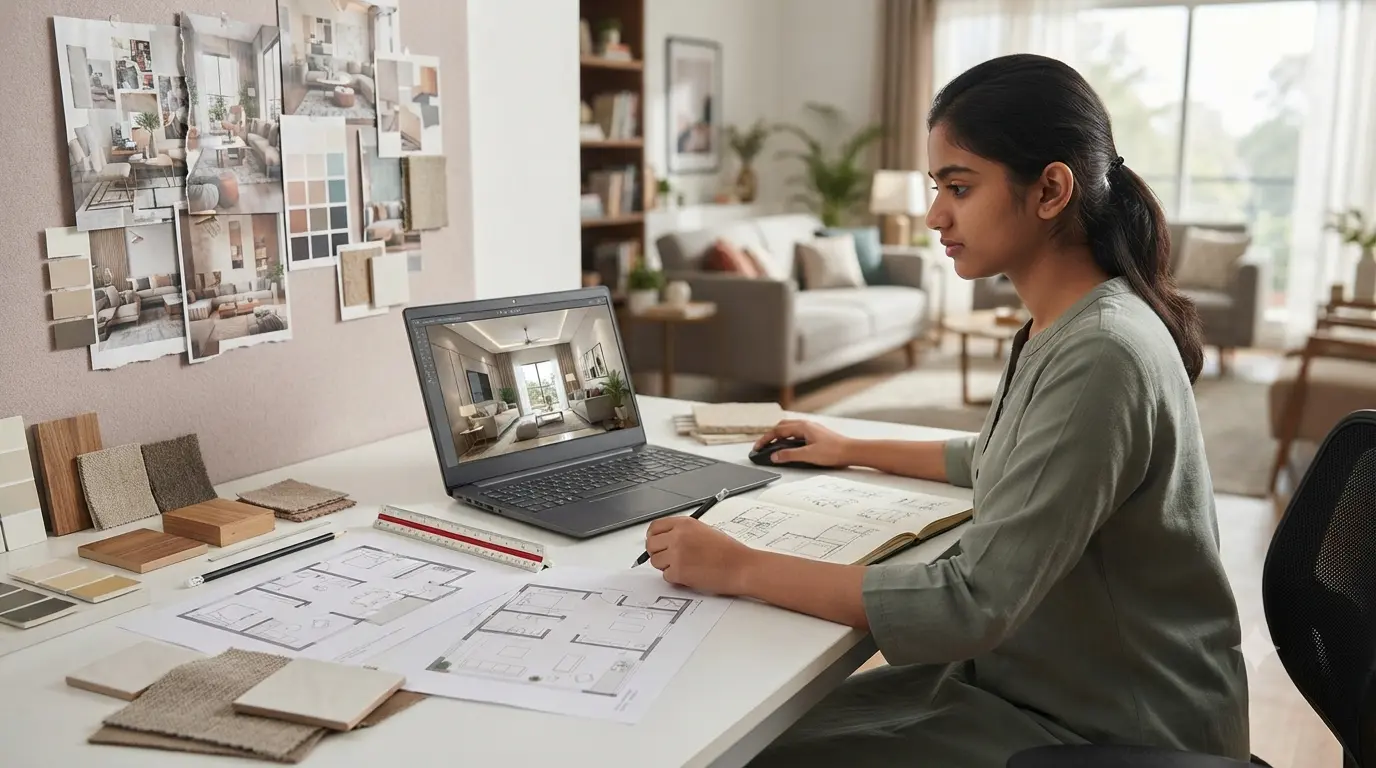
Interior designing ek professional discipline hai jisme indoor space ko sirf visually attractive banane ke bajay uski planning, usability, comfort aur visual balance ko ek saath manage kiya jata hai. Designer ko available area, doors and windows, furniture requirements, lighting, circulation, materials aur client ke daily use ko samajhkar ek workable layout develop karna hota hai. Is process me decoration ek part ho sakta hai, lekin complete interior design ka scope usse kaafi wider hota hai.
Ek interior designer ko project ke beginning me client ki needs aur budget samajhna pad sakta hai aur uske baad measurements, layout options, material suggestions, drawings aur visual presentations ke through concept ko gradually develop karna hota hai. Har project me same solution apply nahi kiya ja sakta, kyunki ek compact apartment, family home, office aur restaurant ki functional requirements alag hoti hain. Isi wajah se designer ko aesthetic decisions ke saath practical limitations ko bhi continuously balance karna padta hai.
Interior design education me students ko colour and composition, space planning, furniture arrangement, material understanding, lighting, technical drawing aur digital visualisation jaise areas se introduce kiya ja sakta hai. Software-based work ke through students proposed layouts aur 3D views prepare karte hain, jisse design ko client ya project team ke saamne explain karna comparatively easier hota hai. Course ka exact syllabus institute ke programme ke according different ho sakta hai, isliye admission se pehle official curriculum check karna useful rahega.
Simple words me, interior designer ka kaam kisi room ko sirf sundar banana nahi hota; us space ko uske intended use ke according organise karna bhi hota hai. Ek successful design me furniture ka placement, movement ke liye available space, lighting, materials, storage aur overall visual appearance ek connected plan ka part hote hain. Isi practical nature ki wajah se students ko course ke saath real layouts, software exercises aur project-based assignments par bhi regular practice karni chahiye.
Interior Designing Courses After 12th (Complete Guide)
12th ke baad interior designing me admission lene wale students ke paas degree, diploma aur certificate jaise different study formats ho sakte hain. In programmes ki duration, syllabus, practical exposure, admission criteria aur software training institute ke according change ho sakti hai. Isliye sirf course ke naam ko dekhkar decision lene ke bajay student ko ye compare karna chahiye ki programme me studio work kitna hai, portfolio kaise develop karaya jata hai, internship available hai ya nahi, aur course ke baad kis type ke entry-level roles ke liye preparation hoti hai.
Arts, Commerce aur Science background ke students ke liye available eligibility institute-specific ho sakti hai, isliye admission se pehle official course page par minimum qualification aur selection process verify karna zaroori hai. Kuch programmes me aptitude test, portfolio, interview ya merit-based selection ho sakta hai, jabki kuch diploma aur certificate programmes comparatively simple admission process follow kar sakte hain. Student ko apne academic background ke saath learning duration, budget aur desired career path ko bhi consider karna chahiye.
Neeche diye gaye course types ko ek starting framework ki tarah dekhein. Exact duration aur curriculum institution ke hisaab se vary kar sakta hai, isliye final admission decision lene se pehle selected institute ki latest official information check karna safer approach hai.
1. B.Des (Bachelor of Design in Interior Design) – 4 Years
- Ye ek full-time professional degree program hota hai
- Isme design theory + practical studio work dono included hote hain
- Students ko 2D planning, 3D visualization aur advanced software training di jati hai
- Final year me live projects aur internships compulsory hoti hain
Consider this route if: Aap structured four-year design education chahte hain aur studio assignments, design research, technical drawing, visualisation, internships aur portfolio development ko ek longer academic programme ke andar systematically build karna chahte hain. Admission se pehle specific institute ka actual curriculum aur interior-design specialisation verify karna zaroori hai, kyunki har B.Des programme ka focus identical nahi hota.
2. B.Sc in Interior Design – 3 Years
- Ye course thoda technical + design blend hota hai
- Focus zyada practical application aur software tools par hota hai
- Curriculum me space planning, material study aur design execution included hota hai
Consider this route if: Aap three-year undergraduate programme ke through interior design ke practical aur academic aspects ko combine karna chahte hain. Course choose karte waqt syllabus me space planning, materials, technical drawing, software applications, studio projects aur internship jaise components included hain ya nahi, ye check karna useful rahega, kyunki B.Sc Interior Design programmes ka structure university ke according different ho sakta hai.
3. Diploma in Interior Design – 1 Year to 2 Years
- Usually shorter duration ka programme hota hai, lekin exact duration institute ke according vary karti hai
- Basic se intermediate level tak design concepts aur practical applications cover kiye ja sakte hain
- AutoCAD, SketchUp ya similar design software syllabus ka part ho sakte hain
- Portfolio assignments aur practical exercises ko admission se pehle curriculum me verify karna useful hai
Consider this route if: Aap comparatively shorter programme ke through interior design fundamentals aur software exposure develop karna chahte hain. Diploma choose karte waqt sirf duration dekhna enough nahi hai; practical classes, faculty support, project work, internship assistance aur final portfolio par institute kitna focus karta hai, in points ko compare karna zyada informative hoga.
4. Certificate Courses in Interior Design – 3 to 6 Months
- Short-duration skill-oriented programme ho sakta hai
- Basic design principles, visualisation aur selected software tools introduce kiye ja sakte hain
- Course ka level institute ke curriculum aur teaching hours par depend karta hai
- Online aur offline formats dono available ho sakte hain
Consider this route if: Aap pehle interior design ko practically explore karna chahte hain ya kisi existing study ke saath additional skill develop karna chahte hain. Certificate programme ko full professional degree ka automatic substitute nahi samajhna chahiye; admission se pehle course me actual project work, software practice aur portfolio output kya milega, ye clearly check karna better rahega.
Eligibility & Important Reality (Very Important)
- 12th qualification ki requirement programme aur institute ke according vary kar sakti hai
- Minimum marks, subject requirements aur admission criteria official institute notification se verify karne chahiye
- Kuch design programmes aptitude test, portfolio review, interview ya merit-based selection use kar sakte hain
- Course ke saath sketching, visual observation, software learning aur project practice develop karna useful rahega
Reality check: Admission milna aur professional work ke liye prepared hona do alag stages hain. Course complete karne ke baad student ko apne layouts, drawings, 3D work, material studies aur selected projects ko organised portfolio me present karna pad sakta hai. Isi wajah se college ya institute choose karte waqt sirf qualification aur duration ke saath practical assignments, internship exposure aur portfolio development ko bhi evaluate karna chahiye.
Interior Designing Colleges & Universities in India (Admission, Fees, Syllabus & Complete Guide)
Interior designing course choose karte waqt institute ko evaluate karne ke liye sirf naam ya fee ko dekhna sufficient nahi hai. Students ko programme ka exact title, duration, eligibility, admission process, curriculum, studio facilities, software exposure, internship structure aur portfolio development jaise factors compare karne chahiye. Different institutions ke programmes ka focus alag ho sakta hai, isliye ek college ka course structure doosre institute ke programme ka exact substitute nahi maana jana chahiye.
Practical training ka importance bhi course ke nature par depend karta hai. Kuch programmes studio assignments aur project work par significant focus kar sakte hain, jabki short-term courses software training ya specific skills par concentrated ho sakte hain. Neeche diye gaye institute examples ko comparison starting point ki tarah use karein aur admission se pehle respective institution ki latest official fee, eligibility, curriculum aur admission information verify karein.
Important comparison point: Institute choose karte waqt students ko portfolio development, practical assignments, software exposure, internship structure, faculty interaction, course duration aur total cost ko ek saath compare karna chahiye. Sirf institute ka naam dekhkar career outcome assume karna useful approach nahi hai, kyunki student ka actual learning experience uske selected programme aur personal practice par bhi depend karega.
What You Will Learn in Interior Designing (Real Industry Skills)
Interior designing me professional work ke liye visual creativity ke saath technical understanding, communication aur problem-solving ability ka combination useful hota hai. Designer ko client ke idea ko samajhna, available space ki limitations identify karna, design alternatives develop karna aur selected solution ko drawings ya visual presentations ke through explain karna pad sakta hai. Isi process ki wajah se skill development ko sirf drawing practice tak limited nahi rakhna chahiye.
Students ko course ke dauran different types ke small projects lekar practice karni chahiye, jaise compact bedroom layout, living-room furniture plan, office workstation arrangement ya material board. Har exercise me measurements, user requirements, movement space aur visual balance ko consider karne se student ko real design decisions ke baare me better understanding develop hoti hai.
-
Creativity & Visual Thinking
Visual thinking ka matlab sirf attractive ideas banana nahi hai; student ko ye imagine karna bhi aana chahiye ki furniture, lighting, colours aur materials actual space me ek saath kaise work karenge. Sketching, mood boards aur reference analysis is ability ko gradually develop karne me help kar sakte hain. -
Communication & Client Understanding
Client ki requirement ko dhyan se sunna aur usse measurable design brief me convert karna important hai. Designer ko options explain karne, feedback samajhne aur revisions ko calmly manage karne ki practice bhi develop karni chahiye. -
Technical Knowledge & Software Skills
AutoCAD, SketchUp ya other relevant software ka knowledge drawings aur visualisation prepare karne me useful ho sakta hai. Lekin software commands yaad karna alone enough nahi hai; student ko measurements, layouts aur design decisions ko accurately represent karne ke liye actual projects par practice karni chahiye. -
Problem Solving Ability
Real projects me limited space, budget, structural restrictions, existing furniture ya client preferences jaise constraints aa sakte hain. Designer ko available options compare karke aisa solution develop karna padta hai jo practical requirements aur visual objectives dono ko address kare. -
Client Handling & Project Management
Project work me deadlines, revisions, budgets, vendor communication aur deliverables ko track karna pad sakta hai. Student ko gradually ye samajhna chahiye ki design concept se final delivery tak project ke different stages ko organised manner me kaise manage kiya jata hai.
Skill development ka practical focus: Student agar har skill ko ek small portfolio project ke saath practice kare, to learning ko measure karna easier hota hai. For example, ek project technical drawing demonstrate kar sakta hai, doosra 3D visualisation, aur teesra material and colour planning. Is approach se portfolio me sirf finished images nahi, balki designer ke decision-making process ka bhi evidence develop kiya ja sakta hai.
Career Opportunities After Interior Designing
Interior design course complete karne ke baad work ka nature sirf ek fixed job title tak limited nahi hota. Qualification, practical skills, portfolio aur experience ke according students residential projects, commercial interiors, design studios, visualisation work, furniture-related assignments, consultancy aur independent project work jaise different areas explore kar sakte hain. Har role mein responsibilities alag ho sakti hain, isliye career options ko samajhte waqt title ke saath actual day-to-day work ko dekhna useful hota hai.
Residential Interior Designer
Residential designers homes, apartments aur villas ke interiors par kaam kar sakte hain. Is work mein room layouts, furniture placement, storage requirements, lighting, colours, materials aur client preferences ko ek coordinated design mein convert karna pad sakta hai. Project ka size small room se complete home planning tak different ho sakta hai, isliye responsibilities bhi project scope ke according change hoti hain.
Commercial Interior Designer
Commercial projects mein offices, retail spaces, clinics, cafes, restaurants aur other business environments aa sakte hain. Yahan designer ko appearance ke saath employee movement, customer flow, furniture requirements, branding, storage aur operational needs ko consider karna pad sakta hai. Larger projects mein drawings, documentation aur site coordination ka role bhi increase ho sakta hai.
3D Visualisation & Rendering Work
Kuch professionals ka primary work design concept ko detailed 3D models, rendered views ya presentation visuals mein convert karna ho sakta hai. Is role mein modelling, materials, lighting, camera views aur presentation quality par considerable practice required ho sakti hai. Ye work design studio ke andar project presentation ke liye bhi use ho sakta hai aur selected remote assignments ke form mein bhi provide kiya ja sakta hai.
Interior Design Consultancy
Consultancy-based work mein complete execution handle karne ke bajay client ko space planning, colour direction, furniture selection, material suggestions ya design recommendations provide ki ja sakti hain. Service ka scope consultant ke experience aur client ki requirement ke according define hota hai, isliye beginning stage par deliverables aur responsibilities ko clearly document karna important hota hai.
Furniture & Material Related Work
Interior projects mein furniture layouts, custom furniture concepts, finishes aur material selection ka bhi important role ho sakta hai. Is area mein interest rakhne wale students furniture proportions, material properties, finishes, usability aur available space ke relationship par additional practice develop kar sakte hain. Aise projects portfolio mein practical design decision-making demonstrate karne ke liye useful ho sakte hain.
Career path ko practically samjhein: Starting stage par student ko ek hi role permanently decide karne ki zarurat nahi hoti. Internship, academic projects aur small portfolio assignments ke through different work areas ko explore karke ye identify kiya ja sakta hai ki interest residential planning mein hai, commercial projects mein, 3D visualisation mein ya consultancy-based work mein. Is approach se career direction actual experience ke basis par gradually develop ki ja sakti hai.
Interior Designer Salary & Income (India Realistic Breakdown)
Interior design me income ko ek fixed figure ke roop me samajhna difficult hai, kyunki employment type, city, experience, employer, project responsibilities aur independent work ke scope ke according payment change ho sakti hai. Fresher ka role generally senior project designer ke responsibilities se different hota hai, aur freelance work me monthly salary ke bajay project-wise fees ya agreed scope ke basis par payment ho sakti hai. Isliye kisi single salary number ko guaranteed earning samajhne ke bajay available figures ko approximate reference ke roop me dekhna chahiye.
Metro aur non-metro markets me compensation bhi identical nahi hota, aur ek hi designation ke andar responsibilities organisation ke according change ho sakti hain. For example, ek junior designer ka kaam drawings aur software support tak focused ho sakta hai, jabki experience badhne ke baad client meetings, site coordination, vendor communication aur project responsibility add ho sakti hai. Independent consultants ke case me project size, scope, revisions aur client agreement final income ko directly affect karte hain.
-
Entry Level (Fresher / Intern)
₹20,000 – ₹40,000 per month (basic drafting, assistant-level work aur initial learning responsibilities) -
Junior Interior Designer (1–3 Years Experience)
₹40,000 – ₹80,000 per month (design documentation, software work, small projects aur client coordination jaise responsibilities) -
Mid-Level Professional Designer (3–6 Years Experience)
₹80,000 – ₹1.5 lakh per month (project handling, design development, client communication aur execution coordination jaise responsibilities) -
Senior Interior Designer / Project Head
₹50,000 se ₹5,00,000+ per project (project scope, commercial requirements, team responsibility aur client agreement ke according variation possible hai) -
Freelancer / Independent Consultant
₹50,000 se ₹5,00,000+ per project (project size, design scope, number of revisions, deliverables aur client budget ke according fees change ho sakti hai)
Income ko kaise samjhein: Interior design me earning experience ke saath automatically ek fixed rate se increase nahi hoti. Professional ko apne design portfolio, software capability, project responsibility, communication, pricing structure aur client relationships ke basis par different opportunities mil sakti hain. Freelancing me especially ek month ka project income next month ke income ke equal nahi hota, isliye students ko starting stage par skill development aur practical experience ko earning figure se alag evaluate karna chahiye.
Future Scope of Interior Designing in India (2027 & Beyond)
Interior design ka future evaluate karte waqt sirf real-estate growth ko dekhna sufficient nahi hai. Residential construction, renovation, offices, retail spaces, hospitality projects, furniture businesses aur digital design services jaise different segments interior designers ke liye different types ka work create kar sakte hain. In segments me required skills bhi alag ho sakti hain, isliye student ko apni interest ke according kisi specific project category par gradually focus karna useful ho sakta hai.
Urban areas ke saath smaller cities me bhi new residential and commercial spaces develop ho rahe hain, lekin opportunity ka nature location aur local market ke according change hota hai. Digital tools ne remote consultation, 3D visualisation aur online design presentation jaise workflows ko possible banaya hai, jabki physical projects me site measurement, material selection aur execution coordination jaise tasks ab bhi important ho sakte hain. Future scope ko isi combination of design, technology and project execution ke context me dekhna zyada practical hai.
-
Urban and Residential Development
Tier-2 aur Tier-3 cities me residential construction, renovation aur apartment projects ke saath interior planning ki requirement project-specific basis par aa sakti hai. -
Customised Residential Spaces
Homeowners storage, furniture layouts, lighting, material finishes aur available space ke according customised solutions seekh sakte hain, jisse residential designers ko varied project briefs mil sakte hain. -
Commercial Spaces
Offices, retail stores, cafes, clinics aur other commercial environments me design ko business use, movement, branding aur customer experience ke saath coordinate karna pad sakta hai. -
Technology and Smart Spaces
Smart lighting, automation, digital visualisation aur space-planning tools jaise technology elements kuch modern projects ka part ban sakte hain, jisse designers ko traditional design knowledge ke saath digital workflows bhi samajhne pad sakte hain. -
Remote and Independent Services
Online consultation, mood boards, layout suggestions aur 3D visualisation jaise deliverables remote clients ke saath provide kiye ja sakte hain, although execution-related work ke liye local coordination ki zarurat alag se ho sakti hai.
Future-scope ko practical way me dekhein: Market change hone ke saath kisi particular specialisation ki requirement bhi change ho sakti hai, isliye student ko ek fixed prediction par depend karne ke bajay transferable skills develop karni chahiye. Space planning, technical drawing, visualisation, material understanding, communication aur project coordination jaise skills different types ke interior projects me repeatedly kaam aa sakte hain, jabki specific software aur design trends time ke saath update hote rahenge.
Freelancing & Business Opportunities in Interior Designing (Real Scope)
Interior design me freelancing ka matlab sirf ghar se design banana nahi hai; independent designer ko project enquiry se lekar requirement discussion, quotation, design development, revisions aur final deliverables tak multiple stages manage karne pad sakte hain. Residential clients ke liye ek room layout aur complete-home project ki complexity alag ho sakti hai, isi tarah online consultation aur site-based execution ke scope bhi different hote hain. Isliye freelancing start karne se pehle student ko apni service exactly define karni chahiye.
Beginning stage me student small assignments jaise room planning, mood boards, furniture layouts, 2D drawings ya basic 3D visualisation se portfolio develop kar sakta hai, provided that the work matches the student's actual skill level. Experience badhne ke saath scope gradually expand kiya ja sakta hai, lekin client communication, pricing, revision limits, timelines aur payment terms ko written form me clarify karna independent work ka important part hai.
-
Freelance Interior Projects
Residential rooms, apartments ya selected commercial spaces ke liye design deliverables provide kiye ja sakte hain. Project start karne se pehle area, deliverables, number of revisions, timeline aur site-related responsibilities clearly define karna useful hota hai. -
Interior Design Consultancy
Is model me complete execution handle karne ke bajay space planning, colour direction, furniture suggestions, material guidance ya design consultation provide ki ja sakti hai. Is type ke work ka scope client ki requirement aur consultant ke expertise ke according decide hota hai. -
Own Interior Design Studio
Experience ke baad independent studio establish karne wale designers ko design ke saath client acquisition, vendor relationships, budgeting, contracts, project scheduling aur team coordination jaise business responsibilities bhi manage karni pad sakti hain. -
Online Interior Design Services
Remote clients ke liye 2D layouts, mood boards, furniture recommendations, colour schemes, 3D views ya consultation sessions provide kiye ja sakte hain. However, site measurement aur physical execution jaise tasks ke liye local professionals ki coordination separately required ho sakti hai.
Freelancing reality: Independent interior design work me portfolio important hai, lekin portfolio ke saath clear service scope, communication, documentation aur project management bhi equally relevant ho jate hain. Students ko beginning me aise projects accept karne chahiye jinki technical complexity unki current capability ke andar ho, kyunki quality maintain karna aur promised deliverables time par complete karna long-term client relationships ke liye important hota hai.
Must Read Article
AI Course, Salary & Future Scope in India
Interior Designing Tools That Professionals Actually Use in 2027
Interior design workflow me digital tools ka use drawings, layouts, 3D modelling, presentations aur project documentation ke liye kiya ja sakta hai. Har designer ko exactly same software combination use karna zaroori nahi hota, kyunki institute, employer aur project requirements ke according tools change ho sakte hain. Student ko pehle ye samajhna chahiye ki software kis specific task ko solve karta hai aur phir practice projects ke through us workflow ko build karna chahiye.
Software seekhne ka practical approach ye hai ki ek tool ko sirf commands ya tutorials ke through yaad karne ke bajay actual room layout, furniture plan, elevation ya 3D scene banakar practice ki jaye. Isse student ko measurements, layers, objects, materials, views aur presentation ke connection ko samajhne me help milti hai. Neeche kuch commonly used tools aur unke typical applications diye gaye hain.
1. AutoCAD (Technical Drawing)
AutoCAD ka use floor plans, elevations, dimensions aur other technical drawings prepare karne ke liye kiya ja sakta hai. Interior design student ke liye iska practical value tab develop hota hai jab wo ek measured room ko accurately draw karna, dimensions organise karna aur furniture layouts ko drawing format me represent karna practice karta hai. Exact software requirement employer ya institute ke according different ho sakti hai, isliye course choose karte waqt training component verify karna useful hai.
2. SketchUp (3D Modelling)
SketchUp ka use interior spaces ka three-dimensional model create karne aur proposed furniture, walls, fixtures ya design elements ko visualise karne ke liye kiya ja sakta hai. Student is tool ke through 2D layout ko 3D environment me convert karne aur client presentation ke liye different views prepare karne ki practice kar sakta hai. Tool ki usefulness project ke type aur designer ke workflow par depend karegi.
3. 3ds Max + V-Ray (Rendering Workflow)
3ds Max aur V-Ray jaise tools detailed modelling aur rendering workflows me use kiye ja sakte hain, particularly jab project ko detailed visual presentation ki zarurat ho. Students ko pehle modelling, materials, lighting aur camera setup ke basic relationships samajhne chahiye; uske baad rendering quality improve karne par focus karna zyada practical hota hai. Har entry-level role me in tools ki same level ki requirement nahi hoti.
4. Revit (BIM-Based Workflow)
Revit Building Information Modeling workflow ke liye use kiya jata hai aur project information ko model ke saath organise karne me help karta hai. Interior-related work me iska relevance project ke scope aur architecture/engineering coordination ke level par depend kar sakta hai. Student ko ise sirf trend ke roop me seekhne ke bajay pehle ye samajhna chahiye ki BIM-based projects me model coordination aur documentation kaise work karte hain.
Practical software approach: Ek saath bahut saare tools start karne ke bajay students ko pehle technical drawing aur basic 3D workflow samajhna chahiye, phir apne course ya target role ke according additional software add karna chahiye. Portfolio me software ke naam likhne se zyada useful ye dikhana hota hai ki student ne un tools ka use karke actual layouts, models ya visual presentations create kiye hain.
3. 3ds Max + V-Ray (High-End Visualization)
Luxury projects aur premium clients ke liye realistic rendering bahut important hota hai. 3ds Max aur V-Ray se aap photorealistic interiors create kar sakte ho jo almost real photos jaise lagte hain.
4. Revit (BIM Future Technology)
2027 me BIM (Building Information Modeling) ka demand India me rapidly badh raha hai. Revit use karke designers architecture + structure dono manage karte hain.
Industry truth: Strong software skills can significantly improve internship and placement opportunities.
Interior Design Specializations and Their Work Areas
Interior design ke andar specialization choose karne ka decision student ke interest, project exposure aur preferred working environment par depend kar sakta hai. Residential projects me individual homeowners ke requirements handle karne pad sakte hain, commercial projects me business operations aur user movement consider karna pad sakta hai, jabki hospitality aur retail projects me brand identity aur customer experience ka role comparatively different ho sakta hai. Isliye specialization ko sirf earning potential ke basis par compare karne ke bajay actual work responsibilities samajhna useful hai.
Residential Interior Design
Residential designers homes, apartments aur villas ke interiors par work kar sakte hain, jahan client lifestyle, storage, furniture, lighting, materials aur available space major considerations hote hain. Ek project me client ki personal preferences aur practical household requirements ko ek workable layout me convert karna important hota hai, isliye communication aur revision handling ka role significant ho sakta hai.
Commercial Interior Design
Commercial interior design me offices, coworking spaces, clinics, retail units ya other business environments include ho sakte hain. Yahan design ko sirf appearance ke saath nahi, balki employee movement, customer flow, work requirements, storage, branding aur operational needs ke saath coordinate karna pad sakta hai. Project size ke according site coordination aur documentation ka workload bhi change ho sakta hai.
Hospitality Design
Hotels, resorts, cafes aur restaurants jaise spaces me hospitality design ka focus guest experience, circulation, ambience, materials, lighting aur operational requirements ko combine karna ho sakta hai. Student ko is area me interest ho to portfolio projects me seating layouts, lighting concepts, material boards aur user-flow considerations ko demonstrate karna useful rahega.
Retail & Brand Spaces
Retail interiors me store layout ko product display, customer movement, visual identity aur available floor area ke saath coordinate karna pad sakta hai. Designer ko brand guidelines samajhkar furniture, lighting, display zones aur circulation ka arrangement develop karna hota hai, isliye is specialization me design thinking ke saath basic understanding of customer behaviour aur branding concepts bhi useful ho sakti hai.
Specialization choose karne ka practical method: Agar student ko residential work pasand hai to home layouts aur furniture planning ke sample projects bana sakta hai; commercial interest wale students office ya retail concepts develop kar sakte hain; aur hospitality me interest rakhne wale students cafe, hotel room ya restaurant layouts ko portfolio exercises ke roop me use kar sakte hain. Is tarah specialization ka decision actual work ko try karne ke baad lena zyada informative hota hai.
| Institute | Course | Duration | Admission Process | Fees (Approx) | Key Syllabus Highlights |
|---|---|---|---|---|---|
| NID Ahmedabad | B.Des Interior & Space Design | 4 Years | DAT Entrance Exam + Portfolio + Interview | ₹2.5 – ₹6 Lakhs | Design fundamentals, space planning, material studies, advanced studio projects, design research |
| CEPT University | B.Des Interior & Built Environment | 4 Years | Entrance Test + Portfolio Review | ₹6 – ₹10 Lakhs | Architectural design, urban interiors, sustainability, BIM basics, studio-based learning |
| Pearl Academy | Interior Design Diploma/Degree | 1–4 Years | Creative Aptitude Test + Interview | ₹8 – ₹15 Lakhs | Luxury interiors, branding spaces, 3D visualization, client projects, software training |
| Amity University | B.Sc Interior Design | 3 Years | Direct Admission / Merit | ₹5 – ₹9 Lakhs | AutoCAD, SketchUp, interior theory, lighting design, furniture planning, project work |
| JD Institute of Fashion Technology | Diploma in Interior Design | 1–2 Years | Direct Admission | ₹2 – ₹5 Lakhs | Basic design principles, software training, portfolio building, residential projects |
| IMS Design & Innovation Academy | B.Des Interior Design | 3–4 Years | Entrance Test + Portfolio | ₹4 – ₹8 Lakhs | Interior styling, space optimization, sustainable design, industry internship projects |
Important Insight
Interior design ko career ke roop me samajhne ke liye students ko sirf market demand par depend nahi karna chahiye. Course select karte waqt syllabus, practical studio work, software training, internship, portfolio development aur total course cost ko compare karna zyada useful hai. Career ki beginning me role aur income employer, location, skill level, project type aur experience ke according vary kar sakte hain, isliye kisi fixed earning ya growth ko guaranteed outcome ke roop me nahi dekhna chahiye.
Common Interior Design Syllabus and Learning Areas
Interior design course ka syllabus programme ke level, institute aur course structure ke according alag ho sakta hai, lekin students ko generally design concepts, drawing, space planning, materials, software aur practical project work jaise areas padhne ko milte hain. Shuruaati classes mein students ko visual balance, proportion, colour selection aur basic design principles samjhaye jaate hain, jiske baad technical drawing, computer-based design tools aur interior project planning par gradually kaam kiya jaata hai. Isliye syllabus ko sirf subjects ki list ke roop mein dekhne ke bajay ye samajhna useful hai ki har subject practical interior project mein kis tarah use hota hai.
- Design Fundamentals & Principles: Design elements, proportion, balance, scale, rhythm aur composition jaise concepts par kaam kiya jaata hai, taaki student kisi interior space ke visual structure ko logically plan kar sake.
- Colour Theory & Visual Composition: Colours ke combination, contrast, mood, visual hierarchy aur overall composition ko samjha jaata hai, jisse different rooms aur spaces ke liye suitable visual direction develop ki ja sake.
- Technical Drawing & CAD: Students measurements, floor plans, elevations aur basic technical drawings banana seekhte hain. AutoCAD jaise software ka use project drawings ko accurately prepare aur modify karne ke liye kiya ja sakta hai.
- 3D Modelling & Visualisation: SketchUp, 3ds Max ya similar tools ke through students rooms aur interior layouts ke three-dimensional views create karte hain. Isse proposed design ko client ya project team ke saamne visual form mein explain karna easier hota hai.
- Furniture & Material Studies: Furniture layouts, materials, finishes, textures aur surface applications ko project requirements ke context mein study kiya jaata hai. Is area mein functionality, maintenance aur visual appearance ko saath mein consider karna important hota hai.
- Lighting & Space Planning: Available space ko efficiently organise karna, movement areas maintain karna aur natural तथा artificial lighting ko design ke saath coordinate karna course ke practical learning ka important part ho sakta hai.
- Interior Construction & Execution: Students ko flooring, false ceiling, wall treatments, furniture installation aur other execution-related aspects ki basic understanding di ja sakti hai, taaki design drawing aur actual site implementation ke beech ka connection samajh aaye.
- Project Work & Internship: Practical projects aur internship ke through students apni classroom learning ko real design situations se connect karte hain. Is stage par client requirements, revisions, drawings, presentations, deadlines aur professional workflow ko samajhne ka opportunity mil sakta hai.
How the learning usually develops: Interior design education mein learning generally basic concepts se practical application ki taraf badhti hai, lekin exact year-wise sequence har institute mein alag ho sakta hai. Early stages mein drawing, design principles aur visual understanding par foundation build ki ja sakti hai, jabki later stages mein CAD, 3D visualisation, material selection, space planning aur project-based assignments ka role badh sakta hai. Degree ya diploma ke final part mein internship, major project ya portfolio work bhi programme structure ka hissa ho sakta hai. Admission se pehle students ko individual college ka current syllabus, semester-wise subjects, studio work, software training aur internship structure official course page ya prospectus se verify karna chahiye, kyunki sirf course title dekhkar syllabus assume karna accurate nahi hota.
Professional Work Habits for Interior Design Projects
Interior design course mein creative aur technical skills seekhna ek part hai, lekin professional environment mein un skills ko organised way se use karna bhi important hota hai. Ek project ke dauran designer ko drawings ke different versions maintain karne, client feedback note karne, deadlines track karne, material information organise karne aur project ke required files ko properly present karne ki zarurat pad sakti hai. Ye working habits classroom assignments se gradually develop ki ja sakti hain aur inka purpose sirf design banana nahi, balki design work ko clear aur manageable process mein handle karna hota hai.
- File & Drawing Organisation: Interior projects mein floor plans, elevations, furniture layouts, material references aur 3D views ke multiple versions ban sakte hain. Files ko proper naming aur folder structure ke saath maintain karna important hai, taaki revisions ke time old aur updated drawings ke beech confusion na ho.
- Revision Tracking: Client ya project team ke feedback ke baad design mein changes aa sakte hain. Student ko har revision ko clearly note karne aur updated drawing ya visualisation ko previous version se distinguish karne ki habit develop karni chahiye, especially jab project mein multiple changes ek saath ho rahe hon.
- Time & Task Management: Interior project mein concept development ke saath drawings, material research, software work, presentations aur client discussions jaise different tasks ho sakte hain. In activities ko priority ke according divide karna student ko deadlines ke andar project complete karne ki practical habit develop karne mein help karta hai.
- Design Documentation: Sirf final render ya attractive presentation project ka complete record nahi hota. Measurements, layouts, material specifications, furniture details aur selected design decisions ko properly document karna project communication ko clearer bana sakta hai, particularly jab design ko kisi aur professional ke saath coordinate karna ho.
- Presentation & Portfolio Organisation: Portfolio prepare karte waqt finished images ke saath project objective, initial idea, drawings, selected revisions aur final outcome ko logical sequence mein arrange karna useful hota hai. Isse viewer ko sirf design ka result nahi, balki student ke working process ko bhi samajhne ka opportunity milta hai.
Practical habit: Students har project ke liye ek simple project folder maintain kar sakte hain jisme brief, measurements, sketches, CAD drawings, 3D views, material references aur final presentation separately organised ho. Course ke dauran ye routine develop karne se portfolio prepare karna bhi easier ho sakta hai aur future project work mein documents ko manage karne ki basic understanding bhi build hoti hai.
Is Interior Designing Career Aapke Liye Suitable Ho Sakta Hai?
Interior designing ko choose karne se pehle students ko sirf creative side ke baare mein nahi, balki is field ke daily working process ke baare mein bhi sochna chahiye. Professional work mein room ya space ka layout plan karna, measurements aur drawings ko revise karna, materials aur finishes compare karna, design software par changes karna, client feedback ko samajhna aur project deadlines ke according kaam complete karna shamil ho sakta hai. Isliye agar aapko visual ideas develop karne ke saath practical problems solve karna, details par kaam karna aur ek design ko baar-baar improve karna acceptable lagta hai, to interior design ke course ko seriously explore kiya ja sakta hai.
Course choose karne se pehle apni interest ko ek small practical exercise ke through test karna bhi useful ho sakta hai. For example, aap ek bedroom, study room ya small living space ka basic layout paper par bana sakte hain, furniture placement decide kar sakte hain, colour combination select kar sakte hain aur phir kisi beginner-friendly design software mein us idea ka simple version create karne ki koshish kar sakte hain. Is exercise se aapko ye samajhne mein help milegi ki aapko sirf final design dekhna pasand hai ya us design ko measurements, revisions aur practical limitations ke saath develop karna bhi interesting lagta hai.
Aapke Interest Is Field Se Match Kar Sakte Hain Agar:
- Aap rooms aur other spaces ko dekhkar unke layout, furniture placement ya overall appearance ko improve karne ke ideas naturally sochte hain.
- Aap kisi design ko ek hi attempt mein final maan lene ke bajay feedback aur practical requirements ke according usmein changes karne ke liye comfortable hain.
- Aap drawing aur visual work ke saath computer-based design tools, technical drawings aur 3D visualisation jaise practical areas bhi seekhne ke liye ready hain.
- Aap materials, furniture, lighting aur space usage jaise different elements ko ek saath consider karke design decisions samajhna chahte hain.
Course Choose Karne Se Pehle In Challenges Ko Samjhein:
- Interior design projects mein measurements, drawings, software work aur repeated revisions jaise detailed tasks ho sakte hain, isliye sirf creative ideas hona complete preparation nahi maana ja sakta.
- Client requirements har project mein same nahi hoti, aur available budget, space, materials ya execution conditions ke according original design idea mein changes karne pad sakte hain.
- Academic projects aur professional work mein deadlines important hoti hain, isliye students ko apne creative work ke saath time management aur project completion ki habit bhi develop karni padti hai.
- Professional improvement ek fixed duration mein automatically nahi hota; practical assignments, portfolio projects, software practice aur real project exposure ke through skills gradually develop ho sakti hain.
Practical self-check: Agar aap is field ko explore kar rahe hain, to admission se pehle ek small room ka layout banakar uske furniture arrangement, lighting requirements, colour palette aur basic 3D view par kaam karke dekhein. Us process ke dauran agar aapko revisions, measurements aur design decisions samajhne mein genuine interest bana rehta hai, to course curriculum ko aur detail mein compare karna useful hoga. Saath hi, jis institute mein admission lene ka plan hai uske syllabus, studio work, software training, internship aur project requirements ko official course information se check karein, taaki decision sirf course ke attractive name ya visual presentation ke basis par na ho.
Interior Design vs Architecture vs Civil Engineering (Complete Confusion Clear Guide 2027)
Students ke liye ye teen fields — Interior Design, Architecture aur Civil Engineering — aksar confusing hoti hain, kyunki teeno hi construction aur design industry se related hain. Lekin inka role, responsibility aur career path completely alag hota hai, Agar aap career choose kar rahe ho, to sirf naam dekh kar decision lena galat ho sakta hai. Har field ka kaam level aur skill requirement different hota hai, isliye difference samajhna bahut important hai.
| Aspect | Interior Design | Architecture | Civil Engineering |
|---|---|---|---|
| Main Focus | Indoor spaces ko functional aur aesthetic banana | Buildings ka overall design aur planning | Structures ka construction aur execution |
| Work Area | Homes, offices, shops, hotels interiors | Building design, layout planning, exterior structure | Bridges, roads, dams, buildings construction |
| Nature of Work | Creative + client requirement based | Technical + creative balance | Highly technical + site execution based |
| Tools Used | AutoCAD, SketchUp, 3D software | CAD, Revit, architectural software | Structural software, engineering tools |
| End Result | Beautiful & usable interior spaces | Complete building design blueprint | Physically constructed structure |
Simple samajh: Architect building ka plan banata hai, civil engineer us building ko physically construct karta hai, aur interior designer us building ke andar ka space livable aur beautiful banata hai.
Common Mistakes Students Should Avoid
Interior design seekhne wale beginners ki common problem ye hoti hai ki wo course completion ko professional readiness ke equal samajh lete hain. Real project work me drawings, software, measurements, revisions, communication aur deadlines ek saath handle karne pad sakte hain. Isliye preparation ke dauran sirf theoretical notes complete karne ke bajay regular project practice aur feedback-based improvement ko learning routine ka part banana useful rahega.
-
Sirf theory par depend karna
Design concepts ko samajhna important hai, lekin un concepts ko room layouts, furniture plans, material boards aur visual presentations me apply karna bhi zaroori practice hai. Har major concept ke baad ek small practical exercise rakhna learning ko stronger bana sakta hai. -
Portfolio na banana
Course ke projects ko end tak wait karke collect karne ke bajay semester ya learning journey ke dauran selected work organise karna better hota hai. Portfolio me sirf final render nahi, balki sketches, layouts, material choices aur project explanation bhi include kiye ja sakte hain, depending on the role being targeted. -
Software skills ignore karna
Aaj ke design workflow me digital drawings aur visualisation ka use common hai, lekin student ko ek saath multiple software start karne ki zarurat nahi hoti. Pehle basic technical drawing aur 3D workflow ko samajhkar, phir target course ya job requirement ke according additional tools learn karna more manageable approach ho sakta hai. -
Networking aur industry exposure na lena
Internships, workshops, studio visits, project collaborations aur professional discussions se students ko classroom ke bahar actual workflow samajhne ka opportunity mil sakta hai. Networking ka objective sirf contacts banana nahi, balki industry roles, project processes aur required skills ke baare me practical understanding develop karna bhi hona chahiye.
Frequently Asked Questions (FAQs)
Can Arts students become interior designers?
Haan, Arts background ke students interior design programmes pursue kar sakte hain, lekin exact eligibility course aur institute ke according change ho sakti hai. Admission lene se pehle selected programme ki 12th qualification, minimum marks, subject requirements aur selection process check karna important hai. Interior design ke liye academic stream ke saath visual thinking, practical project work aur software learning me interest develop karna bhi useful rahega.
Is interior designing a good career in India?
Interior designing ek specialised career field hai jisme residential, commercial, hospitality, retail aur independent consultancy jaise different work areas ho sakte hain. Career suitability student ke interest, preferred work environment, practical skills aur willingness to handle client-based project work par depend karegi. Isliye ise choose karne se pehle course curriculum, actual job responsibilities aur required skills ko samajhna salary ya trend-based statements se zyada useful approach hai.
What is the starting salary of an interior designer?
Is page par diye gaye approximate figures ke according fresher-level roles ke liye ₹20,000–₹40,000 per month ka range use kiya gaya hai, lekin actual compensation employer, city, role, qualification aur candidate ke practical skills ke according vary kar sakta hai. Internship aur entry-level responsibilities bhi same nahi hoti, isliye kisi fixed amount ko guaranteed starting salary nahi samajhna chahiye.
Can I start freelancing after learning interior design?
Freelancing start ki ja sakti hai, lekin sirf course complete karna independent client work ke liye sufficient nahi hota. Student ko pehle selected services jaise room planning, 2D drawings, mood boards, furniture layouts ya 3D visualisation me workable skill develop karni chahiye aur unka portfolio prepare karna chahiye. Client requirements, revisions, timelines, pricing aur deliverables ko clearly define karna bhi freelance work ka important part hai.
Do I need to be good at drawing to become an interior designer?
Basic sketching aur visual communication helpful skills hain, kyunki initial ideas ko quickly represent karne me hand sketches useful ho sakte hain. Lekin professional workflow me technical drawings, digital layouts, 3D modelling aur presentation tools ka bhi use ho sakta hai. Isliye agar aapki hand drawing abhi strong nahi hai, to practice ke saath software-based visualisation aur observation skills ko parallel develop karna practical approach rahega.
Can I become an interior designer without joining an expensive college?
Aap degree ke alawa diploma ya certificate route se bhi interior design fundamentals seekh sakte hain, lekin programme choose karte waqt uska actual curriculum, practical training, software exposure aur portfolio work check karna important hai. Lower-cost course automatically same academic or professional coverage provide kare, ye assume nahi karna chahiye. Agar aap short programme choose kar rahe hain, to uske baad kis type ke entry-level work ke liye aap prepared honge, ye pehle clearly samajhna useful rahega.
Is freelancing better than doing a full-time job in interior design?
Dono working models ka experience different ho sakta hai. Full-time role me student ko studio workflow, team coordination, project documentation aur client communication ka structured exposure mil sakta hai, jabki freelancing me client acquisition, pricing, revisions aur project management ki responsibility directly aa sakti hai. Career ke early stage par student ko apni learning needs, financial requirements aur preferred working style ke according dono models ke practical differences evaluate karne chahiye.
Which software should beginners learn first?
Beginner ko ek saath multiple software start karne ke bajay apne course ya target role ke workflow ke according tools choose karne chahiye. AutoCAD technical drawings ke fundamentals ke liye useful ho sakta hai, jabki SketchUp jaise tools basic 3D modelling aur visualisation practice me help kar sakte hain. Uske baad 3D rendering, BIM ya other specialised tools ko requirement ke according add kiya ja sakta hai; actual software priority institute aur employer ke workflow se verify karna best rahega.
How Should Beginners Practise Interior Design Software?
Software seekhte waqt sirf video tutorials dekhna ya commands yaad karna enough nahi hota. Beginner ek simple room layout se practice start kar sakta hai, jisme measurements ke basis par floor plan banana, furniture placement add karna aur usi layout ka basic 3D version create karna include ho. Practice ke saath student apne drawings ko revise kare, dimensions check kare aur final output ko organised presentation mein convert kare. Is tarah software learning ek isolated technical skill ke bajay actual interior design workflow ka part banne lagti hai, aur student ko ye bhi samajh aata hai ki kisi tool ka use project ke kis stage par kiya ja raha hai.
About the Author & Why You Can Trust This Guide
Ye article After12th Arts Career Research Team ke naam se prepare aur review kiya gaya hai. Is guide ka purpose 12th ke baad interior design ko explore karne wale students ko course formats, learning areas, career roles, software workflows, freelancing aur practical preparation ko ek structured format me samajhne me help karna hai. Career decision lene se pehle students ko individual institute ki latest eligibility, fees, curriculum aur admission information official source se verify karni chahiye.
Article me course duration, skills, career roles aur salary-related information ko general guidance ke roop me present kiya gaya hai, kyunki actual programme structure, job responsibilities aur compensation institute, employer, location, experience aur project scope ke according change ho sakte hain. Isliye kisi bhi example, approximate salary range ya career pathway ko guaranteed outcome ke roop me nahi samajhna chahiye. Students ko apne selected course aur target role ke according current information separately check karni chahiye.
How to Use This Career Guide
- Course choose karne se pehle official eligibility, duration aur curriculum verify karein.
- Institute compare karte waqt practical training, software exposure, internship aur total cost ko saath me dekhein.
- Salary figures ko approximate reference samjhein aur actual role-specific compensation separately verify karein.
- Portfolio me process work, drawings, layouts aur selected finished projects ko organised manner me present karein.
- Freelancing start karne se pehle service scope, revisions, timelines aur payment terms clearly define karein.
Last Expert Review: October 2026
Career Category: Design & Creative Careers After 12th
Content Type: Educational Career Guidance for Students
Final Conclusion
Interior designing ko 12th ke baad pursue karne wale student ke liye sabse pehle course type aur personal interest ka match samajhna important hai. Degree, diploma ya certificate programme choose karne se pehle syllabus, practical training, software exposure, internship structure, portfolio requirements aur total cost compare karna chahiye. Career ke baad residential design, commercial interiors, visualisation, consultancy, furniture-related work aur independent projects jaise different directions explore kiye ja sakte hain, lekin actual opportunities qualification, skills, location aur experience ke according vary karengi.
Agar aap is field ko seriously explore kar rahe hain, to decision sirf salary ya career trend ke basis par na lekar ek small practical project se apni interest test karna useful rahega. Room layout, mood board, basic technical drawing aur 3D concept jaise exercises se aapko pata chal sakta hai ki aapko design process genuinely interesting lagta hai ya nahi. Uske baad selected course ki official information verify karke step-by-step skill development, portfolio practice aur relevant experience par focus kiya ja sakta hai.
Article Reviewed By: Career Research Team
Last Updated: October 2026
This guide provides general educational and career information. Course eligibility, fees, salary figures, admission processes and job requirements can change over time, so students should verify current details with the relevant institute, employer or official source before making an admission or career decision.
What Can Influence Interior Design Work Opportunities?
Interior design work ki requirement different types ke projects se connected ho sakti hai, jaise residential homes, apartments, offices, retail spaces, hospitality projects aur other commercial interiors. Har project mein space planning, furniture arrangement, materials, lighting, drawings aur visual presentation jaise alag tasks ki requirement ho sakti hai. Isliye students ko sirf overall demand ke statement par depend karne ke bajay ye samajhna chahiye ki unki training kis type ke projects aur responsibilities ke liye prepare kar rahi hai.
Build Practical Evidence During the Course
Course ke dauran students apni learning ko assignments, room-layout exercises, CAD drawings, 3D models, material studies aur complete design projects ke through document kar sakte hain. Har project ko properly organise karke rakhne se later portfolio prepare karna easier ho sakta hai, kyunki student ke paas apne design process ko explain karne ke liye actual work available hota hai. Internship ya supervised project work mile to us experience mein kiye gaye tasks ko bhi clearly document karna useful rahega, provided institute aur project rules uski permission dete hain.
Related Career Guides
Communication Skills Guide
Film and Animation Career
Animation Career After 12th